• This forum is the machine-generated translation of www.cad3d.it/forum1 - the Italian design community. Several terms are not translated correctly.

aid 3t carriage size

  • Thread starter Thread starter odisseo 18
  • Start date Start date

odisseo 18

Guest
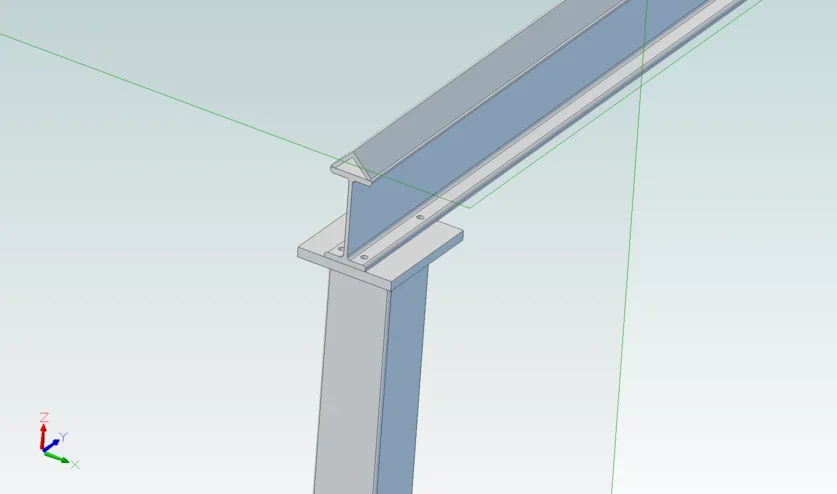
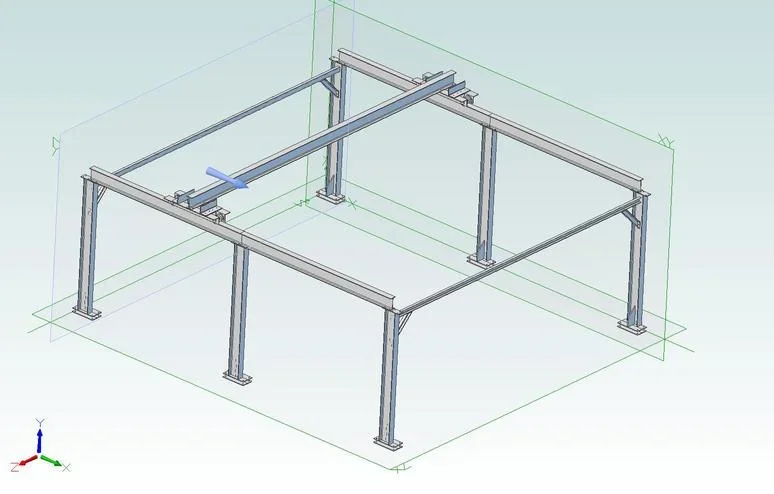
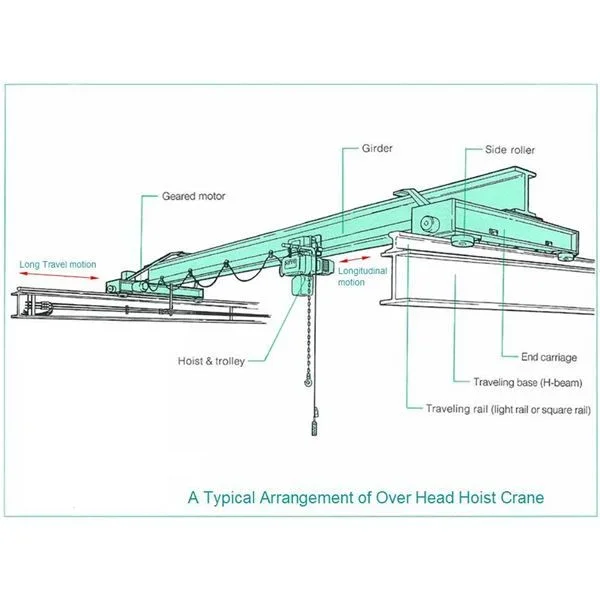
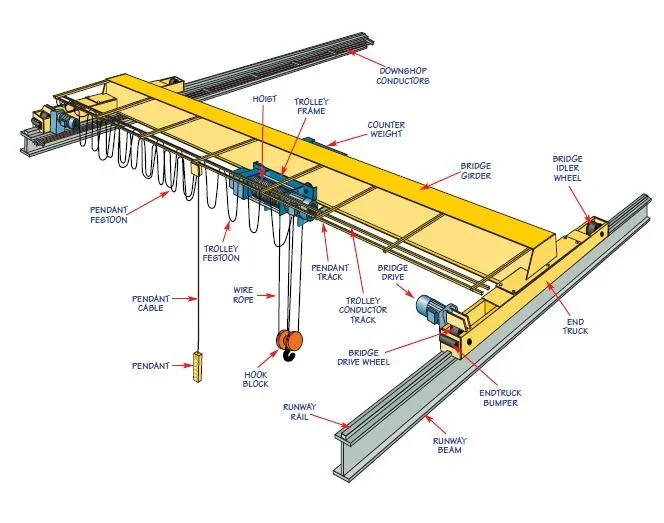
hi, I don't know if you can help me, but I'm putting in a message, I'm supposed to build a mini manual chariot with chain translation, you can help me, height under beam 3,50,light 4,50 flow 2 ton 6 meters, resting on brackets to mensoloni on pillars, could you help me?01220013.webpscaled_vinc.webpscaled_vinc4.webpscaled_vinc3.webpscaled_vinc1.webp
vinc.webpvinc_ayak.webp
vinc_araba.webpvinc_enine_destek.webp
 
Is it just teaching? Do you need to install and build? Can you do the certificate and put it in service? the lifting organ certificate you can do it if you have a skilled industry engineer who does the technical report.. .
Don't you first look at the demag site and buy a suitable wagon with everything?
 
the main things to control are the under load flexions, the guide tracks, the translation mechanics of the bridge with possible rack.
 
as from previous connection sending empirical wagon data, obtained from material tables
mobile bridge crane manual movement rated flow 3 ton
description:
height h under useful hook: 3,20 m
bridge beam length l: 4,65 m ipe section 240x 100 mm
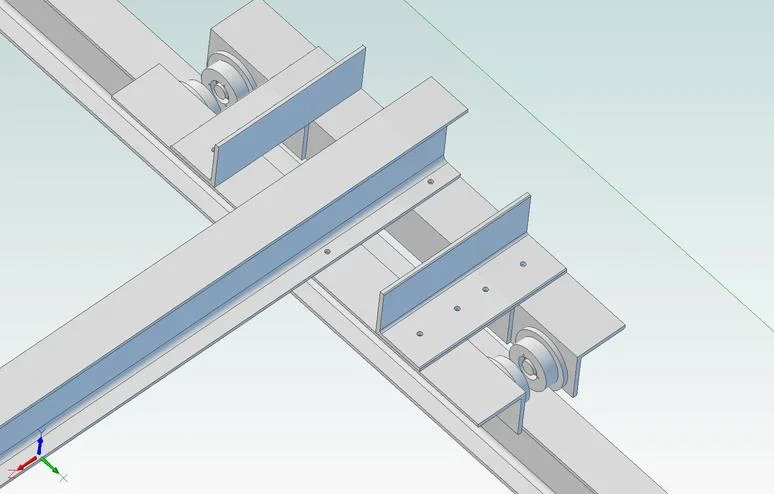
side beams supports wheels anchored in beams n 4 pieces u 120x 60 mm long 700 mm; n° 2 pieces 120 x60 mm long 1500 mm parallel distance between 2 beams 150 mm
n° 4 cast iron wheels for traslation bridge diameter 280x 80 mm thickness 45 mm wide , 15 mm deep, and toothed wheels x mechanical transfer bridge
2nd° 2 routes ipe 220x100mm length l. 5,80 m
n 2 guide tracks ,saldati di costa sulla vie corsa parallele dimensione plate: 30, 50 mm length 5,80 m
distance center pillar 4,50 m
calculation
length in cm supportscarroponte 2.webpp= lxxw/ b 2
in 287
 
Sorry if I put 2 consecutive messages, I recovered the front sketch that I attach, unfortunately it is not very exhaustive is only schematicgru a ponte.webpI hope I have been exhausted, if there were errors, I invite you to report it to me, the calculation was carried out empirically based on material tables thanks to the collaboration of the next
 
I mean, you chose things randomly.
I hope you have some calculations of construction science.
then schematically draws the beams, constraints and calculations the binding reactions. Also you must check that the arrow at the center or however maximum is less than split length 2000.
then calculate the pair you need to move the full load carriage and then size all the transmission organs so that you have to pull less than 30kg the chains to move the whole thing.
 
Anyway, I think you wrote a shopping list at home and you don't understand much. we must interpret. But if you make a drawing and put on the directions you and we understand what you're saying.
I attach you to the isostatic scheme of the structure that you should calculate to understand that you are using.
43a5c5e41039e7481874d7a2e6fe2bb6.png
for the track I recommend to you the appropriate ones for din 536 carriage and you can find them here http://rails.arcelormittal.com/en/crane-rails.htmlif you want to go to the savings you will go to weld a square or rectangular beam on an ipe or similar beam and next to the rack to make the translation.
 
excuse a question I have to calculate it in center of bending but on the sides where balance the beam of the bridge to the 2 beams of the shore that housing the wheels do not have to calculate them to flexo cut?carro laterale ponte mobile.webpIf I'm wrong, I'll invite you to correct me.
 
to say the truth, from the science of constructions, schematizes the beam to study, the forces apply, the reactions are calculated, the diagrams of cutting, traction, bending and twist are drawn. determines the most solicited area and the stresses are checked.
 
the next step, after evaluating the tension state is to verify the flexional state, where the Mexican arrow must be lower than the split heel length 2000.

evaluates well if the force on the wheels is due to the load in half or all on one side.... there will be several considerations to make on the various components.
 
calculator flow rate
ipe 249x 100
l 4,65 meters
(4xkxw): I
4x1600x324):465= (6400x 324): 465=2073600: 465=4459,3548 kg
the road as calculation I believe are equal, the distance between the pillars is 4,50 meters, on it I would like to weld a full plate 50x 30 mm, on the wheels I would like to make a 45mm wide throat x 15 mm ponda I think it is sufficient, size wheels 280mm x 80 mm thick
how do I consider the routes divided 2 or total on pillar support?
 
What is that incomprehensible calculation? Do you write letters and random numbers? A pattern? a reasoning? if each track has more than two pillars you have to make the beam continuous. documented in this regard.
"I think they're the same"? but are you doing an exercise or do you really want to build a wagon?
 
Excuse me, what is the Mexican arrow, on the manual and on the net I found, maximum arrow, moment flenching, but Mexican arrow on the net came out a train, you refer to the rested beam to which a load in presumed halfway applies?link2.webp
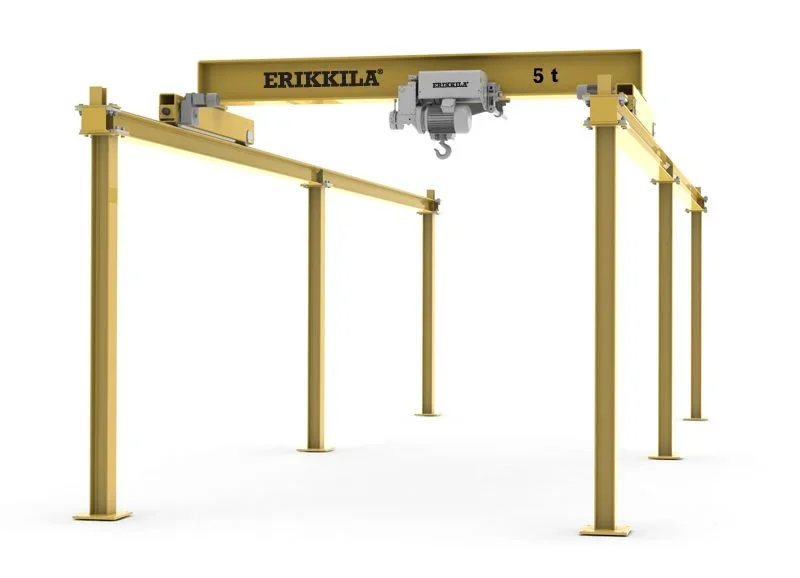
singlegirder-big.gifSPARTAN_Marketing_Picture_3D_5t_small.webp
 
I have understood, I have to apply the norm cnr 10021/85.- 10011 on cranes and the directive cars dpr 459, I have to take into account the wheel step etc of the weight loads of the cart itself and the lifting system
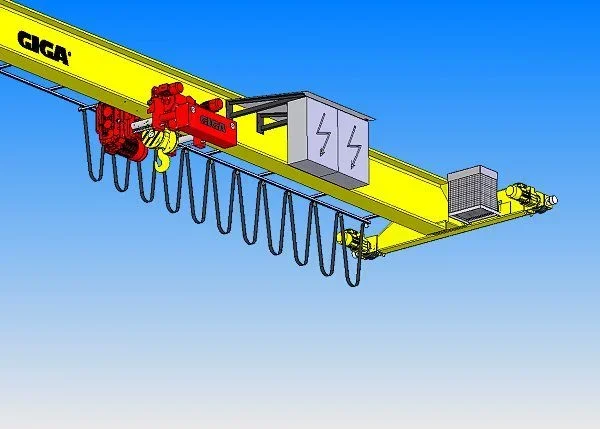
jednonosnikove-mostove-jeraby-01.webpjednonosnikovy-jerab-3d-1.webpSingle_girder_Ex_crane_ELK_5t_MRC_11m_span.webpEx_crane.webp
 
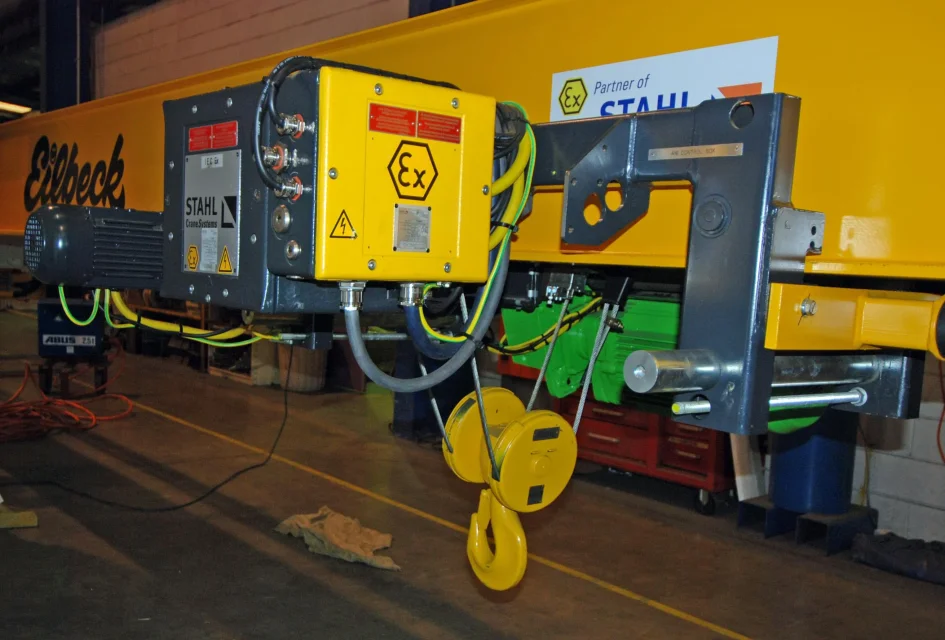
calculation bending trave carroponte I've been bumping into cars lately that look a lot like the wagon. There is a sort of horizontal translating shuttle on two parallel beams.
until now I have always calculated for simplicity that the force of the beam is dots on the span and therefore the resulting arrow is higher than the real one, especially if the two wheel axes of the shuttle are distant.
between the various things I have seen some notes of a colleague who was doing cranes and so I was interested in the exact calculation of the arrow.

First I can say that by checking the calculation with ftool we get the same result.

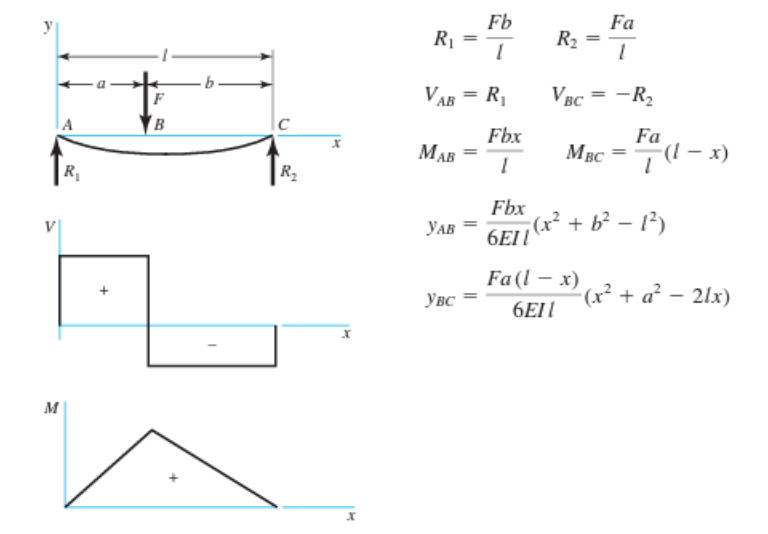
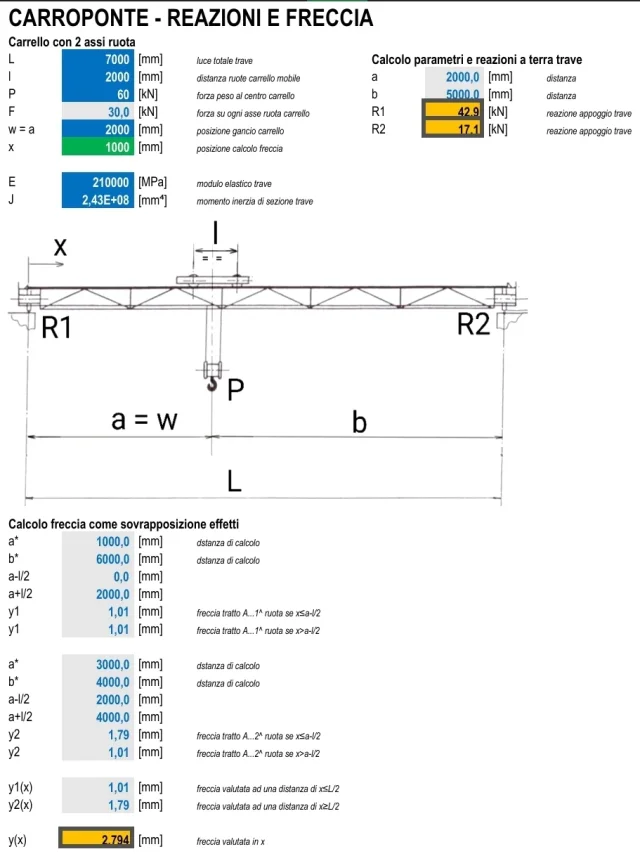
the analysis scheme is as follows:Screenshot_20240813_230557_Photos.jpgthe formulas used for calculation are those of a beam supported with a long dot load x:Screenshot_20240813_230951_Samsung Internet.jpgbeing that the axes of the cart are two and the load is divided equally on each axis it is necessary to make calculation for both forces on axis wheel p.

at this point it is necessary to evaluate the calculation of the arrow for each p at the x calculation distance if using the formula of the a-c or c-b tract.

putting everything in excel and creating rules with function "if" you get the calculation of the right arrow.

In reality you should calculate with the principle of virtual works or the method of the elastic line but I am too rusty to put me to do derivatives and integrals, so I opted for the method of overlaying effects already knowing the equations of parameterization of the y arrow compared to x. the result however does not change.
example:
tubular rectangular section 400x200x12 on 7m span with 120kn total load on the shuttle. the two wheel axles are 2m distant that is not little.
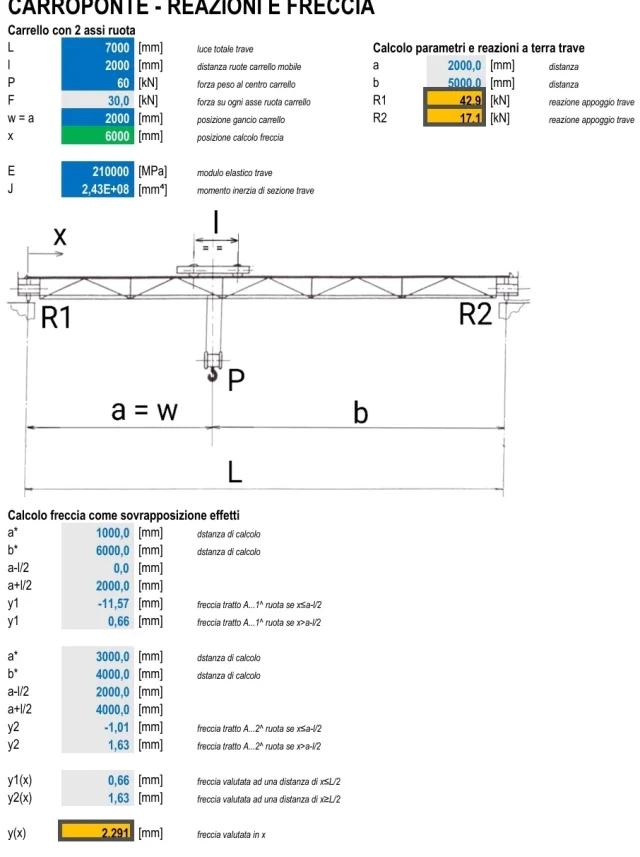
having x independent from the w value of where the load is located you can know in each point the arrow.
Screenshot_20240813_231546_Microsoft 365 (Office).jpgor with x over half beam:
Screenshot_20240813_231933_Microsoft 365 (Office).jpgwith this type of analysis you can optimize the section of the structure by lowering the weight compared to the calculation with a single concentrated force.
 

Forum statistics

Threads
44,997
Messages
339,767
Members
4
Latest member
ibt

Members online

No members online now.
Back
Top