
• This forum is the machine-generated translation of www.cad3d.it/forum1 - the Italian design community. Several terms are not translated correctly.

but what's the point of taking a 3d high-end cad?

  • Thread starter Thread starter Bobo75
  • Start date Start date

Bobo75

Guest
I write here because this should be the section a little more active and more stimulating than the forum where those who use the cad like the people who attend this site can compare three different systems and why not be of help to those who are orienting towards this world or maybe want to evaluate alternatives.
I therefore do this provocation.
removed the automotive and aeronautical industry, where the push management of surfaces requires high skills and margins of error close to 0, really makes sense for a company to bet on a high-end cad 3d?
I also add, why one to do things even quite basic must look for them in additional packages?
the discussion focus on usability I find was a brilliant idea, but it is firm at 2012 and steps since then have been made several. It would be nice that they would be confronted even on basic things and not just a race to those who have it longer.
this could really be helpful for those who want to look for the right solution for him or the field of use.
I know how to show how to build a solid by explaining the modus operandi, or how to configure a project, how to bind a set and create an explosion, as well as how to generate the masses in the table, the explodes on paper with its distinct base, maybe multiple on one sheet, how to handle the parametric methods of a component in all its desinences (binding a quota to another by means of formulas, to manage for )
the title is deliberately provocative I know, but I come from a mid range (solid edge) and I found myself with a high band (cat v5) and ok I did not do the course, ok I do not have much support, but there are times I ask ... but why? ...
I wait for you
 
I know how to show how to build a solid by explaining the modus operandi, or how to configure a project, how to bind a set and create an explosion, as well as how to generate the masses in the table, the explodes on paper with its distinct base, maybe multiple on one sheet, how to handle the parametric methods of a component in all its desinences (binding a quota to another by means of formulas, to manage for )
It is not easy to answer your question, I tell you briefly, my experience.
I began to model in 3d almost thirty years ago with the cad that I still use.
I did evidence with all the cads, without preclusions. I was looking for a tool that allowed me three things: 'maging' all the formats (iges, step..), that allowed me a parametric-varyal modeling and that 'split' me out of the decent stl.
I rated catia, pro/e, microstation, surfcam, ideas (which I used at university) and, almost randomly, I came across a perfect stranger at the time called unigraphics, which was what responded to all my needs.
then first answer: the chosen cad was what I did best the things I needed, and if then I sold a kidney to buy it. . .
from modeling I then went to design, as you know very different.
in my decades of experience I have designed everything, most consumer items.
once, in this forum, I mentioned my design experience talking about the parameterization of a gas kitchen with electric oven, plates, ramps, chains, floors, grills and so on. After a week of work I ran a file with some sketches and a twenty datum plane. from there I drew the kitchen: "The hips can be made two millimeters wider?" asked the client.. yes just change an expression!
telling my experience in this forum I have been disillusioned by many who told me: Do you know how many kitchens I design you in a week?
I say this because in my experience I found more designers than designers who struggle to understand the difference between a high-end cad and an average band.
The explosions, the boms, the boards are certainly important but I consider them a byproduct of a cad. I know that there are pride of designers who do not think so but this is my opinion.
the title is deliberately provocative I know, but I come from a mid range (solid edge) and I found myself with a high band (cat v5) and ok I did not do the course, ok I do not have much support, but there are times I wonder... but why? ...I wait for you
Why yours? :
 
I have no practical experience with "high-end" software. But it seems obvious that they have more tools than cheaper solutions. the user should ask himself, "Do I need those functions?" and choose accordingly.

understanding the real differences, qualities and defects of each solution is very difficult if not impossible, as it is difficult to find comparisons, and sometimes even just see how certain programs work. many software houses do not make information to free, but limited to those who have already bought the product.

There's no one who makes any information. paradoxically in the world of software to play, there are many videos, reviews, hardware analysis etc. in the world of professional software almost nothing of this.
do what you ask is difficult, especially for several different software. you have to buy the program, learn it (and if you don't use it at a professional level it is unlikely to go beyond a flourishing) and then do some article and/or video? It's an investment in terms of money and time that doesn't pay.
on this site, an eternity we made an attempt, but it was very difficult to find people willing to devote time and that they had the appropriate tools. So this is not going on.

on the net there is some very rare exception, videos you can find on yotube. According to me, often made by people living in nations where you do not notice the original licenses and the cost of work is very low. therefore everything repays with the views of youtube.
 
Well, software isn't just what you see...
to the level of reliability, ability to manage large data hubs, to exploit the graphics card, to export neutral files or mesh without losing information and detail level of geometries, not to lose constraints when you update a set heavily etc. Trust me to notice the differences.
not to mention the stability and rapidity of calculation of additional modules (fem or cinematic analysis). .

applies to cads, but also and especially for software calculation and simulation. .
 
I have always used high-end software (almen creed) in the working field (catia, creo and proe) according to me is a matter of what you have to do and how you have to do it ... to do elementary things does not make sense a high-end cad, to do things more complex and with long times (which at present is not possible) maybe would suffice a basic cad ... to do more complex things and maybe interface with other end-ended-type software
 
generally the advantage of high-end cads is the so-called vertical integration: you can switch from conceptual study to fem analysis to executive design to cam without leaving the environment, ie for each part of the project there is a dedicated module but provided by the software house and perfectly integrated. in the mid range instead you often have to use software of other providers for certain parts of the project, perhaps exporting in step and reimporting, to say.
 
first of all thanks to all of the answers.
start responding to "Czechs"

Why yours? :[/QUOTE]I do only a few examples:
Why does a cad that costs money on the base module not have the export/import of the stp model? Why if I have to create a protusion I have to first create the sketch and I can't type the command that interests me and then do the sketch? because while getting used to doing the sketch first I can not use the parts generated in the 3d as reference for the latter (without projecting the same obviously, that then if the project and change erasing a hole that does not center a tube me loses them ). because to customize a table I have to make circus numbers or be almost a programmer (this could be the fault of my lack of course )
my because it is linked to the fact that all the way of software is moving towards simplification. today with a finger on a screen we do things unimaginable until 10/15 years ago and to make a hole away from the tangence of a cylindrical excavation I have to become mad to create points in the space that they do as reference etc...
i understand the functional things but disturb me the fan-boy speeches that are often part of this world. we are professionals (also amateurs sometimes ) and admit that having a certain function in your system that would speed up learning and use is not a defeat?
I used the mid range and a lot, now I'm high, and I used the base (autocad ).
switching to 3d from 2d was wonderful. not having to think about how many designs I would have to update and edit with a change because the program was sublime.
in using a "high slate" instead of the mid I did not have the same enjoyment, all here, indeed...
often our lack of objectivity is from the unawareness of the medium.
This is also the reason for this discussion. and it is also why forums should exist, to confront and feel different opinions.
I nx without this forum I would have thought it was a car;-)
 
another reason can be the company's story: He said that many years ago the midrange did not exist. who passed to the 3d began directly with the "high-end" for the trivial reason that there were only those.

when you find yourself having:

1) personal format on a cad
2) archive drawings that grows every day on a certain file format
3) procedures/macro/gestional calibrated on a certain cad

You know that maybe change to switch to a mid-range would become very complex, although in the meantime mid-ranges have reached a level of functionality that meets the needs of the company.

Still: sometimes you change cad to have compatibility with an important customer/supplier, who maybe uses the high-end cad for any reason that has been exposed.
 
another reason can be the company's story: He said that many years ago the midrange did not exist. who passed to the 3d began directly with the "high-end" for the trivial reason that there were only those.

when you find yourself having:

1) personal format on a cad
2) archive drawings that grows every day on a certain file format
3) procedures/macro/gestional calibrated on a certain cad

You know that maybe change to switch to a mid-range would become very complex, although in the meantime mid-ranges have reached a level of functionality that meets the needs of the company.

Still: sometimes you change cad to have compatibility with an important customer/supplier, who maybe uses the high-end cad for any reason that has been exposed.
exact...the concept of mid-range and high-end is something relatively modern. . .
In principle in a high-end cad I could have all the packages I need integrated into a single environment (of course paying them fragrantly)...in a mid range I probably have to rely on third-party software (although for a few years there are packages also for the mid range).
not necessarily using external software is bad.

I personally tried caia many years ago at the university, I remember a pacchiano system, where to do anything you had to put constraints on constraints... I hope they have improved it a bit from the point of view of usability.
 
I personally tried caia many years ago at the university, I remember a pacchiano system, where to do anything you had to put constraints on constraints... I hope they have improved it a bit from the point of view of usability.
catia (at least v5) is always the usual sulfa ... they suck no from, it was born as a surface manager and for that it is great, other things leave (according to me that I grew up with pro-e) to want. in any case hunter is right ... habits are hard to die but for many reasons that do not always concern users
 
I know that it will be a lost battle probably at the start, but I think I will still say my about it because in my opinion with this system for what we do productivity would benefit and not little with a system a little more "slee".
I don't call catia pacchiano we'd miss, but I think the term "pachidermic" is quite appropriate
 
I only have an experience with a high band: the current one. I use nx for 5 years and before, in this company, it utulizzava td but in previous experiences I worked on inventor and a little solid works.
without wanting too much to inflate on td, I must say that the most appreciated thing working with nx is its extreme reliability. in 5 years I will have had 3 system crashes, while before they were weekly "appointments". this reliability is also appreciated in the regeneration of models due to successive changes; it is based on the fact that it does not make you make features that then can create problems later. the usability can be considered analogous, if not better than the mid ranges I used (besides td, inventor and a bit of swks) but I must say that the company did not bleed on the courses. the only thing about such a powerful tool leaves me puzzled is pattern management; It really seems to me an inexplicable gap for the power of the sw. For the rest, there are all the other positive aspects related to the interface with the world that other users have already described.
 
... this reliability is also appreciated in the regeneration of models due to successive changes; it is based on the fact that it does not make you make features that then can create problems later.
once we have seen that it is not always like this. Look at me. qui, until post #32. but it is not said that it is always bad.
 
once we have seen that it is not always like this. Look at me. qui, until post #32. but it is not said that it is always bad.
I have brought my testimony and it is positive and, I beg to say it, disinterested. then certainly weak points there are in all products, even the most expensive... I will have had the luck not to come across one of these during the use I make.
 
I have brought my testimony and it is positive and, I beg to say it, disinterested. then certainly weak points there are in all products, even the most expensive... I will have had the luck not to come across one of these during the use I make.
Sometimes those who seem weak points are nothing but peculiarity of the system.
 
catia (at least v5) is always the usual sulfa ... they suck no from, it was born as a surface manager and for that it is great, other things leave (according to me that I grew up with pro-e) to want. in any case hunter is right ... habits are hard to die but for many reasons that do not always concern users
Hello I used catia v4 are so a bit of part... However top users in pro-and there are few,
I write here because this should be the section a little more active and more stimulating than the forum where those who use the cad like the people who attend this site can compare three different systems and why not be of help to those who are orienting towards this world or maybe want to evaluate alternatives.
I therefore do this provocation.
removed the automotive and aeronautical industry, where the push management of surfaces requires high skills and margins of error close to 0, really makes sense for a company to bet on a high-end cad 3d?
I also add, why one to do things even quite basic must look for them in additional packages?
the discussion focus on usability I find was a brilliant idea, but it is firm at 2012 and steps since then have been made several. It would be nice that they would be confronted even on basic things and not just a race to those who have it longer.
this could really be helpful for those who want to look for the right solution for him or the field of use.
I know how to show how to build a solid by explaining the modus operandi, or how to configure a project, how to bind a set and create an explosion, as well as how to generate the masses in the table, the explodes on paper with its distinct base, maybe multiple on one sheet, how to handle the parametric methods of a component in all its desinences (binding a quota to another by means of formulas, to manage for )
the title is deliberately provocative I know, but I come from a mid range (solid edge) and I found myself with a high band (cat v5) and ok I did not do the course, ok I do not have much support, but there are times I ask ... but why? ...
I wait for you
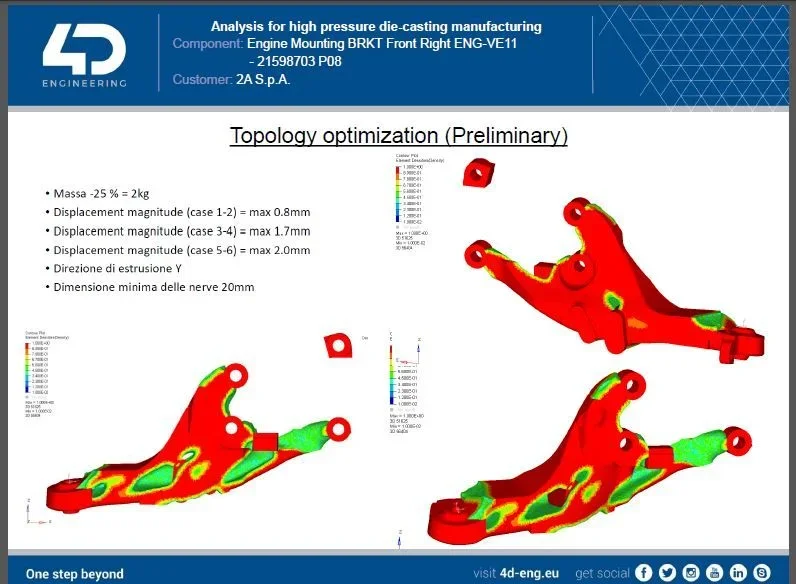
Hi I didn't get it right, you tried a simil se, so... How do you build a solid? the question would be the definition of a mechanical component!! and in this case, as it is realized; in fusion, additive, carpentry? I attach you a topological optimization, made in 3ds, we saved 2.3kg, per customer man. reverse of the technology, beyond the cat license (15.000€) you have to add 60,000€. everything is according to what you want to accomplish. hi and good choice!! !
 

Attachments

  • ottimizzatore.webp
    ottimizzatore.webp
    55 KB · Views: 83
as other users have already said, depends on what you go to do. the cost of licenses can vary on a really wide range and makes no sense to companies that focus more on the concreteness than on the thorough study, spend tens of thousands of euros for a license.

then, personally, I have always evaluated the seriousness of a company also according to the type of cad that is used. Then there are companies that don't even know what cae is...
I know, it's a senseless prejudice. . .
 
Hello I used catia v4 are so a bit of part... However top users in pro-and there are few,

Hi I didn't get it right, you tried a simil se, so... How do you build a solid? the question would be the definition of a mechanical component!! and in this case, as it is realized; in fusion, additive, carpentry? I attach you a topological optimization, made in 3ds, we saved 2.3kg, per customer man. reverse of the technology, beyond the cat license (15.000€) you have to add 60,000€. everything is according to what you want to accomplish. hi and good choice!! !
but the fact of using the cat's fem (if I understood correctly) is due to the fact that this fem is better than that available in mid-range?
 
but the fact of using the cat's fem (if I understood correctly) is due to the fact that this fem is better than that available in mid-range?
I imagine that it refers to the possibility of having integrated, under the same roof, more activity, among which the peo, which, if well exploited, can lead to substantial savings for the company.

said very "good" , makes a series of iterations until it reaches (or approaches) to certain targets.

I often used it for "geometric" issues, because the fem/cfd was "outside" but if you can combine things....

If you imagine 2,3 kg (at least so said) multiplied by (I imagine) 200 thousand pieces/year (then saving of 460 tons of material/year....) , more ' 2,3 kg in less than the medium (I imagine) you have to carry around (then less consumption, less emissions, etc etc.).

Of course, one can always use the "old method" of the reading of the fem, change "manual" of the cad, new analysis and see how it goes, but...

But bobo75 seems to me to be more concerned about the fact that the cad makes a table in a certain way or that a set is bound as he likes it.......

Maybe priorities are different.


Last edited:

Forum statistics

Threads
44,997
Messages
339,767
Members
4
Latest member
ibt

Members online

No members online now.
Back
Top