gil
Guest
I would like to fix glass as an image. the problem that I pose as estimating the position of the hole so as not to go and reduce the resistance of the glass. we hypothesize to have a glass plate, this has its resistance to both vertical thrust along the larger sides of the glass acting perpendicular to the surface.
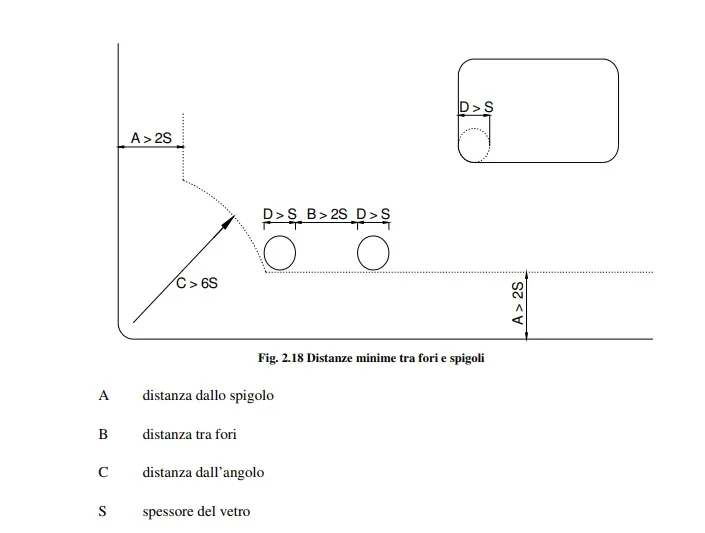
If I fix the glass by means of a pin placed inside a hole I will have to make the hole not too close to the edges, otherwise a board too small will not have the initial flow rate.
there are rules (a few 12150) that suggest the hole position according to the thickness of the glass, but are indications to avoid breaks during the tempering or drilling. I don't think it's about resistance.
so if I have a glass of 10mm thickness and I make 25mm holes leaving 150mm on board from the edge or respected the rules above. But does the plate resist a push like before? and how do we take account of the support surface of the inerts ? is possible a maximum estimate? are there tables to refer to?
thank you all will give me a few minutes
we hypothesize to have a glass plate, this has its resistance to both vertical thrust along the larger sides of the glass acting perpendicular to the surface.If I fix the glass by means of a pin placed inside a hole I will have to make the hole not too close to the edges, otherwise a board too small will not have the initial flow rate.
there are rules (a few 12150) that suggest the hole position according to the thickness of the glass, but are indications to avoid breaks during the tempering or drilling. I don't think it's about resistance.
so if I have a glass of 10mm thickness and I make 25mm holes leaving 150mm on board from the edge or respected the rules above. But does the plate resist a push like before? and how do we take account of the support surface of the inerts ? is possible a maximum estimate? are there tables to refer to?
thank you all will give me a few minutes