• This forum is the machine-generated translation of www.cad3d.it/forum1 - the Italian design community. Several terms are not translated correctly.

conical wheel bearings

  • Thread starter Thread starter christoph
  • Start date Start date

christoph

Guest
Good morning to all,

I'm preparing for an exam and I'd need advice on choosing the bearings for a conical wheel.
then normal for a conical toothed wheel I would split mixed bearings, arrangement "x" for the wheel and "or" for the pinion.. .
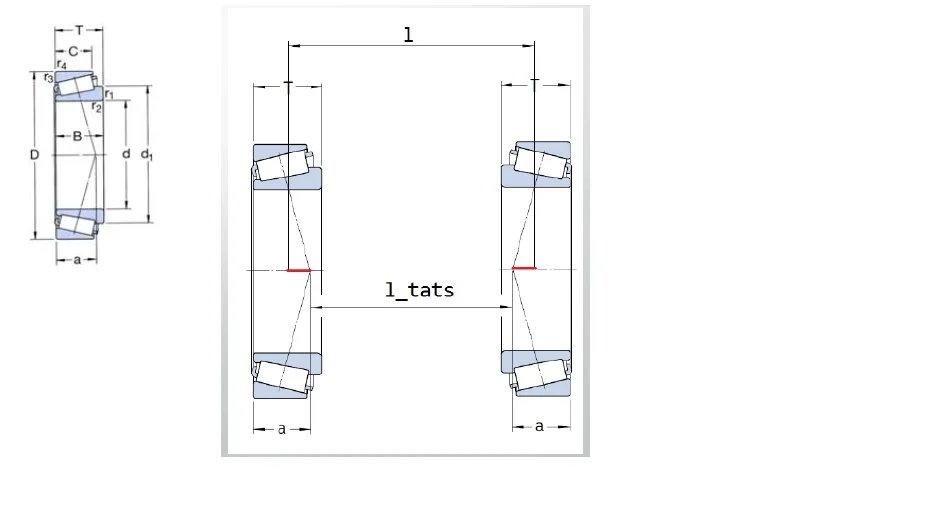
the problem with mixed cuckoos when they are not chosen is that I miss geometric parameters (largehzza t and "a") with which I can calculate the modified distance (it increases with "o" and decreases with "x") and in consequneza I can not calculate the forces....normally I would estimate the bearing and do a recalculum... but during an examination I do not know if' there is enough time.
would I ask if a bearing arrangement for the constraint side and for the free side would also be valid for in conical gear reducer?
I have never seen it, but it would cost less time to calculate during the exam.

Thank you.
 
conical pinions and conical wheels require the use of conical bearings (or oblique) as it is necessary to apply a preload to obtain the registration for a correct ingration, in addition to the fact that they must support axial thrusts determined by the particular type of ingration.
can you represent the bearing with quotas t and to better understand what you mean?
 

Attachments

  • Cuscinetti.webp
    Cuscinetti.webp
    46.9 KB · Views: 17
I think I've given too much unnecessary information. . I just wanted to know if the conical/adjusted bearings for conical wheels are always used, or if you can also use a bearing arrangement for the bond side and for the free side.
in the case of bearings for the constraint side and for the free side the sizing is easier.
in the case of regulated bearings changes a bit the distance between the bearings. . .
 

Attachments

  • cuscinetto-2.webp
    cuscinetto-2.webp
    11.2 KB · Views: 13
there are many variations of bearings. besides the classic you mentioned we have:

oblique contact ball and traditional ball for light and high-performance gearboxes.1720817002431.webpHinge bond with two opposing frames and a cart with rollers. very heavy applications and high temperature variations.Screenshot_20240712_224450_Chrome.webpa half way, two row ball bearing and a roller bearing. medium light applications high performance with large expansions....high temperature variations.Screenshot_20240712_224827_Chrome.webp
 
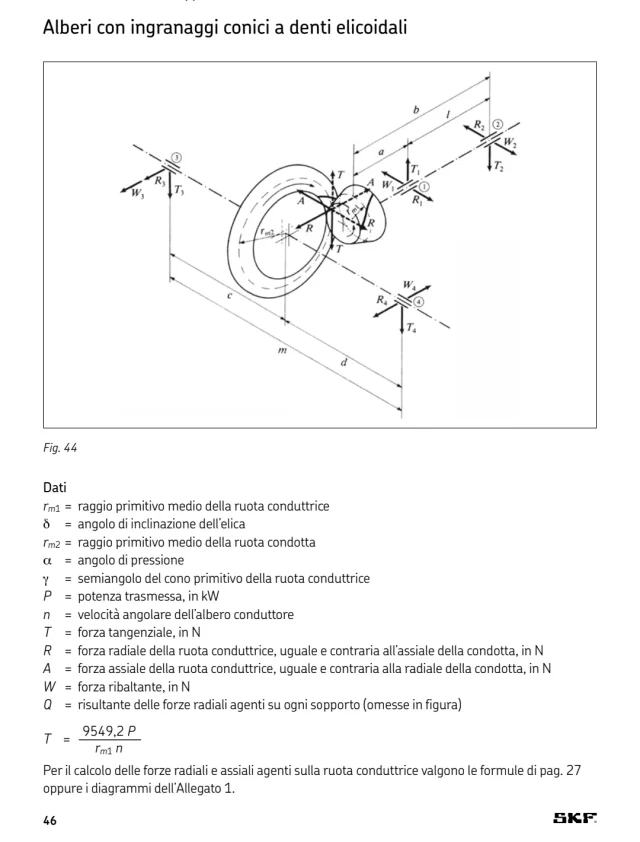
skf training notebook says that oblique or similar contact bearings have the axial shift of the reaction application point Screenshot_20240712_225945_OneDrive.webpbut certainly give as classical calculation scheme the followingScreenshot_20240712_230023_OneDrive.webpto be solved with the following formulasScreenshot_20240712_230053_OneDrive.webpThis means that if you consider first approximation a=0 calculations a first interasse that will then be recalculated... obviously do it for security.
 
I thank you for all the information you gave me.
This was the dilemma I had, if I do it with a regulated arrangement(x or o) I have to make two calculations, first with a=0 and then recalculate it. but if I choose a bound bearing and a free one I can calculate in a shot...that radiates me time during the exam.
 
I thank you for all the information you gave me.
This was the dilemma I had, if I do it with a regulated arrangement(x or o) I have to make two calculations, first with a=0 and then recalculate it. but if I choose a bound bearing and a free one I can calculate in a shot...that radiates me time during the exam.
if you are not imposed on the subject of examination the type of solution, I would say that if well justified, you can adopt the hinge cart and make the account only once.
As much as I think we can do the calculation with x or only once saying that it is first approximation and to say that it is necessary to recalculate to obtain a more truthful result.
depends on what teachers expect. if you know how to reason and set it definitely worth more than a thousand accounts with 10 useless decimals.
 
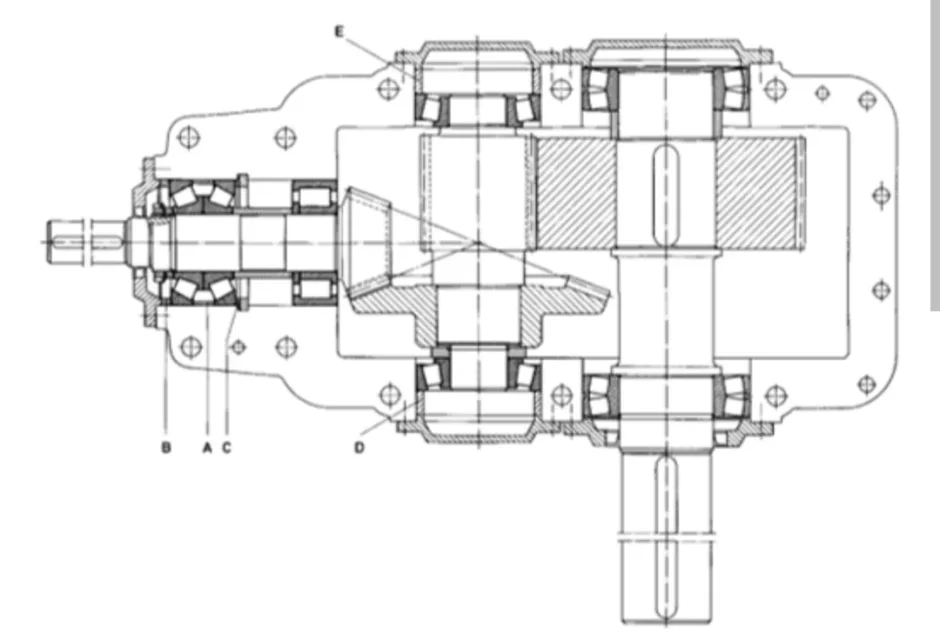
other bearing arrangement is this below. as you can see you can adopt different types of bearings depending on the size of loads, shocks and vibrations, more or less high forces depending on the angles of the cones.1720967478066.webp
 

Forum statistics

Threads
44,997
Messages
339,767
Members
4
Latest member
ibt

Members online

No members online now.
Back
Top