
• This forum is the machine-generated translation of www.cad3d.it/forum1 - the Italian design community. Several terms are not translated correctly.

create direct modeling, baptize a group as part

  • Thread starter Thread starter SILVIO11011978
  • Start date Start date

SILVIO11011978

Guest
Good morning to all
I ask for help in the forum, are looking for a lisp that can baptize a group as part and that during the scanning model from annotation (analyze-->db scanning pattern) see it as a part leaving the parts inside it, it would be very useful to create distinct at multiple levels. this function is present with the model manager package that I clearly do not have. thanks in advance to all.
 
Good morning to all
I ask for help in the forum, are looking for a lisp that can baptize a group as part and that during the scanning model from annotation (analyze-->db scanning pattern) see it as a part leaving the parts inside it, it would be very useful to create distinct at multiple levels. this function is present with the model manager package that I clearly do not have. thanks in advance to all.
without model manager is not possible, at least to my knowledge. What you can do with modeling (but you've already seen it) is to make distinct monolevel or at all levels, but you can't go to decide what to expand and what not.

There are "inseparable" objects that do what you ask, but they only work in pairs with model managers.
 
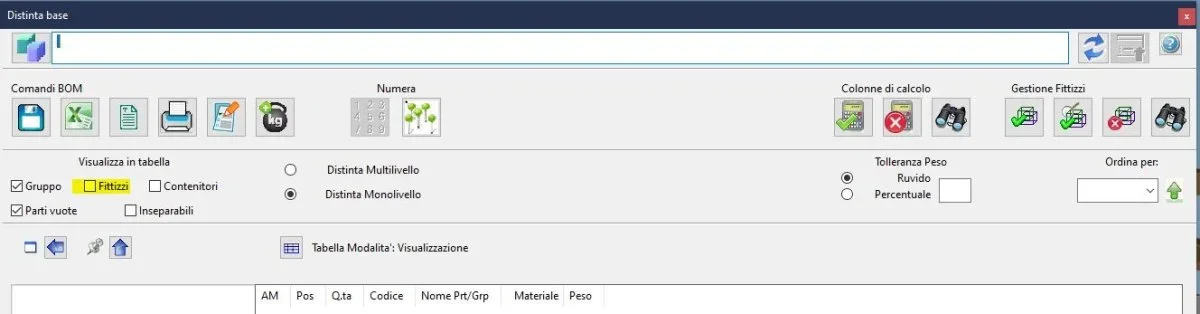
theoretically it may be that phytizies and inseparables can be distinguished through macro without the help of a pdm even from the software itself, I think it is possible because the cdm provided and I think it still provides a distinct command that works without the pdm and that has the box to flag.

if you have a software house that makes you assistance you might find a similar solution, otherwise if your use of fictitious groups is aimed only at grouping details without which they constitute a group (for example to make pattern, to move everyone at once etc) you can try to use the groups part whose command is an icon is a square containing 4 cubes, but being an unused command (for me it is very useful and powerful) has several defects.
 

Attachments

  • Distinta.webp
    Distinta.webp
    24 KB · Views: 18
theoretically it may be that phytizies and inseparables can be distinguished through macro without the help of a pdm even from the software itself, I think it is possible because the cdm provided and I think it still provides a distinct command that works without the pdm and that has the box to flag.

if you have a software house that makes you assistance you might find a similar solution, otherwise if your use of fictitious groups is aimed only at grouping details without which they constitute a group (for example to make pattern, to move everyone at once etc) you can try to use the groups part whose command is an icon is a square containing 4 cubes, but being an unused command (for me it is very useful and powerful) has several defects.
Thanks kaji, nice straight, the command "groups part" actually I never used it. I'll go
 
I try to look for the solution from another point of view, according to you, what are the attributes of the 3 categories (no,part,group) opening with the curtain in the image?, would it be possible to view them in the browser of the tree? popup in the image is what opens with the mm_assign_bom function possible only with model manager. I noticed that these attributes baptized with the function mentioned above remain "impressi" in the file, and if you start creating without the model manager module by scanning the model are always and still recognized with this attribute, then, if I gave the attribute part to a group this will always be seen as part during scanning and so on for other group categories and none. I thought if it was possible to view them in the tree maybe it is also possible to change them. Thank you in advance.1677854732713.webp
 
I also add that if I cover the group with the attribute part, the new group that you come to create will always impress the attribute part....
 
I try to look for the solution from another point of view, according to you, what are the attributes of the 3 categories (no,part,group) opening with the curtain in the image?, would it be possible to view them in the browser of the tree? popup in the image is what opens with the mm_assign_bom function possible only with model manager. I noticed that these attributes baptized with the function mentioned above remain "impressi" in the file, and if you start creating without the model manager module by scanning the model are always and still recognized with this attribute, then, if I gave the attribute part to a group this will always be seen as part during scanning and so on for other group categories and none. I thought if it was possible to view them in the tree maybe it is also possible to change them. Thank you in advance.View attachment 67837
interesting this part-group thing, I didn't know her.

to customize the insertion of values and display in the template tree here' you find two interesting lisp, to be customized:
I've made a good use of it on a project.
 
thanks hunter, these lisp I use them already and I customized to my liking the browser, what I do not have are the indications of the attributes that mention in the previous post. If I had to try to put them in the lisp so I could change them from the browser.
 
thanks hunter, these lisp I use them already and I customized to my liking the browser, what I do not have are the indications of the attributes that mention in the previous post. If I had to try to put them in the lisp so I could change them from the browser.
the command to read custom properties is "inq atts" that you find in the tool menu, after running the command:

(load "inq_all_atts")

I hope this answers your question.
1677864063146.webp
 
the groups parties are not known because they are abnormal in the sense that they can "violate" the structure of the group and also some fundamental rules that always the groups must respect.
the only condition necessary to form these groups is that all parts and groups within them have a common parent group, which can be the whole machine.

I use them for example to trace the historicity of the spare parts, I explain better I have a very complex machine that undergoes washing even with very aggressive agents, so frequent maintenance and spare parts are often necessary and keeping track can be useful also to program the spare parts for the next machines.

to every intervention I create within the machine a group parts in which I put all the details in a single group part, so as soon as I am asked I just need a click to know and immediately view the details for each intervention; the beauty of the groups part is that one same particular and by itself I mean the same not a shared one, can do well part of two different parts groups.
i.e. if the x belt was replaced in March of October and not August, I will only make it appear in the two groups parts of March and October.

without the groups part I should do something horrendous like to create a container and share in the parts details every time for example and anyway it would not be the same object but a shared one.

Moreover the groups part can be recognizable also within annotations, for example they are sensitive components and I want to make appear with a more marked line, as long as in property parts say select parts and groups within a group parts and give them a different line I do it and will immediately notice in the drawing.

I would like this object to be recognizable in some way from the pdm but I have no chance to ask, the worst flaw is that when you change, that is, add and remove details you have to follow the following procedure:

- change group parts
- click on the button
- at this point click parts and groups with the usual xor logic or just add or delete.

if you click only on change and start selecting the parts as for normal groups following the xor logic, the party group will reset you and at the end of the change will contain only the parts and groups you have added in second instance.
 
Last edited by a moderator:
I did not resist and tried to change the lisp starting from those who advised me hunter .the result is not there yet but according to me we are on the good road. Unfortunately my ignorance in the lisp language stops me at this point, I managed to attribute some of the values but there is someone missing and I do not know how to add them. if someone knows how to leave the lisp here as indicated by hunter to view attributes use the command below by entering the user input line. (load "inq_all_atts")
 

Attachments

  • attributi desiderati.webp
    attributi desiderati.webp
    26.4 KB · Views: 14
  • attributi ottenuti con il lisp.webp
    attributi ottenuti con il lisp.webp
    16.7 KB · Views: 14
  • bom indicator.lsp
    bom indicator.lsp
    2.8 KB · Views: 1
Good morning, everyone. I looked again at the lisp I posted earlier and realized I made a syntax mistake. the lisp seems to work correctly now, if I check the (bom_indicator -- part), the axieme behaves as a part during scanning also multilevel in annotation, otherwise if I check the (bom_indicator--> assembly) will return to behave as a group, all without the model manager module. This can be useful to create assemblies even with many nestings of various groups in which there are assemblies that must behave as parts for example commercial such as sleds, cylinders, or welded compounds from many parts that must be for the purposes of the distinction as parts. I didn't test it in a maximal way, so if anyone should find situations where it doesn't work, you'll communicate in this discussion. thanks to all for the help
 

Attachments

Good morning, everyone. I looked again at the lisp I posted earlier and realized I made a syntax mistake. the lisp seems to work correctly now, if I check the (bom_indicator -- part), the axieme behaves as a part during scanning also multilevel in annotation, otherwise if I check the (bom_indicator--> assembly) will return to behave as a group, all without the model manager module. This can be useful to create assemblies even with many nestings of various groups in which there are assemblies that must behave as parts for example commercial such as sleds, cylinders, or welded compounds from many parts that must be for the purposes of the distinction as parts. I didn't test it in a maximal way, so if anyone should find situations where it doesn't work, you'll communicate in this discussion. thanks to all for the help
I'm sorry about the lisp? I can write propiety in the group but then the information is not collected when I scan the parent group.
 
Yes, I am using it without any problem. for clarity, when I scan the usage model analyzes-->db scanning model by annotation. all the asses I beat as part are seen as parts.
 
Yes, I am using it without any problem. for clarity, when I scan the usage model analyzes-->db scanning model by annotation. all the asses I beat as part are seen as parts.
I uploaded your lisp myself and it works fine, you see that I made something wrong to copy it in mine.
 
Good morning, everyone. I looked again at the lisp I posted earlier and realized I made a syntax mistake. the lisp seems to work correctly now, if I check the (bom_indicator -- part), the axieme behaves as a part during scanning also multilevel in annotation, otherwise if I check the (bom_indicator--> assembly) will return to behave as a group, all without the model manager module. This can be useful to create assemblies even with many nestings of various groups in which there are assemblies that must behave as parts for example commercial such as sleds, cylinders, or welded compounds from many parts that must be for the purposes of the distinction as parts. I didn't test it in a maximal way, so if anyone should find situations where it doesn't work, you'll communicate in this discussion. thanks to all for the help
Hello, beautiful command! :
I'm testing it on a little set and it looks like it works great!
by chance is there also the way to exclude a part or group from scanning when creating the distinct?

But where can you find some cocumentation about it?
 
Hello, beautiful command! :
I'm testing it on a little set and it looks like it works great!
by chance is there also the way to exclude a part or group from scanning when creating the distinct?

But where can you find some cocumentation about it?
hi, yes after this lisp I created a lisp that made me the transparent parts or assemblies to the scan, the only drawback is that once "baptized" as a reference, then transparent to the scan it is no longer possible to delete this attribute or better I did not succeed, to obviate to this in case there was the need to make visible to the scan the part or group just "copy them" using the conscious command.
I attach both files both to give part attributes to the axieme and to make them transparent this because I created in the display of the side toolbar of the indicators that make visible the properties of these commands in this way it is not necessary to use the load command "inq_all_atts" to question the file.1681023996867.webp
 

Attachments

your work is really great, unfortunately I do not have the opportunity to test it when I use modeling with pdm and a series of centralized tools that sometimes conflict with the local settings of the software, so "the invisibility of a component" for me is determined at the time of the choice of the "classes" in the coding phase (the class of invisible elements is the fictitious) then in the drafting phase of the separate link

there is also the possibility to manage different types of distinte, for example the constructive one and that of the exchanges that would perhaps take into consideration and differently some components, but not exploiting this opportunity and not having the possibility to ask the software house I can only hypothesize the possibility.
 

Forum statistics

Threads
44,997
Messages
339,767
Members
4
Latest member
ibt

Members online

No members online now.
Back
Top
