• This forum is the machine-generated translation of www.cad3d.it/forum1 - the Italian design community. Several terms are not translated correctly.

design/design a laying

  • Thread starter Thread starter TorMec
  • Start date Start date

TorMec

Guest
Good morning to all, I work for a company that like many others designs and builds automation machines on specific requests and specifications of customers.
Lately, the need to design poses in order to accommodate particular plastics and not with complex surfaces and shapes is present. For those who do not know it are called poses because they must be able to accommodate the details with extreme precision and thus respecting the shape and the reference surfaces for correct stability and repetitiveness.
after several design attempts with solidworks (software used by the company) and with the help of the workshop cam we did not get good results and we turned to a free professional who draws only these things with catià and with a few hours of work (less than one day) gives us the mathematical model 3d of the laying.
Although we lean on an outside we remain within times and costs and the result is very good, but the direction would like us to learn to draw them with solidworks. personally I have never known anyone who uses this software to design poses and other companies of my knowledge also turn to external consultants.
Can you give me your opinion?
can solidworks be used for these things?
I need your consult to know how to deal with the company, considering I'm in charge of the office.
thanks in advance
 
from that, little to say the truth, that I understand you must know how to shape very well with the surfaces considering that solidworks does not aim so much on this aspect.
I think it is essential that a thorough course of the environment should not have to go to attempts without knowing what to expect from the various commands.
Have you tried looking for some solid videos with the English term equivalent to laying?
 
it would be very useful to know what degree of precision it serves and what is done in these poses (they only need to hold the particular for a certain time, they have to resist stresses during subsequent work of the piece, they have to drive the piece for a subsequent couple).
and, of course, if these poses are to be left firm or moved (manually or mechanically, then if they have to be prepared with special couplings).
in the past I have done something like this: great precision was not required (order of 2/3 mm) but the piece had to be held firm during a casting of resin and not deform to weight gain.
all then had to be stacked during the gelification.
we had built a system with standard commercial cassettes in which we put a first centering and on this the actual layings. In some cases, simple sponge rectangles were enough.
for the most delicate pieces, in general, I created a simplified silhouette around my detail (let's say a draft), I obtained a negative removing the volume from a larger cube, which then I cut to the height that serves to maintain the position and then I composed this solid in the encumbrance of the first centerpiece. I finally passed everything to a third party for the thermoforming of the series. adjustments and corrections were made at that point.
I didn't use sw at the time, but I think it's feasible. Then, it depends on what you have to do.
I hope I was useful.
 
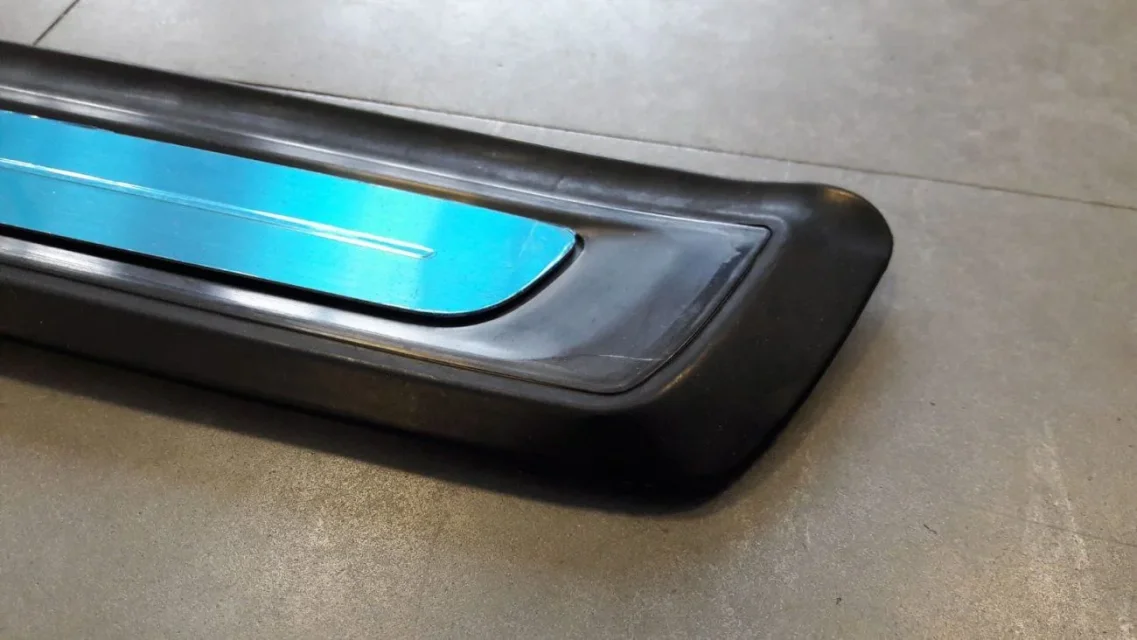
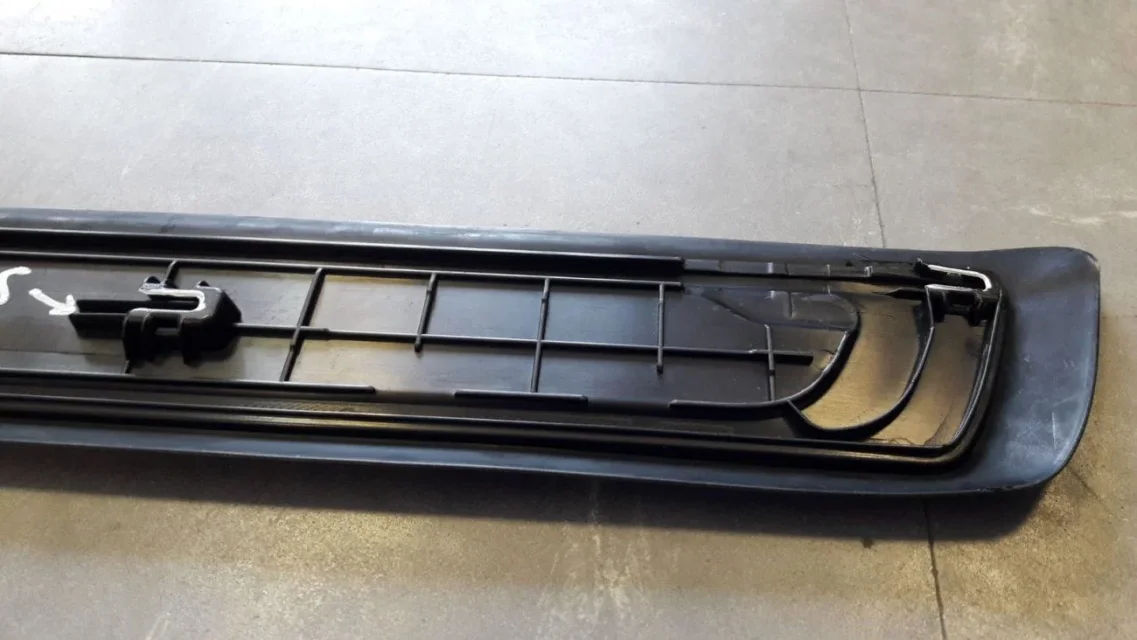
Yes, but I did a quick search, I didn't have much time. However, to understand, I attach two examples of a piece of the customer, of what you see, you need to draw a solid that perfectly copies its shape. I press that it is an example and there are other much more complex pieces, also this in particular seems simple but in its small has many irregularities.
from that, little to say the truth, that I understand you must know how to shape very well with the surfaces considering that solidworks does not aim so much on this aspect.
I think it is essential that a thorough course of the environment should not have to go to attempts without knowing what to expect from the various commands.
Have you tried looking for some solid videos with the English term equivalent to laying?
IMG-20190708-WA0004.webpIMG-20190708-WA0003.webp
 
it would be very useful to know what degree of precision it serves and what is done in these poses (they only need to hold the particular for a certain time, they have to resist stresses during subsequent work of the piece, they have to drive the piece for a subsequent couple).
and, of course, if these poses are to be left firm or moved (manually or mechanically, then if they have to be prepared with special couplings).
in the past I have done something like this: great precision was not required (order of 2/3 mm) but the piece had to be held firm during a casting of resin and not deform to weight gain.
all then had to be stacked during the gelification.
we had built a system with standard commercial cassettes in which we put a first centering and on this the actual layings. In some cases, simple sponge rectangles were enough.
for the most delicate pieces, in general, I created a simplified silhouette around my detail (let's say a draft), I obtained a negative removing the volume from a larger cube, which then I cut to the height that serves to maintain the position and then I composed this solid in the encumbrance of the first centerpiece. I finally passed everything to a third party for the thermoforming of the series. adjustments and corrections were made at that point.
I didn't use sw at the time, but I think it's feasible. Then, it depends on what you have to do.
I hope I was useful.
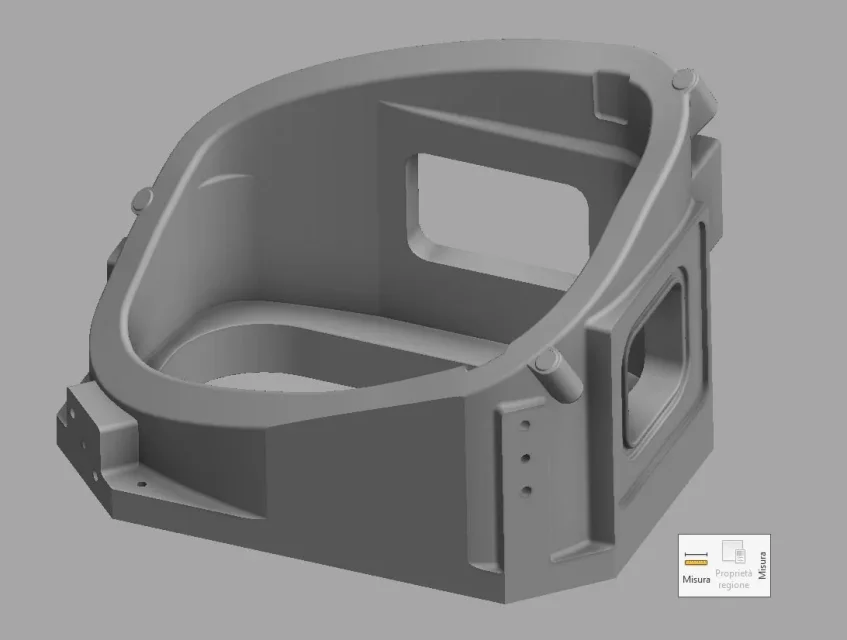
no matter the functionality or the precise, the needs and the cases or manual or automatic operations can change depending on the project. I need to have the whole negative form after which I can change the solid as I want, starting from squared reference plans I add holes other processing etc.tomorrow.I send you a photo of the laying that drew me the external designer with catià in three hours of work so I spy better.
 
Good morning to all, I work for a company that like many others designs and builds automation machines on specific requests and specifications of customers.
Lately, the need to design poses in order to accommodate particular plastics and not with complex surfaces and shapes is present. For those who do not know it are called poses because they must be able to accommodate the details with extreme precision and thus respecting the shape and the reference surfaces for correct stability and repetitiveness.
after several design attempts with solidworks (software used by the company) and with the help of the workshop cam we did not get good results and we turned to a free professional who draws only these things with catià and with a few hours of work (less than one day) gives us the mathematical model 3d of the laying.
Although we lean on an outside we remain within times and costs and the result is very good, but the direction would like us to learn to draw them with solidworks. personally I have never known anyone who uses this software to design poses and other companies of my knowledge also turn to external consultants.
Can you give me your opinion?
can solidworks be used for these things?
I need your consult to know how to deal with the company, considering I'm in charge of the office.
thanks in advance
how did you find yourself?
https://www.cad3d.it/forum1/threads/posaggi.53577/#post-418453
 
for such geometry I repeat what is said in the post linked by reader and that is to use the cavity command.
 
bad, the person who used visi is no longer there and still kept it on a pc without internet connection, you can imagine why. he also used it for years and despite everything was very sleek and long as process, worse still to learn fasting for those who like me use sw for a long time. I repeat that for me if 3/4 hours of work of an outside are sufficient and guarantee us a good result I do not see the reason to pull the wedge on the feet insisting with sw, but I have to convince the direction.
 
for such geometry I repeat what is said in the post linked by reader and that is to use the cavity command.
I have seen some quick tutorials, I want to point out that often the files of this have small errors and are not full but well-tended zero surfaces. Does the cavity control also work with the surfaces?if there are small errors do you not hesitate to complete the command? last but not least, the parallelepiped to be subtracted as the location in space compared to the customer piece that default does not have reference plans and origins in smart places? often it is difficult to find a parallel wall or perpendicular to another and the halfway of an object worse yet. Last question, how does the cavity command react on complex objects?The tutorials show very trivial objects like a bottle or a glass.
 
I did things like that both with solid edge and solidworks. you have to use the surface module, with the basic solid modeling you cannot do: In practice, you have to use your product as a "tool" to use to dig a solid that will then become your pose.
 
if it were possible to post a particular from which to obtain the laying we could make some evidence
 
you could use creo for laying
I imagine that buying a new software and learning to use it only for that specific use is more expensive in time and money than to keep doing it externally
 
buy a new cad is to be escuded.I don't think it can send you a step file or solidworks for privacy but I try to look if I have something to give you if I can already today.
 
I think it's possible even in freecad.
I don't know with your software if you can do a boolean operation, for example do a parallelepipedo and "take" the solid in question, you get out the perfect support.
If then you need changes etc. . Then you need a modeler and you need to use it.
I practically camp these things
 
per @viver@, about post #5
you have already answered: You don't need a pose to hold the piece, but a perfect negative for further work.
I am not expert in sw, but with creo there is the function of subtraction of a solid from another (as reported by other users).
By the way: always with creo there is solidification command. if you have a row of only surfaces makes it a solid: if it works it means that there are no errors or cavities and any subtraction command works smoothly. I imagine that sw has something similar or even more advanced (never learned to correct the surfaces in creo, I let the program do if it could).
other thing: use a software (e.g. create) to have files (the negatives of the piece) to use then in sw (the software you use, it seemed to me to understand, it doesn't seem like an optimal thing. Of course.
 
per @viver@, about post #5
you have already answered: You don't need a pose to hold the piece, but a perfect negative for further work.
I am not expert in sw, but with creo there is the function of subtraction of a solid from another (as reported by other users).
By the way: always with creo there is solidification command. if you have a row of only surfaces makes it a solid: if it works it means that there are no errors or cavities and any subtraction command works smoothly. I imagine that sw has something similar or even more advanced (never learned to correct the surfaces in creo, I let the program do if it could).
other thing: use a software (e.g. create) to have files (the negatives of the piece) to use then in sw (the software you use, it seemed to me to understand, it doesn't seem like an optimal thing. Of course.
we use only solidworks
 
I designed for about 2 years laying and post-moulding equipment, for about 2 years.
imperative that the cad can copy with extreme precision and manage the surfaces of the component to be accommodated; without this premise also place a rps made of a simple plug, becomes a titanic operation.
to "manage" the copied surfaces, I also mean that often the customer redefines points of laying, rps and checkpoints, so the latter must be moved and should not remodel the components (this means that there is an excellent management of external references)
cad that perform very well this are caia and creo.
I used creo with the "aa" module (advanced assembly), with its commands such as the "copy geometry" (which is not a simple copying of surfaces due to the many internal options and the ability to freeze, update automatically, update manually or make copied geometries independent).

solidworks I still don't know enough to judge it in this area, but for what little I use it in the field of surfaces, I don't see it very suitable to produce in short time such projects.
 
I think it's possible even in freecad.
I don't know with your software if you can do a boolean operation, for example do a parallelepipedo and "take" the solid in question, you get out the perfect support.
If then you need changes etc. . Then you need a modeler and you need to use it.
I practically camp these things
there are many situations where the simple subtraction of volumes or cut of surfaces, is not optimal for the final laying, it happens to have to create a gap of even 5 cents, in this case it is necessary the reprocessing of the surfaces of support, we do not talk about it in the cases of "subsquadra", where you need perhaps the surface of the piece, you need only the trend of a curve and not of the surface... .
 

Forum statistics

Threads
44,997
Messages
339,767
Members
4
Latest member
ibt

Members online

No members online now.
Back
Top