• This forum is the machine-generated translation of www.cad3d.it/forum1 - the Italian design community. Several terms are not translated correctly.

geometric tolerances of an overall

  • Thread starter Thread starter LucaC25
  • Start date Start date

LucaC25

Guest
Hello everyone, I introduce myself, I am luca, study mechanical engineering at the university of tor vergata and this is my first post on the forum.

they are struggling with an exercise on geometric tolerances on which I have many perplexities regarding both representation and their use.
I was wondering, first of all, for legislation is it allowed to represent above a geometric quota both a reference and a roughness? (I couldn't find examples on the book)
Is the oscillation tolerance necessarily to be applied to a circular side of a cylindrical object or is it also applicable to its planar side? (for example, I have a wheel of a cart that turns on an axis, can I tolerate in oscillation also the side part of the wheel, to understand what does not touch on the ground? )

I've been looking through open discussions but I haven't found anything about it.

I attach the image of the work done so far, I apologize for the disorder and for the lack of some tolerances that fall between the generals (still to choose) or the odds put wrong (they are put as I turned the pieces several times studying the layout).

I apologize if I have violated any rules of the regulation or by chance I have wrong section, I have tried to read it as carefully as possible, I hope I have not escaped anything!
 

Attachments

  • bozza eserc_toll_geom.webp
    bozza eserc_toll_geom.webp
    37.3 KB · Views: 120
Why don't you use solidworks to make drawings?
to comment correctly drawings you should know their function otherwise everything can go well as not.
Anyway, draw left:
- tolerances on diameter 48 do not serve because the hub does not work and has no mating function; In addition, this type of wheels is often cast and therefore the lightening surfaces are rough.
speech for diameter 120
- the datum puts on the surface
-40b8 is a very strange tolerance, it has a deviation of 0.04 but with a discard from the measure of 2 tenths. little logical. Moreover it does not give itself is symmetrical, one face has planar tolerance while the other can be twisted
the operator should not put himself to make calculations of the missing size so it serves the depth of the lightening that you do not know even if it is symmetric
-48e7 other strange tolerance that above all makes little sense because the width of the wheel will not be coupled with nothing
Are the lightening holes random?
- there is a tolerance of perpendicularity between hole 40h7 and floors.

drawing in the center:
-The diameter 26 collar does not make sense to be tolerated, on the contrary it starts from commercial thread and therefore not even to be worked
-forum for fattening should not be tolerated, we pass fat
- the seeger quarry is not listed in that way and above all by that position, in the forum there is a lot of discussion.
-the perpendicularity of 8 simulators it is absurd for a quarry to seeger, no one will ever control it and if they do it would cost you more that pin than all the car on cuoi should be installed
- 0.5 means rectification, are you sure? missing the exhaust throat

right drawing:
more or less the same mistakes of other designs.

in general you have put so many dimensional and geometric tolerances and with discordant values as if everything should be fundamental without thinking about the actual function of objects.
tolerance and roughness require specific equipment and controls that translate into costs.
so first of all you have to wonder what a component needs, what is its function as it mates with other components, then it represents it and is quoted because it is produced knowing that the operator does not have to make calculations and can not stop the machine to take the table and see that tolerance has 40h7
 
regarding tolerances the professor specifically asked us to represent them implicitly using the iso system, as then we represent games and interference in the table.

instead of strange tolerances, they are caused by the fact that in total there are no nominal games and have been obtained through tolerances.
the part of the wheel hub, in fact, must be assembled together with 2 rosettes inside a fork and sliding on the axis, I think it needs specific roughness, this also regarding geometric tolerances.

regarding the diameter 48 tolerated concentricly, should not be placed however the quota, perhaps widening the tolerance, to avoid vibration or eccentricity of the overall?

I apologize for omitting this information, taking for granted the operation of the overall, decidedly necessary instead to interpret the piece.

regarding the discharge throat, being the section, is it representative with a simplified line within the sampling or is it necessary to change the section to do so?

I've changed a lot of tolerances, so I'll get my job back.

regarding the use of cad I prefer not to use it for exercises as there will not be possible to use it during the exam, so I try to grasp the assigned works as exercise to speed me in the sketches.

I thank you very much for the answers!
 

Attachments

  • bozza eserc_toll_geom.webp
    bozza eserc_toll_geom.webp
    40.6 KB · Views: 98
regarding tolerances the professor specifically asked us to represent them implicitly using the iso system, as then we represent games and interference in the table.
instead of strange tolerances, are caused by the fact that in total there are no nominal games and have been obtained by tolerances
to impose a nominal size 40 a tolerance that brings the size to 39.8 a 4 cent deviation means not having understood the use of tolerances.
such a pair will inevitably have a game of a couple of tenths (upposing the fork with basic hole tolerance) and therefore that scaffolding is simply wrong.
concerning the diameter 48 tolerated concentricly, should not be put however the quota,
but it should not be tolerated because you do not give us anything about that diameter (except your demonstration against)
regarding the discharge throat, being the section, is it representative with a simplified line within the sampling or is it necessary to change the section to do so?
I didn't understand anything about the sampling.
the seat is simply wrong quoted. is quoted from the shoulder and not from the initiality of the pin.
regarding the use of cad I prefer not to use it for exercises as there will not be possible to use it during the exam, so I try to grasp the assigned works as exercise to speed me in the sketches.
if in the examination phase the professor accepts drawings made on the cheese card as these the school situation is really depressing. you are at university and do not produce your documents with the technology that will then serve you at the workplace, it is frankly aberrant.

tolerances must be put where it serves, all the rest are the general tolerances.
Since the drawings are practically identical if not worsening from the point of view of the tolerances I deduce that of all I have written you did not understand anything or do not consider valid observations.
 
I am pro-carded at the exams, especially by free hand. but clearly at the exam you cannot present a drawing in that way you have attached.
the reason is that examinations, cad courses are made “abundantly” later and it is superfluous to add to the complication of the exam that of the use of the computer.
the first examination, that of industrial technical design is good to do it by hand free, without even the teams. the reason is that there are two needs in the working world today. to make constructive drawings, executives, avamprogetti, etc. and there without doubt in all cases now the cad is used.
However, there are many situations where it is necessary to make a quick sketch, like a meeting, a comparison with a colleague, with an operator in production, or in many other cases where you are not in front of the computer or anyway you want to make it clear in a short time.
In this case it is good to have a minimum of manualness and mastery of the pencil, without squares that are now a museum object.
the professor who still uses the teams I find it nostalgic but doesn't make any sense.
 
to impose a nominal size 40 a tolerance that brings the size to 39.8 a 4 cent deviation means not having understood the use of tolerances.
such a pair will inevitably have a game of a couple of tenths (upposing the fork with basic hole tolerance) and therefore that scaffolding is simply wrong.

but it should not be tolerated because you do not give us anything about that diameter (except your demonstration against)

I didn't understand anything about the sampling.
the seat is simply wrong quoted. is quoted from the shoulder and not from the initiality of the pin.

if in the examination phase the professor accepts drawings made on the cheese card as these the school situation is really depressing. you are at university and do not produce your documents with the technology that will then serve you at the workplace, it is frankly aberrant.

tolerances must be put where it serves, all the rest are the general tolerances.
Since the drawings are practically identical if not worsening from the point of view of the tolerances I deduce that of all I have written you did not understand anything or do not consider valid observations.
with regard to the shocks, including that from 39.8, unfortunately for the design we have the hands tied, in the instructions every single quota is not editable and has no nominal game, consequently to make the functional object we are forced to use games created by the conscious tolerances of being doing a real useless job for the purpose of the realization of the object.

about geometric tolerances, I see trying to eliminate everything that is unnecessary.

I thank you, however, for the availability and timeliness of the answer that I do not think is absolutely wrong, however, being an exercise for educational purposes I still thought I had to represent the possible.
 
I am pro-carded at the exams, especially by free hand. but clearly at the exam you cannot present a drawing in that way you have attached.
the reason is that examinations, cad courses are made “abundantly” later and it is superfluous to add to the complication of the exam that of the use of the computer.
the first examination, that of industrial technical design is good to do it by hand free, without even the teams. the reason is that there are two needs in the working world today. to make constructive drawings, executives, avamprogetti, etc. and there without doubt in all cases now the cad is used.
However, there are many situations where it is necessary to make a quick sketch, like a meeting, a comparison with a colleague, with an operator in production, or in many other cases where you are not in front of the computer or anyway you want to make it clear in a short time.
In this case it is good to have a minimum of manualness and mastery of the pencil, without squares that are now a museum object.
the professor who still uses the teams I find it nostalgic but doesn't make any sense.
I absolutely agree with the opinion and I realize, having had the opportunity to work on solidworks to test pieces in a laboratory activity of the university, not only as much as the cad is a powerful tool, but also as now the drawings with team and compass are only a way to stretch much time. Surely, as I have already had occasion in the past, I will have the opportunity to work on cad and be clear, of course I would not have delivered such a free hand design to an examination, I use a graphic tablet in order to be able to reason with agility on the design to be realized without sciupare sheets useful to the delivery.
 
you are at university and do not produce your documents with the technology that will then serve you at the workplace, it is frankly aberrant.
in all universities of Italy the first design examination is by hand free.
considers that not all those who choose engineering have done the technical institute and considers that not all those who choose engineering want to make cad designers finished the studies.

then:
- knowing how to shape the cad is good;
- knowing how to freely express the form, functionality and often the physics of an object or a set is fundamental.
 
there are many things to say in these drawings, from the fact that you read little and bad, from the fact that the vertical nn quotas you can write a little to the right and a little left of the lessons of quota nee, but I design you always read by turning the head of 90 degrees anticlockwise... or the sheet turns 90 degrees hour.... and you have to read straight ...no subsurface.
the pulley will have hole 大40h7... the bronzine that needs to be planted will be 40r6 and hole 29 campf8 because when you plant a r6 in a h7 the hole of the bronzine is closed. and the tree will be 大29h7 or g6.
i seeger are listed on the useful side because the quarry is wider than the seeger and if the quoti on the wrong side dances in it (what written and rewritten also on the forum).
just because you're one who doesn't throw sheets... .
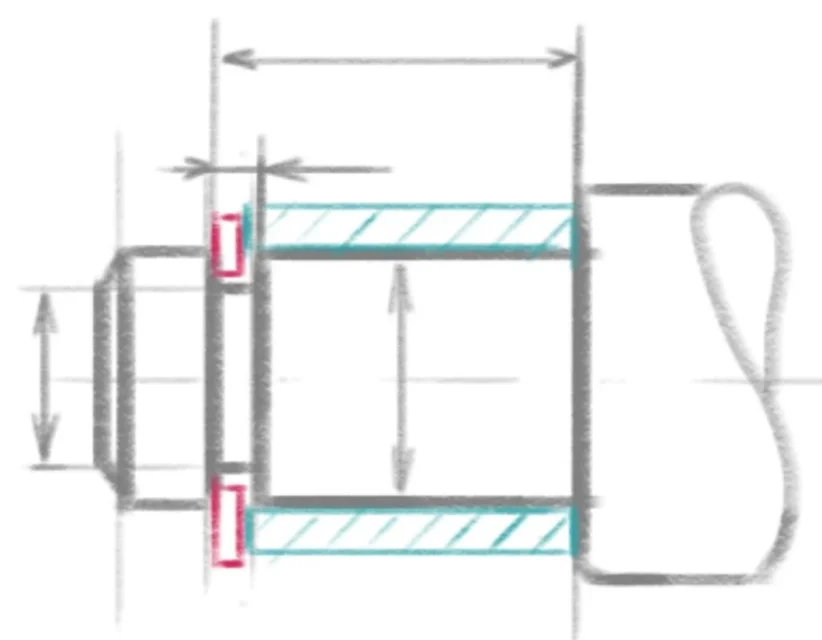
if you use autodesk software which is free and also runs on the phone (made with huawei p20lite) you can make very beautiful, realistic designs, with simple tools ... and then you quota so the seat of a seeger.Screenshot_20200509_211816.jpgand there go symmetry axes to the pieces of revolution.
 
Last edited:
symbols of roughness must be standardized and not at home or wherever you want. the tip insists on the side to work.Screenshot_20200509_215325.webpdirectly....or with referral arrow.
 
there are many things to say in these drawings, from the fact that you read little and bad, from the fact that the vertical nn quotas you can write a little to the right and a little left of the lessons of quota nee, but I design you always read by turning the head of 90 degrees anticlockwise... or the sheet turns 90 degrees hour.... and you have to read straight ...no subsurface.
the pulley will have hole 大40h7... the bronzine that needs to be planted will be 40r6 and hole 29 campf8 because when you plant a r6 in a h7 the hole of the bronzine is closed. and the tree will be 大29h7 or g6.
i seeger are listed on the useful side because the quarry is wider than the seeger and if the quoti on the wrong side dances in it (what written and rewritten also on the forum).
just because you're one who doesn't throw sheets... .
if you use autodesk software which is free and also runs on the phone (made with huawei p20lite) you can make very beautiful, realistic designs, with simple tools ... and then you quota so the seat of a seeger.View attachment 57697and there go symmetry axes to the pieces of revolution.
the bronzine is contact with seeger and shouldering.
the seeger is pushed all to the left of his quarry. to the right has air.Screenshot_20200510_083910.webp
 
other thing....if the tree has 大g6 I would say that the spacer should not be 29 camp otherwise dance too. the correct indication on the spacer hole is 大28 +0,1/+0,2.
Also you will have to do analysis of width tolerances because a spacer that should be almost zero with tolerance nothing I don't see the sense of a b11... on a 2mm... that does -0,14/-0,2... so dance a little too.
 
with regard to the shocks, including that from 39.8, unfortunately for the design we have the hands tied, in the instructions every single quota is not editable and has no nominal game, consequently to make the functional object we are forced to use games created by the conscious tolerances of being doing a real useless job for the purpose of the realization of the object.
Maybe I can't explain.
Do you realize that making a game of two tenths and imposing a 4 cents and absurd scaffolding? if I write -0,1-0,3 is functionally equal but give way to control only with the caliber. It is not a question of insecurable quotas, but of how they are managed
all you have fossilized on the contestation of hand-made design, but that is the last of the problems of those drawings
 
Maybe I can't explain.
Do you realize that making a game of two tenths and imposing a 4 cents and absurd scaffolding? if I write -0,1-0,3 is functionally equal but give way to control only with the caliber. It is not a question of insecurable quotas, but of how they are managed
all you have fossilized on the contestation of hand-made design, but that is the last of the problems of those drawings
you are right massivonweizen, but a design must:
- be geometrically correct
- be mechanically correct and functional
- have representation of correct symbols and words
- be quoted dimensionally and geometrically correctly

in fact there are indications on geometric tolerances from cents and thousandths with dimensional tolerance of tenths.... therefore discrepancy of precision and accuracy.

then there is always the problem that teachers assign to him the exercises done in a certain way that are not adherent to the real world.... we know it well unfortunately.... and the students find themselves with the hands tied because so it is imposed.


other thing still abnormal:
pulley width 40b8 = 39,791÷39,83 mm
Space width = 2b8 = 1,846÷1.86 mm
minimum and maximum = 41,637÷41,69 mm

the tree is 60g6 long.... what goes on mounted to make the package? There are 19mm names dancing.

Boh.

However also the linear measures I must follow the basic hole rule or base tree....someone must be zero to not go crazy to control tolerances.
 
I see that compared to your colleague you left the discussion.
I refer you to what the project is so much the same. Maybe compare yourself to each other.
 
I'll be late for a few notes.
Datethe rules. it is not that you can put the reference where it seems and likes.
so no, you cannot put datum on geometric tolerances1589200101051.webp
concentricity and coaxialityI still have a hard time understanding why we are going to use these geometric tolerances.
use them without binding also a tolerance of rotondity is not correct, since this tolerance of per se does not bind a circular profile.
this without counting that it is a tolerance that to be properly controlled needs a numerical control measuring instrument.
without taking into account that concentric/coaxial tolerance is always less than or equal to total run-out

see if these images can clarify (the 3 "square" arrows at the bottom of the image indicate the possible movements of the measuring machine)
1589201404715.webp1589201448597.webp
Run-outas from above image, it is possible to tolerate a surface that is not "theoretically" arranged along the rotation axis of the datum
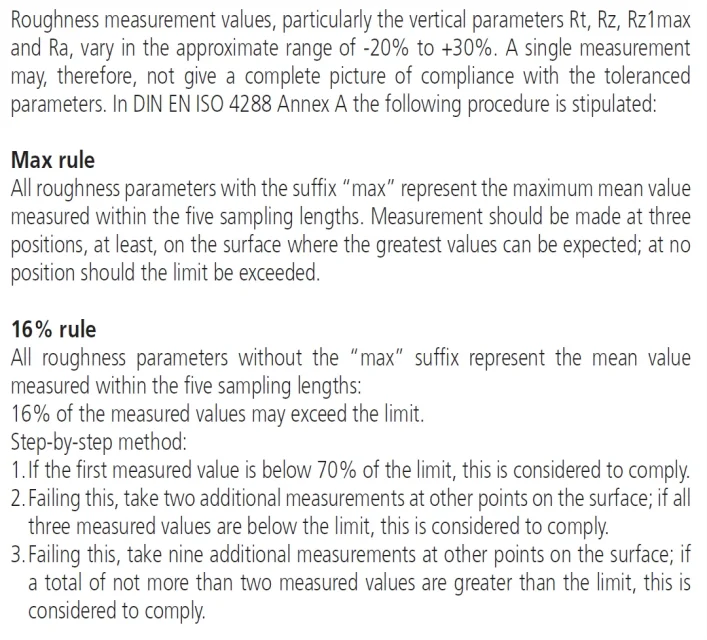
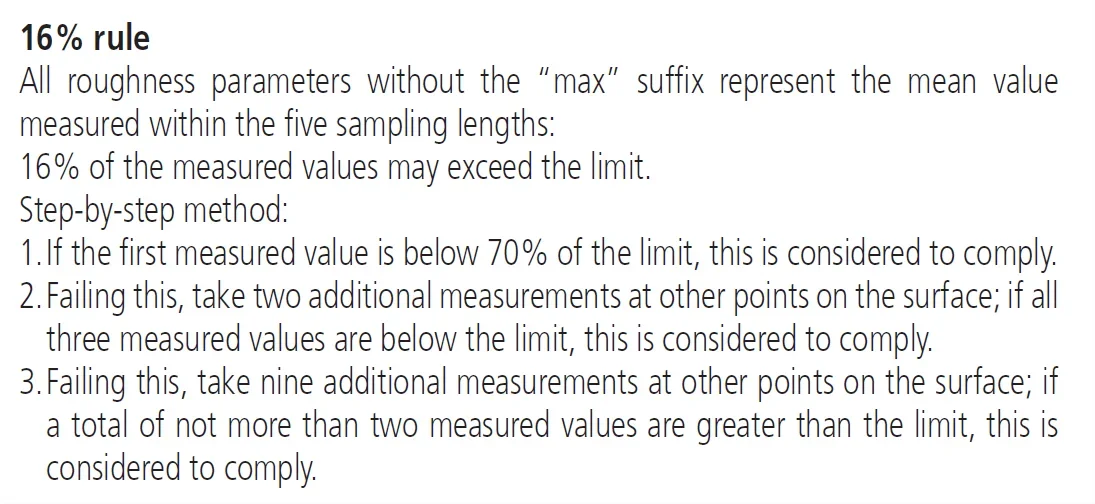
roughnessAlways remember that the rule in the absence of the max suffix regulates a specific procedure for calculating roughness.
1589202198334.webp
 

Attachments

  • 1589202129050.webp
    1589202129050.webp
    77.9 KB · Views: 52

Forum statistics

Threads
44,997
Messages
339,767
Members
4
Latest member
ibt

Members online

No members online now.
Back
Top