• This forum is the machine-generated translation of www.cad3d.it/forum1 - the Italian design community. Several terms are not translated correctly.

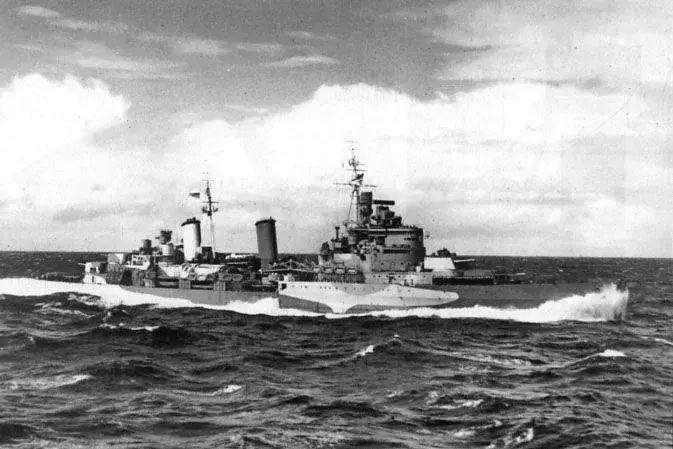
hms belfast

  • Thread starter Thread starter tecnico_plast
  • Start date Start date
Some news on the belfast.

the hms belfast belongs to the class “town” or “southampton”. at the end of World War I, the royal navy needed units to protect strategic ocean interests. Thus between 1928 and 1936 they entered service heavy cruisers class “kent” (13 units) and light type “leander”, “perth” and “arethusa”.
Following the many times mentioned treaties of Washington of 22 and 30, the maximum displacement for cruisers was fixed in 10000 tons. the distinction between light and heavy, was based exclusively on the caliber of the artillery (155 or 203 mm).
all the marines adapted and placed in the yard units that respected more or less, this limit. The Japanese “mogamists”, the American “brooklyn” and the Italians “garibaldi” and “duca degli abruzzi”.
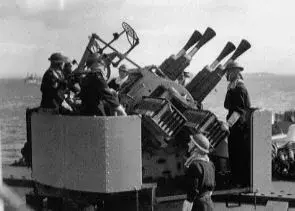
the British leadership adapted and set the “southamptons” whose project was inspired by the previous “perths” although the differences were remarkable at the level of protection (114 mm to the belt against 70) and armor. They could count on four 152/50 mkxxii trinate towers and four 102/45 anti-aircraft plants. Moreover, always with anti-aircraft functions, they had two quadruple “pom-poms” of 40 mm and 8 12.7 mitral.
during the conflict then they were embarked on a 20 mm “oerlikon” machine and further weapons of 40 mm. completed the equipment, two plants launches 533 mm drilled torpedoes and two “walrus” waterplants launched with a fixed transversal catapult.
the need to get the hangar for the two planes (a novelty for the English) influenced the design of the tower that is massive, with the fumaiolo inclined back, aft of the prodier tree. the motor apparatus was divided into four premises and consisted of four admiral boilers, four groups turbo gears parson, for a total of 80000 hp, which made it reach the 30 knots to the ship. the displacement was greater than 9000 tons and exceeded 12000 full load.

the probability that Europe would arrive at the conflict, a program of strengthening the royal navy. the construction of four units, then reduced and two, derived directly from the southampton class: the edinburgh and the belfast.
the belfast was set on 10 December 1936 at the harland and wolff yards of belfast and launched on 17 March 1938, entered service on 5 August 1939.
while coming from the southamptons, they were longer than 7 meters and spread 11500 tons (14400 full load). the greater length, allowed more rationally to place the ammunition deposits of the plants from 102/45 (up to six). the resulting shrinkage of the boilers and turbos, was evidenced by the different position of the fumaioli.
At first it was thought to adopt quadruple towers from 152/50 but in the end the classic trinate of southamptons upgraded to the mk xxiii version.
the edinburgh, sank on May 2, 1942 in the sea of barents during a confrontation with German units.
the belfast spent the first part of the conflict in the yard.
In fact, it was seriously damaged on 21 November 1939 when it was struck by the explosion of a mine with German influence. the mine exploded at the height of the prora boiler room. the damage suffered caused the flooding of numerous premises, serious injuries to the bases of the turbines of the local prora machines and, above all, the distortion of the keel.
The idea, initially taken into account, of the demolition of the unit, went on to long repair works (before turned to rosyth and then to devonport). damage was so serious that repairs lasted three years during which important changes were also made to improve the underwater protection. electronic equipment and anti-aircraft weapons were also upgraded.

on December 26, 1943, along with the battleship “duke of york” and the cruisers “norfolk, sheffield and jamaica”, intercepts the German battlecruiser “scharnhorst” which, after a long fight, is sunk several tens of miles to the north end.
Later, after escorting the carriers whose aircraft boarded attacked the battleship “tirpitz”, the belfast took part in the naval operations of the landing in Normandy, bombing German positions in the ver sur mer area.

a subsequent cycle of work was carried out between July 44 and April 45. hydroplane landings and relative catapults were landed in place of hangar housing, canteens and recreational areas for the crew. a crane was landed and repositioned the other. 102/45 poppieri plants were removed and anti-aircraft weapons were shipped from 40 and 20 mm.
So we arrive in 1956 when the belfast enters the yard again at the Devonport arsenal to stay until 59. in this phase the belfast assumes the look that it has today. windows were closed and sealed to operate under nbc protection conditions, installed air conditioning systems and a water jet plant for external decontamination from radioactivity. on two new trellis trees were placed the renewed electronic equipment while the ladder tubes were disembarked together with the smaller anti-aircraft armament replaced by six binati bofors mk v from 40/60 mm. the crew had showers, toilets and cots instead of the ancient hammocks.

disused in 1963 it seemed destined to demolition, but, thanks to a campaign organized by a private body, and to the pressures of Admiral Sir morgan-giles, former commander of the ship, was transformed and transferred to the museum on March 1, 1978, moored on the tamigi, near the tower bridge.
After the transfer to London, the belfast was dried twice to carry out repairs that allowed long-term storage. in 1982 repairs were made at tilbury and in June 1999 at portsmouth. the first revision involved cleaning and sanding of the hull, inspection of welds and an ultrasound test looking for cracks.
Later, the belfast was also repainted following a mimicry scheme officially known as admiralty disruptive camouflage type 25, identical to what the ship had in the period between November 1942 and July 1944.
 

Attachments

  • Town.webp
    Town.webp
    47.3 KB · Views: 4
  • pom pom.webp
    pom pom.webp
    11 KB · Views: 3
Last edited:
mine to influence... would be magnetic? Why not make a chapter upstairs and below these? you could throw in even modern types of torpedoes, philitis, etc...
I had talked about it quite extensively from post 433 to 436 above and under the waves but may have escaped you.
speak in depth of modern torpedoes, it is not so easy. many info as you will understand, are covered by a thick layer of confidentiality.
I will see some more information on weapons, especially mines, used during the First World War.
mines with influence are mines precisely to "magnetic influence".
quickly you can distinguish:
- mines to anchor,
- magnetic flu
the first consist essentially of a case (usually spherical) containing a certain amount of explosives, anchored to the bottom by a dead body to which it is connected through a steel cable.
the explosion occurs if a ship hits it, or, in the antenna types, if the ship passes it over bumping a copper wire antenna attached to it. being immersed in a few meters of depth, the deflagration assures important damage to the hull of the ship.
Influence mines, generally cylindrical, are instead placed directly on the bottom. When a ship passes above them, their activation device "free" magnetic mass, noise, or pressure change, explode.
 

Attachments

  • Mina giapponese.webp
    Mina giapponese.webp
    53.5 KB · Views: 1
  • mina magnetica.webp
    mina magnetica.webp
    58.2 KB · Views: 1
Last edited:
I have heard of German mines with magnetic influence that if I understood well once detected the presence of a ship they threw away from the dead body and in the trajectory to go back to the ship, exploding at the optimal distance to cause damage.
 
mine to influence... would be magnetic? Why not make a chapter upstairs and below these? you could throw in even modern types of torpedoes, philitis, etc...
I have heard of German mines with magnetic influence that if I understood well once detected the presence of a ship they threw away from the dead body and in the trajectory to go back to the ship, exploding at the optimal distance to cause damage.
Okay, I give up. .
I found how to spend the afternoon.
 
I have heard of German mines with magnetic influence that if I understood well once detected the presence of a ship they threw away from the dead body and in the trajectory to go back to the ship, exploding at the optimal distance to cause damage.
Not only but they chase you, so when it explodes you can't know where the minefield was.
 
publish it:
so maybe you even make a lot of money, at the bottom of the book you put one or more pages with bibliographic notes......
bye:
 
publish it:
so maybe you even make a lot of money, at the bottom of the book you put one or more pages with bibliographic notes......
bye:
if this had been the intention I would not have written (and I would not continue to do so) on the forum.
think how many potential customers I burned myself:
I am evaluating whether to make it available to everyone or, send it to those interested.
are 5 chapters for a total of almost 500 pages. . .
 
if this had been the intention I would not have written (and I would not continue to do so) on the forum.
think how many potential customers I burned myself:
I am evaluating whether to make it available to everyone or, send it to those interested.
are 5 chapters for a total of almost 500 pages. . .
If you're going to make it public, you still have a creative commons license. there is anceh the possibility to publish a book and simultaneously make it available free of charge in pdf or ebook, so that whoever wants to download it and who does not want to print it and prefers a nice book relegated if he buys it. some use this system.
For example:http://www.lululu.com/product/a-cop...di-edi-edi-edi-edi-20110329-standard/15359979downloads are free, the paid book.

Try to see if this can be interesting even economically. I don't know exactly how to work.

cmq, my mother published a small book of dialect poems through a local typography, but practically gave them to friends and acquaintances (it will have sold about twenty out of 100 printed minimums), but just for satisfaction!:biggrin:

The important thing is that you have everything for good saved...:finger: then, if you want, consider me "interested", but it would be very nice that there was also the possibility to save all the discussion, photos and interventions included, so as to see how "born and lived" the story... saving the discussion with the "printable form" option is inadequate and I'm still a tot of pages... ! ! !
Who knows if administrator can do something... Sandra? Gianni? You know how? :confused:
 

Forum statistics

Threads
44,997
Messages
339,767
Members
4
Latest member
ibt

Members online

No members online now.
Back
Top