
I have always had a doubt about this type of scanner: about objects that need to be scanned around us, what kind of precision do they have on the overall form? If I walk around a round column, can the scan come out oval?Hello thanks for the answer.
Perhaps with an example I can make better understand.
in the company where we produce seats for buses and trains.
the property would like to buy this type of scanner for the acquisition of seat geometry (in frame terms, padding, structural parts etc.).
according to you such scanner could satisfy this requirement without going on much more expensive products?
Your opinion would support me.
Thank you very much
back to the point, I remembered this:hi to all, I would need a price indication regarding the scanner below:
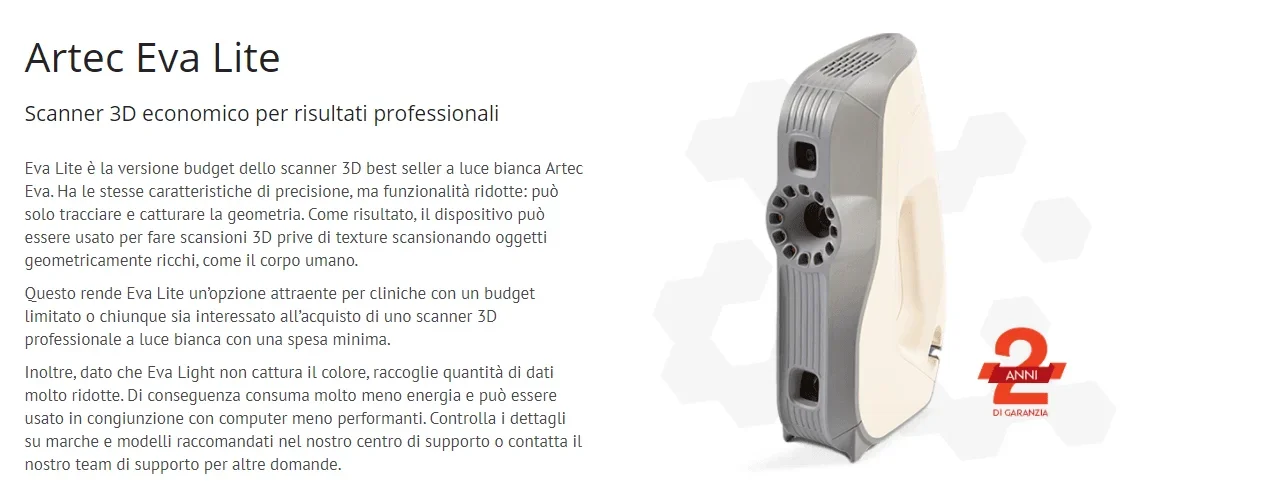
View attachment 62432do you think there is something alternative but equally valid in terms of performance?
I'm a 3d scanner neophyte.
Thank you all anyway.
I have this scanner, and for a seat, in my opinion it can be okay. as precision you are something under the millimeter, 0.5 - 0.7 obviously not good for precision mechanics objects, but for a seat I think it can go. I use it to detect composite geometries on which then create molds for couplings.. I'm fine. simple softwarehi to all, I would need a price indication regarding the scanner below:
View attachment 62432do you think there is something alternative but equally valid in terms of performance?
I'm a 3d scanner neophyte.
Thank you all anyway.
Yes, but no. It could also be that your prototype is simply a reference to the maximum, so it could be enough to overlay the cloud of points to your modeling so that it can regain its size and proportions.how much I understand the output of the scanner will be a cloud of points that, through another software (geomagic - catia - ect), must be manipulated to get surfaces and with so much patience, in the end, a solid?
Is the iter correct?