
• This forum is the machine-generated translation of www.cad3d.it/forum1 - the Italian design community. Several terms are not translated correctly.

lifting machine yes or no? when applying res part 4?

  • Thread starter Thread starter Elet88
  • Start date Start date

Elet88

Guest
Good morning to all,
I have a doubt that it has attracted me since I work with the directive. I'll be the only one, because they all liquidate it with a clear "no, it's not like this" while I always think about it.

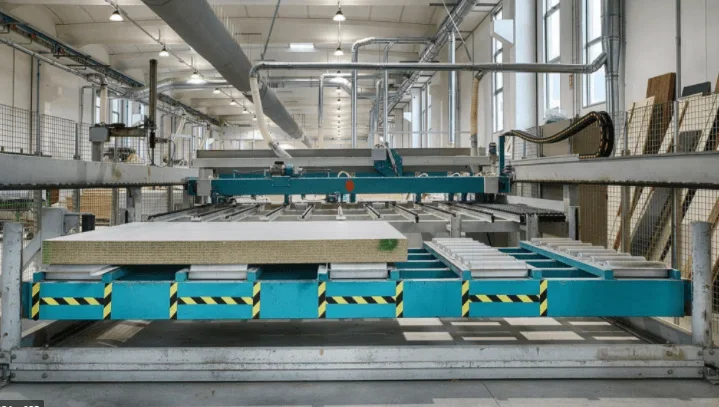
my company builds almost-machines equipped with a roller floor on which transits of the material of various types.
  • the machine receives the material on the rollers and places it at the center of the plane,
  • the rollers stop,
  • a motor lifts the inside floor on which the material is located through a series of chains/belts, and lifts it up to the free plane (on 7) according to the production process of that moment, completely autonomous,
  • the rollers are activated and the material goes away,
  • the roller plane returns down and is ready to load other material and lift it up.
here all tell me that this is not the case in which the res of paragraph 4 are applied despite speaking of defined plans, lifting operations in a given period, etc...

the same applies to trolleys (machines) that lift/low loads on a lifting platform (some are electric, other manuals with a pedal and a hydraulic circuit).

What do you say?

Thank you.
 
Last edited:
il guru qui è @gerod But I try to say mine.

from how you describe it, your machine is a machine because it has a very determined application (it also has to move objects from point to point b). It is not an almost machine, and define it as an abuse.
If it is a machine, the applicable res must be met. Everyone.

What does Res 4 say? that the machine must be stable (4.1.2.1), that it should not be broken (4.1.2.3), that actuators should not go away (4.1.2.6, but also any other rule on drives). so do not get point 4 means making a car that does not work. What's the problem?
 
If your machine also includes the plans I think it is not the subject of point 4.
if you go to the comment § 344 you will understand why:
Machines connecting defined floors are machines intended to move goods, persons or goods and persons between predetermined floors or levels of a building, construction or structure. The machines connecting defined floors include, for example, lifts, building lifts for goods and people, lifts connected to machines such as tower cranes or wind turbines, to access workplaces, domestic lifts, lifting platforms for people with reduced mobility and lifts.
then I agree with @fulvio Roman (thank you for the guru) that the res of point 4 get them by complying with those of point 1.
I for elevators, machines that lift and move of quota objects, I never applied it. paradoxically, that point should also be applied to robots, etc.
It's not almost a car for me, too.
read the guidelines and you will see that you find the solution
 
Last edited:
Good morning to all,
I have a doubt that it has attracted me since I work with the directive. I'll be the only one, because they all liquidate it with a clear "no, it's not like this" while I always think about it.

my company builds almost-machines equipped with a roller floor on which transits of the material of various types.
  • the machine receives the material on the rollers and places it at the center of the plane,
  • the rollers stop,
  • a motor lifts the inside floor on which the material is located through a series of chains/belts, and lifts it up to the free plane (on 7) according to the production process of that moment, completely autonomous,
  • the rollers are activated and the material goes away,
  • the roller plane returns down and is ready to load other material and lift it up.
here all tell me that this is not the case in which the res of paragraph 4 are applied despite speaking of defined plans, lifting operations in a given period, etc...

the same applies to trolleys (machines) that lift/low loads on a lifting platform (some are electric, other manuals with a pedal and a hydraulic circuit).

What do you say?

Thank you.
from how you speak it looks like an automatic palletizer/magnet...the working area is interrupted in the human presence I imagine
 
If your machine also includes the plans I think it is not the subject of point 4.
if you go to the comment § 344 you will understand why:
I didn't interpret it as a whirlpool, but as a magazine, like that of the setiators. load the package on a roller coaster, this moves to quota ribbons and from there a transfer brings them to the cutting plane. on such a machine according to me point 4 applies.1601965793509.webp
paradoxically, that point should also be applied to robots, etc.
robots have a standard of type and dedicated to them that enters the merit. I would not go to interpret the directive in this case.
 
I didn't interpret it as a whirlpool, but as a magazine, like that of the setiators. load the package on a roller coaster, this moves to quota ribbons and from there a transfer brings them to the cutting plane. on such a machine according to me point 4 applies.
lifting means bringing a load from one quota to another.
load and lift have different meanings.
We are perhaps talking about goat wool and guidelines certainly do not clarify.
If so any machine moving a load on the vertical axis is lifting machine. the guidelines exclude only the machines that work continuously (cf. "at a certain time") and which do not move loads outside the machine.
robots have a standard of type and dedicated to them that enters the merit. I would not go to interpret the directive in this case.
automatic warehouses also have a standard of type c!
It is a matter of understanding whether the applicable res are complying with the standard c.
certainly is an interesting topic that should be studied.
Hi.
 
lifting means bringing a load from one quota to another.
load and lift have different meanings.
We are perhaps talking about goat wool and guidelines certainly do not clarify.
If so any machine moving a load on the vertical axis is lifting machine. the guidelines exclude only the machines that work continuously (cf. "at a certain time") and which do not move loads outside the machine.

automatic warehouses also have a standard of type c!
It is a matter of understanding whether the applicable res are complying with the standard c.
certainly is an interesting topic that should be studied.
Hi.
When I say you're a guru, it's not like I say it randomly.
 
Thank you.
the topic is however interesting because it trains the mind!
but who started the discussion will give us other feedback?
You finally tell us what car it is? How is it made?
 
Here I am. Sorry I'm late, but I couldn't access yesterday. to answer some questions:

- You know a ceramic lynx? a press size of the squares (tiles), these tiles should be baked to be cooked. the oven however has many floors (7) so as to load a greater amount of tiles.

- the almost-machine will be integrated into a ceramic line, and lifts the tiles (produced earlier by the press) to bake them in the first free floor that finds in the oven that cooks the tiles (the oven is owned by the customer).
this almost-machine non integrates the various floors (which are part of the oven) but only lifts the tiles and sends them to the oven through rollers.
the concept of the quasi-machine is simple: consists of a frame and a roller conveyor that is lifted by a motor (belts, pulleys, etc...). everything is wrapped in a monitored access protection network.

Could it be compared to a hoist? I don't think: the car is interception access.

- the working cycle, as you can guess, is entirely automatic. works continuously (the tiles arrive on the rollers, and she raises them to bake them in the first floor free which she finds) but it is not a continuous work as can be that of a mobile scale (which turns incessantly). in my case, the lifting of the roller coaster must stop to allow to bake the tiles, the roller coaster returns to the "ground floor" and receives new tiles to bake to a different floor.

- this is an almost-machine since it is not expected that you work outside a well-defined ceramic line (for example you can't place it in front of the house and use it to move boxes from one floor to another) but must be placed between a line that bakes tiles and a ceramic oven (other almost-machines; the final machine is the complete ceramic line because we also talk about wiring, logic emergencies, etc...).

however interesting the statement of @gerod:
"saving means carrying a load from one quota to another.
load and lift have different meanings. "

Now, if my machine carries a load (plants) from quota x to quota y, lift. However, being well defined its purpose (Charging the oven) is no longer understood as a lifting but a loading? Is that what you mean?

However, my almost-machine, in addition to the "§327 field of application of part 4" of the guideline, is cited by the definitions of 4.1.1:

(a) lifting operations: operation of displacement of load units consisting of things and/or people who need, at a certain time, a change of level.tiles, at a certain time, are raised. Or maybe the hippo is right here? is not "in a certain moment" but a continuous operation? (because it does not happen a couple of times a day but with a frequency of 6 times a minute).(b) 'guided load': load of which the entire shift takes place along rigid or flexible guides, whose position in the space is determined by fixed points.the roller conveyor (loading plane) is lifted by the straps; the roller conveyor moves along rigid guides (wheels along the sliding routes). Maybe there's the other catch? or that the operation must be referred to the load itself and not to the load plane (roller)? But in the definition of "lifting operation" we talk about "things and/or people", and I think that a person does not like to be chained to be lifted, but prefer to use a lifting plan.(g) Load support: part of the machine on which or where people and/or things are supported to be lifted.here we return to what I wrote on point b: the load support is there (roller) so the res 4 can also be applied to a load that is not "affirmed" directly (e.g. chained).At this point I am curious about one thing: what machine would you apply res 4 to? ?
 
Last edited:
- this is an almost-machine since it is not expected that you work outside a well-defined ceramic line (for example you can't place it in front of the house and use it to move boxes from one floor to another) but must be placed between a line that bakes tiles and a ceramic oven (other almost-machines; the final machine is the complete ceramic line because we also talk about wiring, logic emergencies, etc...).
this is a machine for the reason you say, that is because it has a well defined application, that is to raise ceramic tiles between a press and an oven.

the "machine" system can be constituted by several machines or almostmachines that constitute it.
there would then be to discuss whether the plant is a machine (it must comply with three parameters that I think are not respected here), but this is another story.
(a) lifting operations: operation of displacement of load units consisting of things and/or people who need, at a certain time, a change of level.tiles, at a certain time, are raised. Or maybe the hippo is right here? is not "in a certain moment" but a continuous operation? (because it does not happen a couple of times a day but with a frequency of 6 times a minute).
the "determined moment" is after the press cut them. It is not a continuous operation at all. It is not a matter of frequency, it is a matter of logic of operation that serves to discriminate machines to continuous operation (rulliere, coclee, etc.) that ignore the state of the process from machines to batch operation that instead have to activate certain sequences according to the state of the process about which in some way must be informed.
and how they are informed (consensus or command?) that discriminates one of the three parameters that distinguish a "set of machines" from "machines working together but not a set". and therefore if the plant must be considered machine or not.

in conclusion for me the res of point 4 must be applied
 
I agree with you except for this:
This is a car for the reason you say,
as the directive says:
"almost-machines": sets that make up almost one
machine, but that, alone, are not able to guarantee
a very determined application. a drive system
It's almost a machine. the almost-machines are
only intended to be incorporated or assembled to
other machines or other machines or appliances
a machine governed by this Directive;
that it is an almost-machine I do not question it because it cannot be taken and used but someone (client) must complete the missing res emerged from the relevant technical statement + risk assessment (e.g. front and back is open, and if you put one the tile on it or is crushed by the lifting). what would be the parameters that the plant (machine) do not think respect?

remain waiting to hear the guru in the light of new information;)
 
I agree with you except for this:
as the directive says:
"almost-machines": sets that make up almost one
machine, but that, alone, are not able to guarantee
a very determined application. a drive system
It's almost a machine. the almost-machines are
only intended to be incorporated or assembled to
other machines or other machines or appliances
a machine governed by this Directive;
that it is an almost-machine I do not question it because it cannot be taken and used but someone (client) must complete the missing res emerged from the relevant technical statement + risk assessment (e.g. front and back is open, and if you put one the tile on it or is crushed by the lifting).
Forgive me, but absolutely not.
the concept is that " alone I am not able to guarantee a well determined application". your machine instead takes the tiles from point to point b, so the application is determined hereme.
where is it written that if you can't respect all the res and then it's almost machine? I do not think that this concept is present in the directive. and the fact that you cannot satisfy all the res (although the machine is free of shelter because it uses those of the plant, which is a classic) does not make it almost machine because it is not provided by the directive.

an industrial robot is almost a machine, because you buy it, turn it on and it does absolutely nothing. You have to mount an end effector and you have to write software to him, then it becomes a machine.
a "drive system" is an almost machine (although in reality the guidelines better describe this border line situation) because it moves something without knowing well what until you complete the machine.
practically almost machines are limited to these two examples, I see daily declared stuff almost machine but that is widely disputed.
what would be the parameters that the plant (machine) do not think respect?
I don't want to mess with you. I answer this question, but it is a different concept than the previous point.
suppose to have a sequence of machines, the first loads the tiles, the second informs them, the third paints them, the fourth the can. It's just an example.
I would like to say that each of these machines has had a complete iter and therefore have a technical file, a declaration of conformity and marking.

question, is the plant overall machine? must also have an iter there? must you have your declaration of conformity and your marking?

depends on whether the machines have a solid functioning (you can refer to paragraph 38 of the guidelines). so that they have a solid functioning they must at the same time meet the three requirements below:
1. the constitutive units are mounted together in order to fulfil a common function;
2. the units are connected functionally so that the operation of each directly affects the functioning of the other units or as a whole
3. units have a common command system.

here falls the donkey in practically all the advice I've done. in the example the units are not at all times to a common function, because the function is not "make the tiles", but, cut them, cook them, move them and box them. are separate functions that do not have a close functional connection. It shows the fact that if you wanted to box tiles not painted or not cooked I could do it. It would be a commercial countersensus, but technically I could.
Does the operation of a machine affect others? I'd say no. the oven for example also works empty, so its operation is not affected by the charger. who laughs at it is only the finished product.
Finally, what is a command system? command systems are those of 13849, which refers to a thousand other rules, but the list is always that. a start, a restart, a stop, an emergency fungus. These are commands. the power switch is not a command. So, is there a button that starts all the machines? attention, I didn't say "there's a button that if pressed starts the whole cycle," is a very different thing. If I have a button whose contact for example is reported on the different machines, then I have a common command system. if instead I have to feed and start all the machines individually, at that point all the machines are started, but still waiting for a consensus (for example the photocell that sees the tiles enter), well, that is not a common command system, but only a system of consents.

At this point I ask you, in this system so designed, is it mandatory to mark there the whole plant making it machine?
the answer is no, you can do it, but it is not obligatory because, and the guidelines say, the machines do not have a solid functioning, but they are "a group of machines connected to each other, but in which each machine works independently from the others".
In this case, the only thing that is necessary to do (at the expense of the manufacturer by means of a machine directive, or by the employer, for example by means of Annex v of tu81) is to check whether there are risks arising from dangers arising from the fact of putting the machines behind each other.
I give you an example to clarify this last concept. If I take a roller coaster (which is obviously also a machine, although almost all suppliers will declare it almost machine), it is sure because it respects all the res. if I take another equal to the put at 200mm from the first, it is also safe, but a new danger arises, that if I put myself in the middle of the two rollers I could be crushed by what passes on it.

They are concepts to chew and digest, so if something is unclear tell me.
 
Last edited by a moderator:
dear fulvio, first of all thank you for all these clarifications. I'm waiting to take courses on this... but they never come. I have some support to ask, but I am doing everything self-taught and, as you can imagine, not always everything is clear and simple. study as much as you want, but without a comparison.. .

returning to your explanation: Yes, it's hard to digest.
but why do we say that they are almost-machines?

you can not feed and use qm outside a plant (it is forbidden by the manual and lacks the computer that manages it), but you have to insert it into a plant or it will not work (it does not receive the consents, the sensors are not connected, etc...).

now, an overview for your doubts about the machine (line):
  • the set of qm that make up the line (1) (from after the furnace press) is managed by a computer; this together forms the machine (marked c) which is formed by all qm. has its commands (start stop emergency ...)
  • I add, just for completeness: the set of qm that make up the line (2) (from the oven to the polish that paint the tiles) is managed by a computer; this together forms the machine (marked c) which is formed by all qm. has its commands (start stop emergency ...)
  • press, oven, and polish is produced and managed by others
each line therefore has its commands, its computer, the emergencies that arrest it, and it is end to itself.

taking your question:
"where is it written that if you can't respect all the res and then it's almost machine? "​
here I did not say a correct thing, but certainly if I have a qm, once inserted in a plant to form the final machine, it goes completely recertificated and then the res that my qm did not comply now must comply with them.
As you have noticed, the line is a machine but does not respect all the res if it is not placed between an oven and a press (here we return to your example of the two rollers, in fact beginning and end of the machine (line) have a residual risk of crushing). However, when the set is assembled, the risks are practically null.

also the press that manufactures tiles is declared qm since it must be inserted between 2 qm (one before charging raw material, and one after turning it 180° in anticipation of cooking in the oven). These 3 qm (of three different manufacturers, one is us) form the final machine (ce) which can work alone despite the dangers it presents and the obligation to enter it in a given context (before line 1).

returning to all qm that make up the line (machine) and according to the section 38 of the guide, the qm that make up the line:
  • are assembled together to perform the production of a given product;
  • are connected so that the operation of one acts on the others (of course yes. example: if the oven freezes, the fork machine - the original topic object - no longer loads the oven, the line slows down until it stops and the press no longer produces);
  • have a common command system (the central computer)
If these qm do not work independently, the set is a machine.

=== in addition to this, remains to be clarified if the lifting operation on the tile lift involves the res 4 ==
 
Last edited:
I do not want to insist, even because it is an unequal struggle. there are people who still today think that if it breaks the engine and sells it separately can even declare that the object is not a machine (incidentally who wrote the directive had to write: "or intended to be equipped" just to go against these tricks)
you can not feed and use qm outside a plant (it is forbidden by the manual and lacks the computer that manages it), but you have to insert it into a plant or it will not work (it does not receive the consents, the sensors are not connected, etc...).
This is your (though common) interpretation. always think of the industrial robot. that is almost a machine because if you turn it on, it remains still, not because there is written so on the manual or because if you do not give it the consents do not depart (just give it to him, even by hand, no?).

You must reason from the point of view of the principle. the almost machine is born for a very precise reason. If I cannot make a machine safe not for a technical difficulty, but precisely because the dangers are not defined, then the concept of almost machine comes to me. example? always with the robots because I am congenital. a small industrial robot with payload 3kg and all padded has residual risks? Come on, whatever you want it to be...then the supplement mounts us as effect endor a scalpel to dissect carcasses of animals (it really exists, I am not inventing it). how does the robot builder speculate all possible uses and all possible software errors that one can commit? Well, then that is almost a machine because the application is not defined.

in your case the application is defined. point. that thing there treats tiles, not tree trunks or pig carcasses, but only tiles, you wrote it in the manual, didn't you? and what are you doing with these tiles? takes them from to and brings them to b. more defined than so.
now, an overview for your doubts about the machine (line):
  • the set of qm that make up the line (1) (from after the furnace press) is managed by a computer; this together forms the machine (marked c) which is formed by all qm. has its commands (start stop emergency ...)
I don't have to go any further. if on the line there is also only one almost machine, this should be integrated. integration action makes machine what surrounds it. if you read well I used to make the example of only machines online.
However, when the set is assembled, the risks are practically null.
apart from the concept of zero risk does not exist, but that risks are practically null who says so? You? and how? with the Iter ce? You did the car. Since I was right? :
are connected so that the operation of one acts on the others (of course yes. example: if the oven freezes, the fork machine - the original topic object - no longer loads the oven, the line slows down until it stops and the press no longer produces);
Of course, yes. Don't change words. the text says (the capitals are mine):
the constitutive units are connected in a functional way so that the operation of each unit directly affects the functioning of other units or of the whole, and therefore a risk assessment is necessary for the whole;
The two of your units are totally independent. so independent that they need an electrical consent so that one knows what the other does. do not confuse a machine that does not work with a process that begins to work badly. If the oven breaks you must stop the elevator not because it has problems working, but only to control the process. if he kept working what would happen? that the tiles would clutter and fall? and does it look like a problem to your car or trial?

the focus of the directive, read it in the last sentence, is always the risk. If I have a functional connection between two units I can have additional dangers due to this connection. if I have a banal consent that alerts the next machine of the end processing of the previous one I do not have (=I do not have, see uni en iso 12100 and therefore uni en iso 13849) no additional risk. This is precisely the sense of §38.
=== in addition to this, remains to be clarified if the lifting operation on the tile lift involves the res 4 ==
You think?
in conclusion for me the res of point 4 must be applied
then I agree with @fulvio Roman (thank you for the guru) that the res of point 4 get them by complying with those of point 1.
 
Last edited by a moderator:
You think?
Roman fulvio wrote:in conclusion for me the res of point 4 must be applied
gerod ha scritto:then I agree with @fulvio Romano (thank you for the guru) that the res of point 4 obtained them by complying with those of point 1.
fulvio excuse but I am a confused moment since the two sentences you mentioned are in contrast to each other:
  • you concluded that res 4 should be applied (as I also support).
  • @gerod supports the opposite.
@gerod, in the phrase you mentioned, it means that the res 4 already comply with res 1 and therefore, in my case, do not apply.

I always have the doubt about why they do not apply and what an example of lifting machine to which res 4 can be applied.
 
I've lost my post, sorry, but I've been reading at night lately.

briefly. guidelines do not help. Step 4 res apply to your machine only in part and those that apply are those of mechanical resistance, etc. that raises ok, from the definition of the guidelines can stand but we are talking about goat wool. If you go to see which points of § 4 you can apply, few will probably already be applied to § 1.3 (mechanical risks). End. surely you can not mark the machine with the courses, etc. that are typical of lifting machines (gru, ple, etc.). I apply § 4 for those machines and lifting accessories.
I have never applied them on such machines but those applicable are already covered by the preceding res.

on qm I fully agree with @fulvio Roman. for me qm do not exist (other than unscheduled anthropomorphic robots and some other obvious examples). qm is a para...to take less responsibility (I sell you something that is then integrated).
Here too the guidelines are nebulae but just make some reasoning to say that there would be few around, instead many manufacturers of online machines make machines with well defined applications and say that they are qm. stride the thing.
I wrote years ago an article that analyzed the guidelines and showed that they were really few qms.
Yours can't be a qm.

If you want my order organizes an 8-hour course on the machine directive in December and there will be my master as rapporteur!
Hi.
 
Good morning to all and apologize for the delay, but I was moved on a more urgent job that had to be finished within "now" since they asked me.
qm is a para...to take less responsibility (I sell you something that is then integrated).
Despite the firm insisting on this point, I agree with you. In the beginning I thought I was free, and instead, said without a turn of words, the company must stand behind. All right, let's let them do it. the road they want to keep is this and I cannot change it (dict, branch of a company, belonging to an international group. . etc... everything is bigger than me here. It would certainly be better if they clearly admit their intentions instead of keeping the "secret": I would understand more and I could not however interfere with their projects).

As for the res 4 ok, I can agree with you, but as you yourself say we speak of "the goat", and for a person like me who always tends to unbalance towards "if it is possible greater safety then adopt it, even if excessive", it is natural to move on res 4.

for the courses I return to insist. Given also the situation "tranquilla" with less work, I would say it is the right opportunity to fill presumed dead times with training courses.
 
I would like to add to the debate already well-extended.
but if the almost machines are only those that do not have a well defined purpose, as would be interpreted those machines sold without some parts that the customer provides himself to put.
I'll explain better. building machines and plants strictly on orders, I often happen that the final customer, wanting to save, wants to provide in own on some parts.
typically electrical plants, penumatics etc.; sometimes shelters and sometimes integration with existing plants.
I've been dealing with these things for many years, but I haven't found a unique answer yet.
some consultant asked says "machine without ...."; but so it is logical that in some cases all res are not satisfied.
I expect your comments.
 
I would like to add to the debate already well-extended.
but if the almost machines are only those that do not have a well defined purpose, as would be interpreted those machines sold without some parts that the customer provides himself to put.
I'll explain better. building machines and plants strictly on orders, I often happen that the final customer, wanting to save, wants to provide in own on some parts.
typically electrical plants, penumatics etc.; sometimes shelters and sometimes integration with existing plants.
I've been dealing with these things for many years, but I haven't found a unique answer yet.
some consultant asked says "machine without ...."; but so it is logical that in some cases all res are not satisfied.
I expect your comments.
I have also happened many times, for example, that the customer wanted to do for example for some fixed shelters.
My idea is:
- the manufacturer designs shelter in order to satisfy all res.
- the manufacturer does not provide shelter, but provides the specifications in detail and does not authorize the commissioning of the machine without testing.
- the customer respects the specifications in the realization of the shelter.
- the test manufacturer checks that what was installed by the customer complies with the specifications and releases the certificate of correct installation and testing.

the manual obviously brings the complete shelters, because the car is that. the fact that components are physically purchased and mounted by a manufacturer's delegate (in this case the customer) does not move the matter.
 
I would like to add to the debate already well-extended.
but if the almost machines are only those that do not have a well defined purpose, as would be interpreted those machines sold without some parts that the customer provides himself to put.
I'll explain better. building machines and plants strictly on orders, I often happen that the final customer, wanting to save, wants to provide in own on some parts.
typically electrical plants, penumatics etc.; sometimes shelters and sometimes integration with existing plants.
I've been dealing with these things for many years, but I haven't found a unique answer yet.
some consultant asked says "machine without ...."; but so it is logical that in some cases all res are not satisfied.
I expect your comments.
quoto in full what said Roman fulvio.
the iter proposed by him is what allows to obtain a technically unique object and therefore also the invoices paid to the various suppliers will be able to form a single value.
 

Forum statistics

Threads
44,997
Messages
339,767
Members
4
Latest member
ibt

Members online

No members online now.
Back
Top