Sfiligoy
Guest
I am a student of mechanical ing. I introduced myself a few months ago, but I followed you and followed you for a long time. from this community there is a lot to learn.
do you know what is why the pulleys with many teeth (and therefore high diameters) are produced only in cast iron or not in steel? among all the catalogs I have consulted (avoid to name), I have noticed the passage to the cast iron for medium-high diameters.
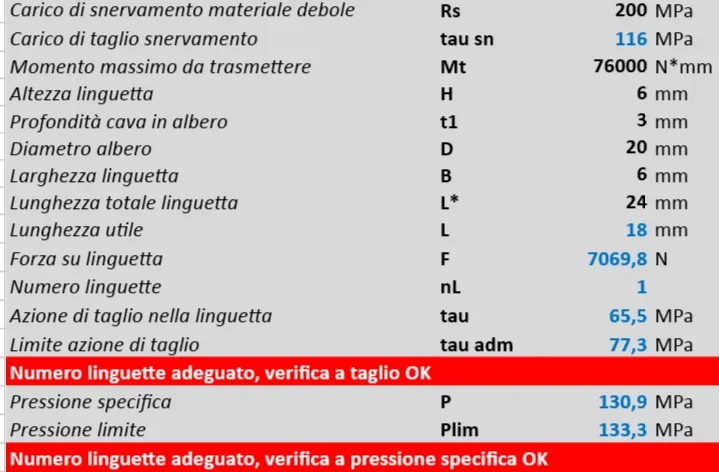
having to dimension a tab (pair 76 nm on a diameter of 20 mm), the average pressure on the hips is higher than the admissible pressure. for the cast iron I have the value of 50 mpa, which I will go down with a proper safety coeff. since that value of couple is not so reliable.
discarding the passage to the grooves, they are looking for a pulley (280 mm in diameter) in steel, so as to have a higher admissible pressure, but not found.
Thanks and good weekend.
do you know what is why the pulleys with many teeth (and therefore high diameters) are produced only in cast iron or not in steel? among all the catalogs I have consulted (avoid to name), I have noticed the passage to the cast iron for medium-high diameters.
having to dimension a tab (pair 76 nm on a diameter of 20 mm), the average pressure on the hips is higher than the admissible pressure. for the cast iron I have the value of 50 mpa, which I will go down with a proper safety coeff. since that value of couple is not so reliable.
discarding the passage to the grooves, they are looking for a pulley (280 mm in diameter) in steel, so as to have a higher admissible pressure, but not found.
Thanks and good weekend.
Last edited: