
braudo
Guest
Good morning to all,
I have to design a braking system for a hydraulic cylinder with this principle:
- before arriving at the end-race the cylinder passes in front of the hole of the oil mouth, in fact choking it
- while the hole is rubbed, the oil comes out through a meato (clearence or gap) between the piston and inner diameter of the cylinder
- the fall of delta p determines how slow the race
given to large lines the principle with which I want to perform braking, I must determine the size of the oil passage meate
during the hole chopping.
this meato (or clearance) is derived from a formula that I found on a treaty of an Indian professor
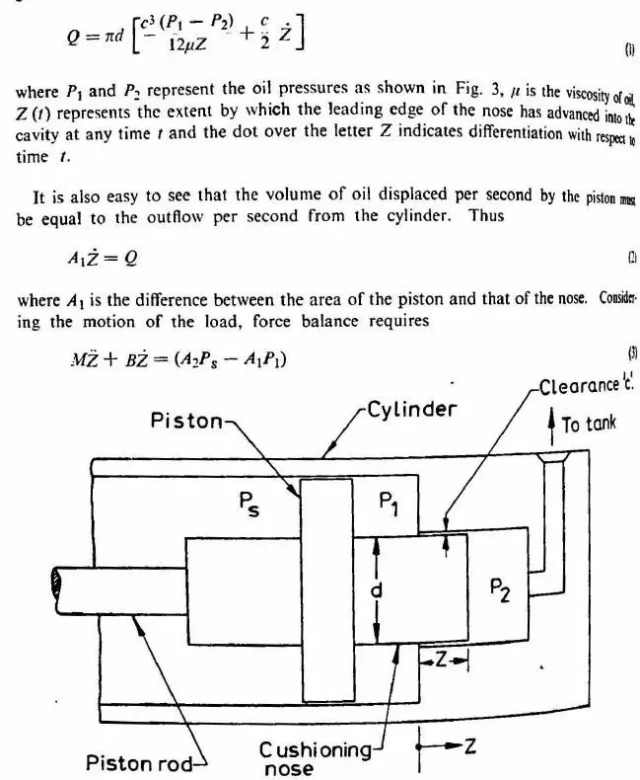 trivially, by doing the reverse formula you could get c, but unfortunately I do not have any other notions so deep of algebra
to solve the formula.
I ask anyone who has knowledge/experiences about it if I can help.
these cylinder data:
alesaggio = 63mm
cylinder stroke = 360 mm
brake stroke = 25,4 mm
pressure = 207 bar
max cylinder speed = 70 mm/sec
arrival speed = 7.25 mm/sec
output during braking = 0,882 - 2,05 l/min
thanks to who will help me.
I have to design a braking system for a hydraulic cylinder with this principle:
- before arriving at the end-race the cylinder passes in front of the hole of the oil mouth, in fact choking it
- while the hole is rubbed, the oil comes out through a meato (clearence or gap) between the piston and inner diameter of the cylinder
- the fall of delta p determines how slow the race
given to large lines the principle with which I want to perform braking, I must determine the size of the oil passage meate
during the hole chopping.
this meato (or clearance) is derived from a formula that I found on a treaty of an Indian professor
trivially, by doing the reverse formula you could get c, but unfortunately I do not have any other notions so deep of algebrato solve the formula.
I ask anyone who has knowledge/experiences about it if I can help.
these cylinder data:
alesaggio = 63mm
cylinder stroke = 360 mm
brake stroke = 25,4 mm
pressure = 207 bar
max cylinder speed = 70 mm/sec
arrival speed = 7.25 mm/sec
output during braking = 0,882 - 2,05 l/min
thanks to who will help me.
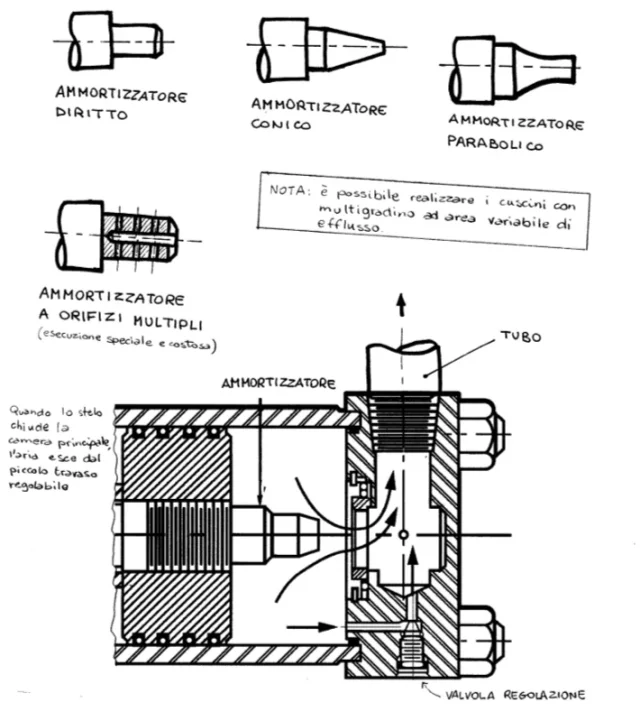
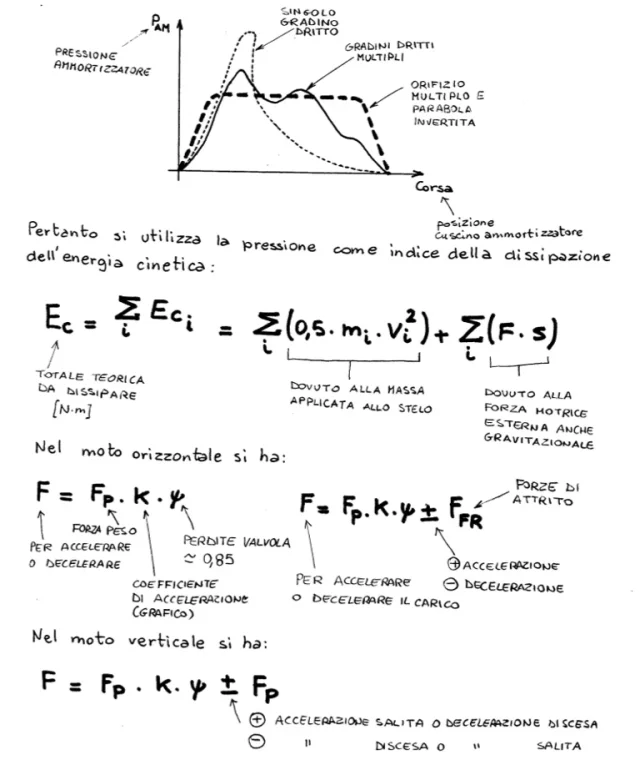
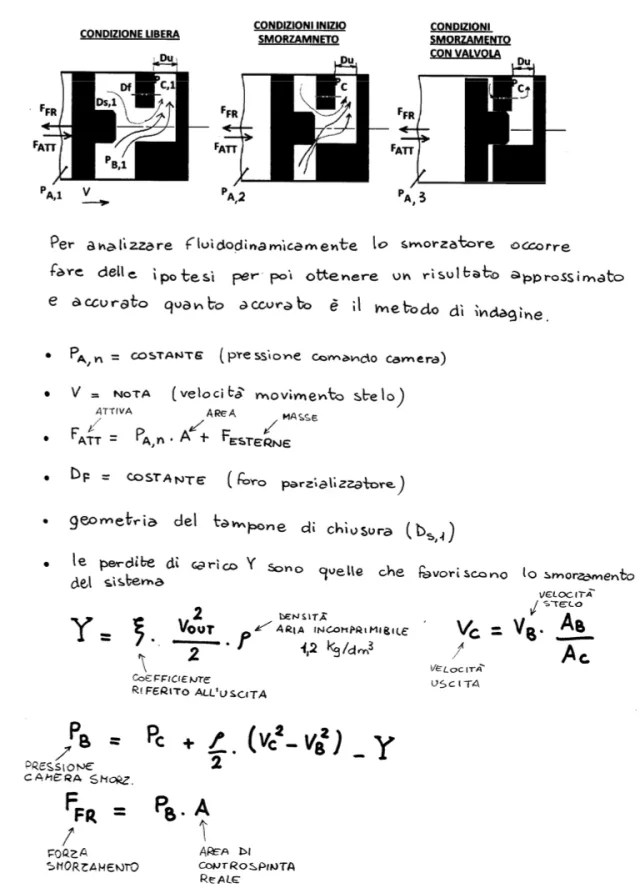

 ), while I thank you for the critical answer and for the schematic contributions you gave me and I ask you in advance to apologize if I wanted to fix as a starting point of discussion, how much I found on the net.