Mr.Plasson
Guest
Hello, everyone.
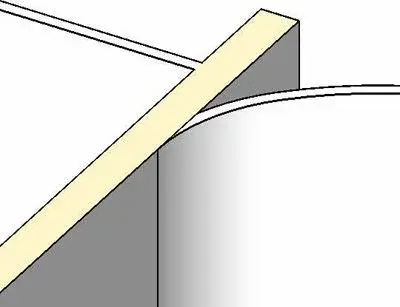
I am a beginner (I've been studying revit only for a few days helping me with the manual "autodesk revit building. complete guide" of nale and mine), I would like to understand if there is an automatic way to solve a type of junction between walls such as that represented in plant and in perspective in the attached images. It is the "tangential" junction between a straight wall and a curved wall belonging to different types. in the manual the problem is by-passed in the sense that it gives itself as implicitly solved while I find the situation represented in the images of the "first".
I intuitively solved through the "unisci geometry" command but the solution seems to me like those improvised and I wondered if there was a method, as I said above, automatic. in allplan, for example, it is possible to attribute to the various functional layers of a masonry a different "priority" that dictates the hierarchy when two walls (the same type or belonging to different types, little matter) meet. This system avoids the kind of inconveniences like what I submit to you in this specific case. Is there something like this in revit? Thank you.
I am a beginner (I've been studying revit only for a few days helping me with the manual "autodesk revit building. complete guide" of nale and mine), I would like to understand if there is an automatic way to solve a type of junction between walls such as that represented in plant and in perspective in the attached images. It is the "tangential" junction between a straight wall and a curved wall belonging to different types. in the manual the problem is by-passed in the sense that it gives itself as implicitly solved while I find the situation represented in the images of the "first".
I intuitively solved through the "unisci geometry" command but the solution seems to me like those improvised and I wondered if there was a method, as I said above, automatic. in allplan, for example, it is possible to attribute to the various functional layers of a masonry a different "priority" that dictates the hierarchy when two walls (the same type or belonging to different types, little matter) meet. This system avoids the kind of inconveniences like what I submit to you in this specific case. Is there something like this in revit? Thank you.