ecto
Guest
hello to everyone, I would have a break to submit to the forum.
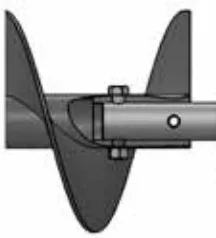
It is a coupling motor shaft with shaft duct, made by double 90° spindle, trees in aisi 304.
the motor shaft is full and is inserted into the shaft (tip of dia. external 60 mm), which introduces the holes specially paved to provide flat support to the bolt washers.
two bolts are then inserted at 90°, each consisting of:
screw m12 x 90 (accorciata in workshop at 78 mm) in aisi 304 class a2-70, flat washer under the head, flat washer at the other end and self-locking nut.
the system works for 8h, with about 10 start and stop. the speed is about 70 rpm.
bolt clamping is normally uncontrolled and should be around 100 nm.
It is clear that ideally instead of bolts two elastic thorns should be applied, so to approach the ideal case the two bolts should not be preloaded.
we come to break: about once a year the first bolt, the one closest to the end of the shaft, has the head breaking.
could be rotating bending due to the lack of straightness of the trees, or theoretical error or problem of bolt material (this last hypothesis would be to be set aside given the repeated breaks even with different screws)?
Thank you.
and everyone.
It is a coupling motor shaft with shaft duct, made by double 90° spindle, trees in aisi 304.
the motor shaft is full and is inserted into the shaft (tip of dia. external 60 mm), which introduces the holes specially paved to provide flat support to the bolt washers.
two bolts are then inserted at 90°, each consisting of:
screw m12 x 90 (accorciata in workshop at 78 mm) in aisi 304 class a2-70, flat washer under the head, flat washer at the other end and self-locking nut.
the system works for 8h, with about 10 start and stop. the speed is about 70 rpm.
bolt clamping is normally uncontrolled and should be around 100 nm.
It is clear that ideally instead of bolts two elastic thorns should be applied, so to approach the ideal case the two bolts should not be preloaded.
we come to break: about once a year the first bolt, the one closest to the end of the shaft, has the head breaking.
could be rotating bending due to the lack of straightness of the trees, or theoretical error or problem of bolt material (this last hypothesis would be to be set aside given the repeated breaks even with different screws)?
Thank you.
and everyone.