• This forum is the machine-generated translation of www.cad3d.it/forum1 - the Italian design community. Several terms are not translated correctly.

semi-axis size rally car

  • Thread starter Thread starter mareco
  • Start date Start date

mareco

Guest
Good evening, everyone!
for the construction examination of machines I have to make a sizing of a semi-axis (the short) of a renault clio 2000 group a.
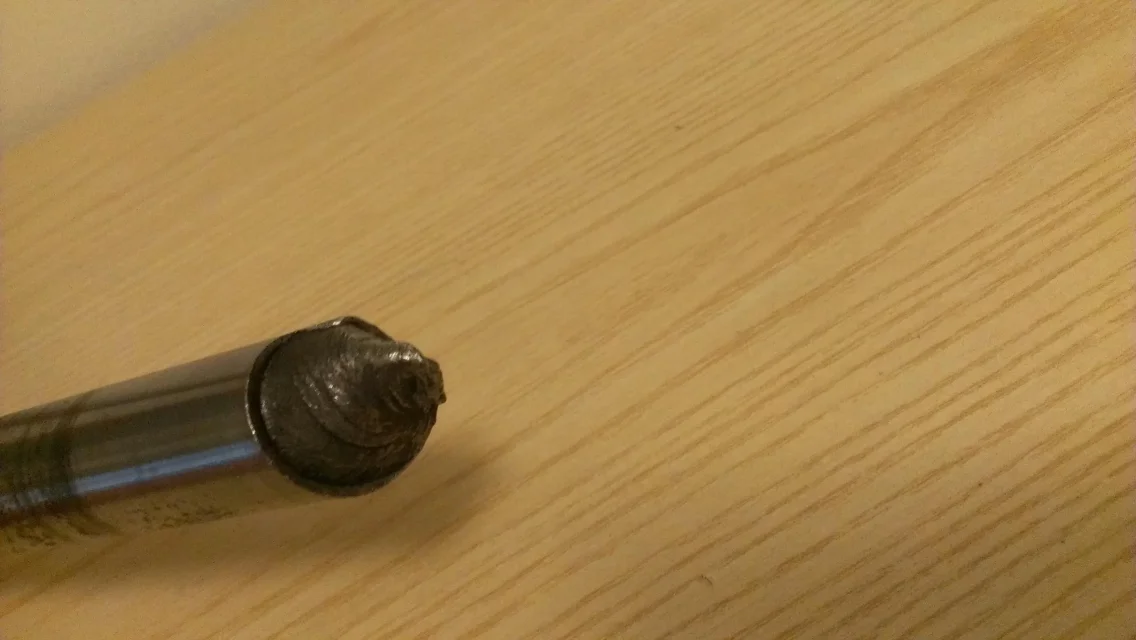
of the auto possess a broken semi-axis (with fracture type "a cone") at the beginning of the groove (I believe that side of the hub). this semi-axis lasted 3 races (about 180 km) all made on land.
about the size I have many doubts.. first of all if to consider the weight of the semi-axis, and then to make a flexo torsione or only torsion. . Could I neglect the weight of the semi-axis as it is very low compared to the forces in play?
to make torsion sizing which couple should I use in the formula? :confused:
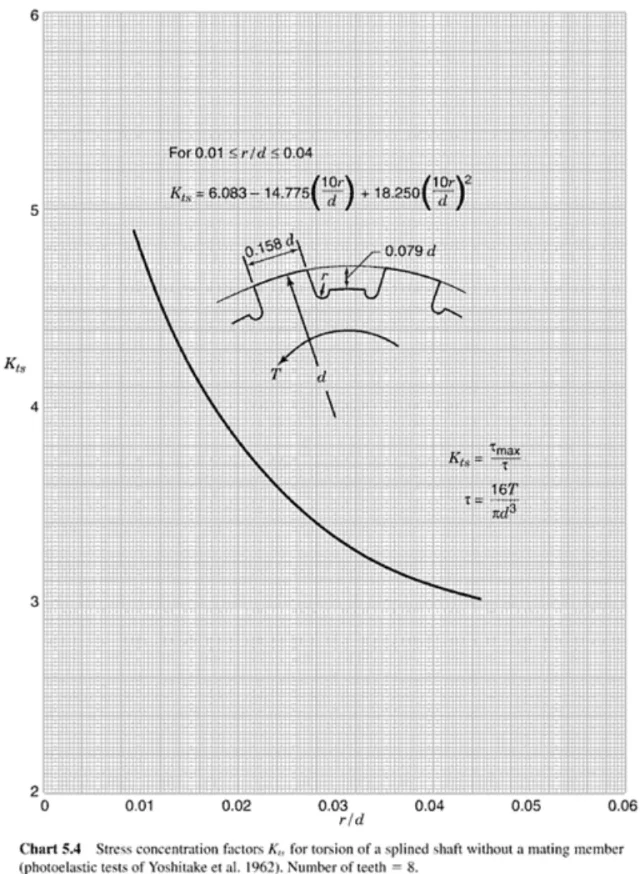
and how can I do to estimate the carving effect of the groove? I couldn't find any type of table on the cutting coefficients for grooves. .
another question is about fatigue. . making an infinite-life dimensioning for a car like this I think doesn't make sense, so I thought I was using the wohler diagram, but I have no idea how to estimate the number of cycles (what does a cycle in this case? )

thanks to anyone who will answer:redface:
 
first you have to have all the engine regimen data to determine torque and number of turns.

you must consider that first second and third are the most used marches and therefore more stressed. you have to estimate, i.e. invent a plausible cycle. to each change the couple enters suddenly due to the release of the brusque clutch, if and when used.

You have to see if the joint breaks are hard or if for too much torque, which occurs very often at the uphill start and many times it breaks just for too much torque.

for the values of carving coefficients look well on the net that you find something. possibly look on the peterson’s stress concentration factors that is the book where there are the curves that serve you.

the infinite-life dimensioning is done on the series car and not the rally car, so I would say that for three races we could be there. about wohler theoretical we are at 3000 cycles as a definition of low cycle life.

Keep in mind that on earth you have many vibrations and additional stresses also x1.5 compared to normal use.
 
If you have a groove you can use this chart for twisting.
However they are indicative curves and not exact, otherwise you should do on the single piece under review.
 

Attachments

  • wp_ss_20150711_0001.webp
    wp_ss_20150711_0001.webp
    108.8 KB · Views: 25
thanks to the "meccanicamg" response!
I have the maximum torque value but I don't know the strong torque. .
the break seems like a fragile break with fatigue, it seems more a break due to too much torque as you say! But I don't understand if the broken part is that differential side or that wheel hub side.
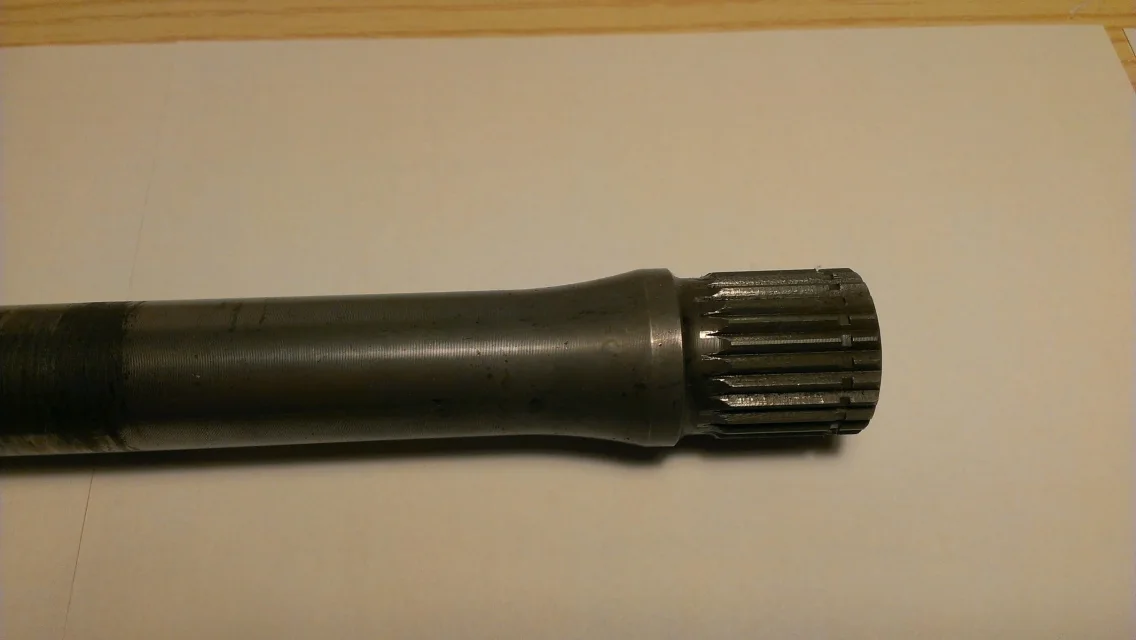
I attach some pictures
IMAG2495.webpIMAG2497.webpIMAG2500.webpIMAG2501.webpIMAG2502_BURST002.webp
 
I don't think it's been long since the fracture trigger where there's a milerighe where it crashed into a break in the smooth cylindrical part.

the twist is seen from the lines on the tip cone that are helical.

the fact that it is very accentuated means that the load was very high.


probably also had a flexional component that blew sideways of the tree pieces.

looking at the photos could be broken on the joint side wheel.
However it could give that there was also the connection radius like the other end, try to see if there is...because if there is no need to break there.
 

Attachments

  • wp_ss_20150721_0001.webp
    wp_ss_20150721_0001.webp
    74.5 KB · Views: 86
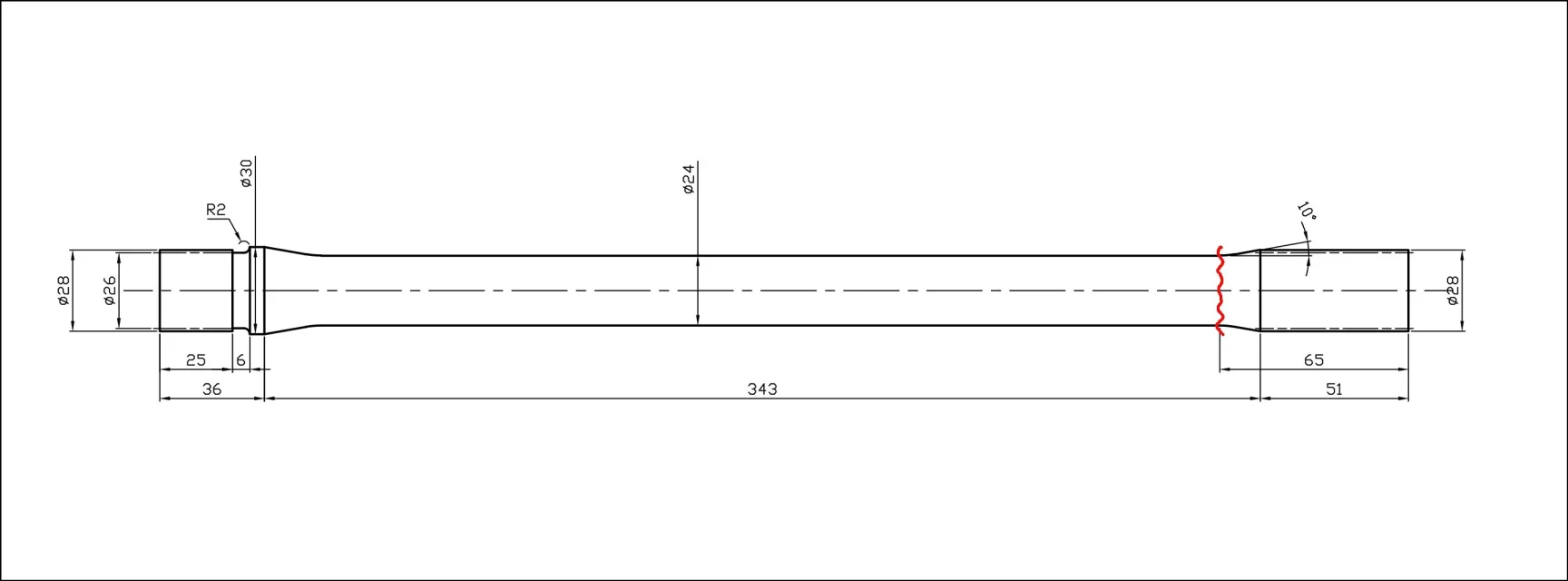
there is a connection that connects the millerighe (external diameter greater) to the rest of the semi-axis but without the shouldering that instead is present in the integral part. .
I thought that probably the break occurred at the time of landing from a jump (maybe on some asperity that acted as a flender load) without the pilot taking off the foot from the accelerator.. is it plausible?
 
as a maximum torque you can use the maximum transmissible from the tread on asphalt in dynamic conditions, as an agent load on the wheel take that of the suspension completely packaged, friction coefficient between rubber and aphalt and tread diameter.

This at least should ensure that the tread begins to slip before the semi-axis ceases.

On the other hand, take the maximum torque resulting from the maximum torque that can be transmitted from the clutch in the shortest torque available.

this should ensure that the clutch slips before the semiasses ceases.


When you are reasonably sure that or clutch or tread slip before the break of the semi-axis you can reason on exceptional events, for example when the car lands from a jump on a single wheel with the release engine, in this case the differential tends to slow down the wheel again in the air, which obviously when it touches the ground is in a very bad situation, in this case the speed of the differential and the engine is not possible
- Slip the tires
- slip clutch
- the car changes speed instantly
- the semi-axis shatters.
 
I thought that probably the break occurred at the time of landing from a jump (maybe on some asperity that acted as a flender load) without the pilot taking off the foot from the accelerator.. is it plausible?
If the pilot keeps on track and the powertrai group maintains a speed more or less consistent with that of the ground there are no problems, problems arise when it lands with very different speeds.


Another typical case is when traveling with very blocked differentials, in this case the two wheels are "litigare" between them and the semi-assisted make their expenses
 
Thanks athlon! now I have the clearest ideas.. But I have a doubt about the inclination of the semi-axis.. Do I have to take this into account? i.e. the torque I have to split it up for the top tilt angle thing?

One more thing. It is not clear to me how you could break up at that point.. i.e. if I had seen the whole semi-axis, I would have thought that we could break up on the shoulder connection radius (where there is the short millerighe).
semiasse quotato.webpInstead it broke at the beginning of the conical zone (as from drawing), where I think it is less present the carving effect. .
 
the semi-axis combines a differential with a wheel, for it there are no inclinations (which are managed by the homokinetic joints)

Maybe the breakage started out from a mileage fault
 
the torque moment to which the semi-axis is at the origin (or almost) right?
I was thinking of making a finite-life dimensioning with 10^4 cycles, but the wohler diagrams that are all inversion, so it can be okay if I make an infinite-life dimensioning (considering so the high stresses of the races on dirt) use the goodman diagram and how critical tension that at origin (which in the case of my material coincides with that of yielding) and maybe using a low safety coefficient
 
the torque moment to which the semi-axis is at the origin (or almost) right?
I was thinking of making a finite-life dimensioning with 10^4 cycles, but the wohler diagrams that are all inversion, so it can be okay if I make an infinite-life dimensioning (considering so the high stresses of the races on dirt) use the goodman diagram and how critical tension that at origin (which in the case of my material coincides with that of yielding) and maybe using a low safety coefficient
Boy, you have to speculate and invent. The important thing is that you use the right formulas...then if you want to use the values you think are appropriate. no one will ever know the truth. I don't think your teacher wants to get banged.

I think you have freed the inventive.
the woheler diagram you draw it....you don't find it on the catalogs. You have to impose all coefficients and find the sigma does or do depending on whether you think it is torsional or flexional.
on the forum you can find screenshots of an excel sheet that tracks whoeler curves...you must do the same... carving coefficient, reliability, treatments or coatings, surface finish, temperature etc.
However the end life, for whoeler is less than 10e3 and in this range co are different formulas than the 10e3 / 10e7 section.
 

Forum statistics

Threads
44,997
Messages
339,767
Members
4
Latest member
ibt

Members online

No members online now.
Back
Top