
Could you post the file?Hello everyone
when the solids are converted into sheet metal, but in the edges we need to have the surmount of one side, can't there be a way not to let him make that horror in the edge??? I mean automatically that he understands that the edge must overcome as linear traits
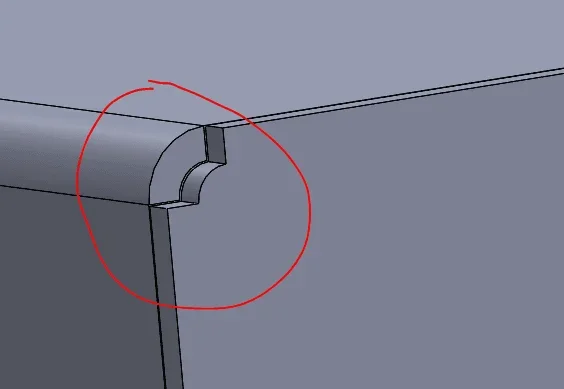
View attachment 62394Thank you very much
hi, try to take a look at the conversion I did, it is in 2019... I almost never use the command "converted ni sheet", usually use "insert folds", after managing in my own way all the details. the command you used is more immediate, but a little less manageable (personal speaking).Hello everyone
when the solids are converted into sheet metal, but in the edges we need to have the surmount of one side, can't there be a way not to let him make that horror in the edge??? I mean automatically that he understands that the edge must overcome as linear traits
View attachment 62394Thank you very much
I do so often, and the motivations are different. often it is easier to work on the top in solid modeling or surfaces, and then convert to the end. In some cases, particularly intricate, the thickness is a heavy burden to be carried back, better to work on surfaces and add the thickness only at the end, when the final shape is reached.basically you cannot expect to do with the command converts to sheet metal, which processes in its own way, what you can do with the dedicated tools.
answer this: why models in solid and convert instead of modeling in sheet metal?
However, in your example it is not a simple conversion as it had done marcoc, but you included pre-transforming adjustments in sheet metal. insert folds certainly has more potential*, just see how many options to manage there are, compared to the convert sheet, but you have to see what you start and in this specific case you had to make small changes.hi, try to take a look at the conversion I did, it is in 2019... I almost never use the command "converted ni sheet", usually use "insert folds", after managing in my own way all the details. the command you used is more immediate, but a little less manageable (personal speaking).
Of course, I must achieve the complete form, it is a simpler and direct conversion.However, in your example it is not a simple conversion as it had done marcoc, but you included pre-transforming adjustments in sheet metal. insert folds certainly has more potential*, just see how many options to manage there are, compared to the convert sheet, but you have to see what you start and in this specific case you had to make small changes.
exactly, the priority of functions in the tree must be handled, as always with the parameters.* attention that sometimes with insert folds you can run into unpleasant accidents such as the conversion of holes to normal holes in which the largest diameter is used