Ing.Vedder
Guest
Hi, everyone, I'm going back to a topic from which I hope someone can pull me out, as I alone don't step forward. .
I need to understand, once and for all, how to evaluate a coefficient of free inflation for steel columns. .
the theory of coefficients based on hinge etc 0.7,1,2 we all know it, but then in practice?
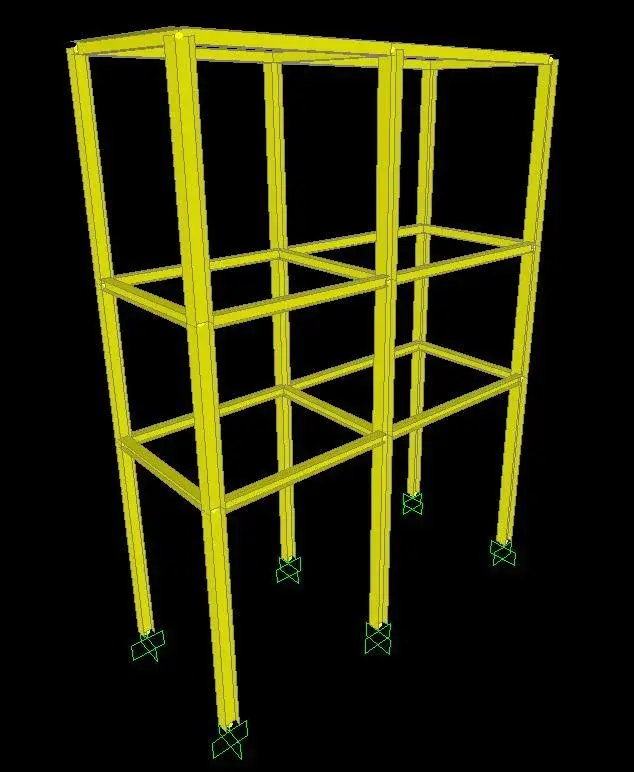
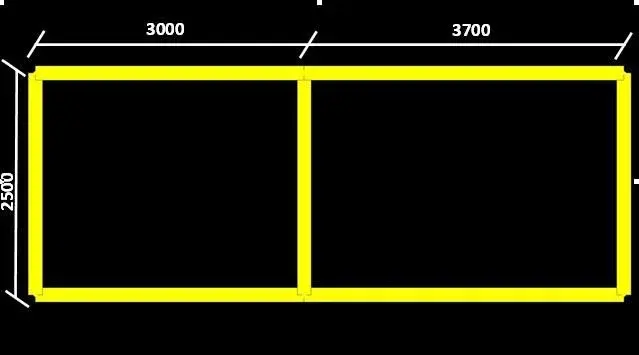
stupid example of terlaio 3d.
each of the 3 floors will be trampled (live boxes) and will hold pipes (dead boxes).
exists a unique way to establish what coefficient of free inflection consider for the 6 columns of the frame?
How do I behave?(They also told me that the length of free inflation is calculated by performing a buckling analysis of the structure but I didn't understand much more)
At the base I'll have some basic plates, so considering them stuck, it seems to me a correct approximation, but for the rest I would like someone to explain to me how to proceed. .
help, please..do realize talking to a child of the elementary school...I tried to read everything possible but I did not find a clear and simple explanation on how to do it.
Many thanks to all.
Ing. vedder
I need to understand, once and for all, how to evaluate a coefficient of free inflation for steel columns. .
the theory of coefficients based on hinge etc 0.7,1,2 we all know it, but then in practice?
stupid example of terlaio 3d.
each of the 3 floors will be trampled (live boxes) and will hold pipes (dead boxes).
exists a unique way to establish what coefficient of free inflection consider for the 6 columns of the frame?
How do I behave?(They also told me that the length of free inflation is calculated by performing a buckling analysis of the structure but I didn't understand much more)
At the base I'll have some basic plates, so considering them stuck, it seems to me a correct approximation, but for the rest I would like someone to explain to me how to proceed. .
help, please..do realize talking to a child of the elementary school...I tried to read everything possible but I did not find a clear and simple explanation on how to do it.
Many thanks to all.
Ing. vedder