• This forum is the machine-generated translation of www.cad3d.it/forum1 - the Italian design community. Several terms are not translated correctly.

surface trasforms (for large patterns)

  • Thread starter Thread starter lotus77
  • Start date Start date

lotus77

Guest
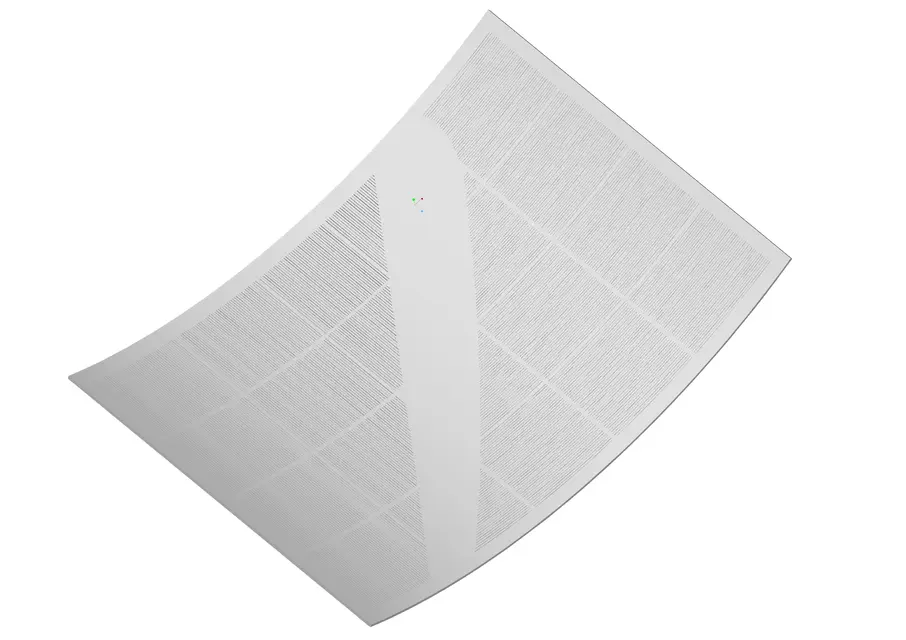
I asked for help on what was written in the subject. I explain: I have a part (sector of a cylinder (60°) of 2mm thickness) on which I have to make a feature patterned countless times (currently use about 1.5h in regeneration). I found wandering in my manuals that there is the possibility to simplify all these features through the surface transform operation that should reduce the complexity of regeneration by 80% as it reduces a "block" of pattern in a single surface in turn to pattern.
But I don't take my feet... Can someone explain how it works? where to find commands (wf2)? and if it really simplifies this enormousness of features that weigh to unmix the part?
thanks in advance.
 
in wf5 there is the geometric series.
in wf2 you have to create your feature as a set of merged surfaces, make the copy-paste, serialize the copy, make the solidification (modification>solidification) of the first element of the series and serialize the solidification.
If you can post the file we can help you better.
Bye.
 
Hello lotus, I try to interpret your question.
when a pattern (or series) is very heavy to calculate in general proceeds like this.
copy and paste the geometry surfaces of which you are interested in making the pattern.
solidify copied geometry.
realize the pattern of copied geometry.
realize the solidification feature pattern.
this mode will lighten the pattern a lot.
 
I asked for help on what was written in the subject. I explain: I have a part (sector of a cylinder (60°) of 2mm thickness) on which I have to make a feature patterned countless times (currently use about 1.5h in regeneration). I found wandering in my manuals that there is the possibility to simplify all these features through the surface transform operation that should reduce the complexity of regeneration by 80% as it reduces a "block" of pattern in a single surface in turn to pattern.
But I don't take my feet... Can someone explain how it works? where to find commands (wf2)? and if it really simplifies this enormousness of features that weigh to unmix the part?
thanks in advance.
If the feature you need to serialize is just one, and with only one I mean that it is not part of a feature group, the surface transform helps you little while if it is part of a group then it is worth it.
then if it is only one there is the option to set in the identical series, this affects enormously, because instead of regenerating all quotas of all the members of the series only regenerates the master.
 
first of all thanks for the immediate answers, I will try as soon as possible (currently I am messed up in another job) then I will let the result know. . .
However the question you interpreted correctly, now you have to see if I can develop it (it is not very clear how to make this paste copy of surfaces since they are functions that I rarely used for the machines that project) however from the image I attached you should be more clear. I add that unfortunately in addition to the pattern we say "equal", the series must also end up on two curves that delimit me the area that must not be "incisa". difficult to say but from the image you should understand
Thanks again.
Hi.
 

Attachments

  • settore_gda-30_v3.webp
    settore_gda-30_v3.webp
    1.1 MB · Views: 16
if the series is bounded by curves use the fill series, if I don't remember badly there is also in wf2.
Bye.
 

Forum statistics

Threads
44,997
Messages
339,767
Members
4
Latest member
ibt

Members online

No members online now.
Back
Top