• This forum is the machine-generated translation of www.cad3d.it/forum1 - the Italian design community. Several terms are not translated correctly.

unified modules of toothed wheels

  • Thread starter Thread starter Trial4life
  • Start date Start date

Trial4life

Guest
Bye to all,
I am preparing the construction examination of machines, and I have a doubt about the project of toothed wheels.
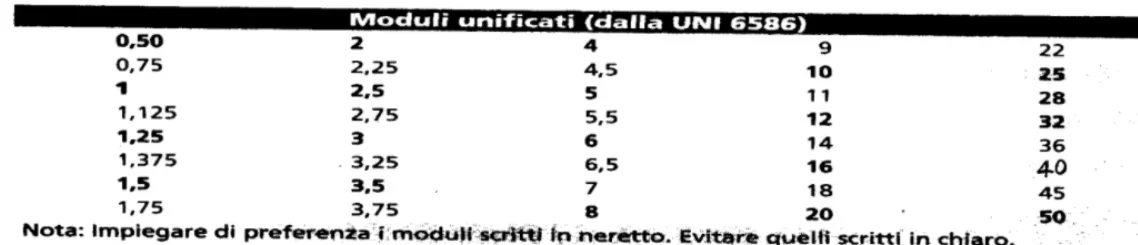
in the choice of the module, the unified module table shows some not recommended, and others strongly advised. What weight has this indication?
tjkvs02.png
For example, I find myself having to choose between a module 6.5 that guarantees me the least possible encumbrance (recommended by hertz report considering a number of pinion teeth of 18), and a module 6 that is much more recommended than the previous one. However, using a 6 module (recommended with a 20 tooth sprocket), the maximum ingot increases by 42 mm.

how much does the choice of the module weigh in this circumstance? and above all, what is the preference of some modules compared to others?

Thank you in advance.
 
the speech of the modules of the gears is old as argument because:
- whole modules are easily manageable (fat series)
- for each module you need a series of very expensive equipment of creators and grinding wheels
- it is much easier to deal with simple modules

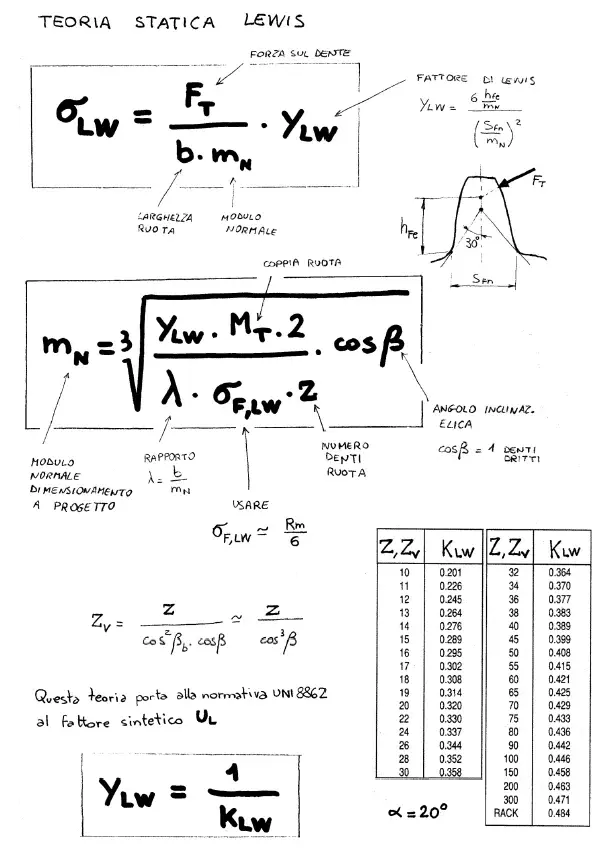
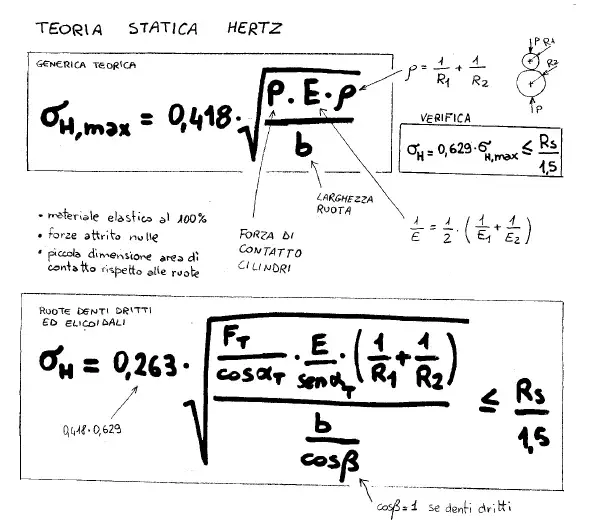
purely school audits using the theory of lewiss for the bending of the tooth and/or that of Chestnuts for specific pressure are not suitable for the evaluation of a real gear. In addition, many myths have been exploited in practice, such as that of the realization of gears with the first number and other things that have historically been indicated but that on the practical side they do not have major problems of operation.
keep in mind that it is necessary to audit according to iso 6336 for gears according to European standards (which is the most complete) and therefore your gear can be well revised for:
- material and treatment
- band width b
- profile shift factor (x>0 allows you to have very durable tooth base)
- a whole range of factors due to load distribution, dimensional factors, lubrication factors, duration factor curve di wohler, cutting factor etc.

Therefore I recommend you use kisssoft to really verify your pair of gears. there is also the free evaluation version.

I attach the table where preferential modules are indicated boldlywp_ss_20170107_0001.webppersonally I would try to optimize the couple of gears of minor encumbrance maximizing the characteristics of the gears themselves, therefore m=6, z=18, x ~ 0.6, material 18crnimo7 cemented hardened and rectified, widen band b, possibly widen of only a few millimeters the operating entirex if possible to carry out x>0 for both gears.

If you make helical wheels you can use a tilt angle around 10° and possibly use even a smaller number of teeth than is indicated on the theory books, just because you move the profile with x>0 and do not cut. clearly go to penalize the total replenishment factor but eventually if the gear is checked for what it has to do, no matter.
 
lewiss theory, as written in several of my posts, is calculated as follows:lewiss.webpthe theory of hertz is calculated sohertz.webpAs you can see, there are high security factors and you do not take into account anything else.
 

Forum statistics

Threads
44,997
Messages
339,767
Members
4
Latest member
ibt

Members online

No members online now.
Back
Top