• This forum is the machine-generated translation of www.cad3d.it/forum1 - the Italian design community. Several terms are not translated correctly.

modeling statue

  • Thread starter Thread starter alegad
  • Start date Start date

alegad

Guest
Hello everyone!! I'm a little in crisis because I can't shape a statue of a hanging Christ (I attach the photo)...I've seen that a method could be that of the gray tone mesh or the rhino displacement plugin. Does anyone know any other method more effective and faster?? thank you very much in advance....with your suggestions :smile:
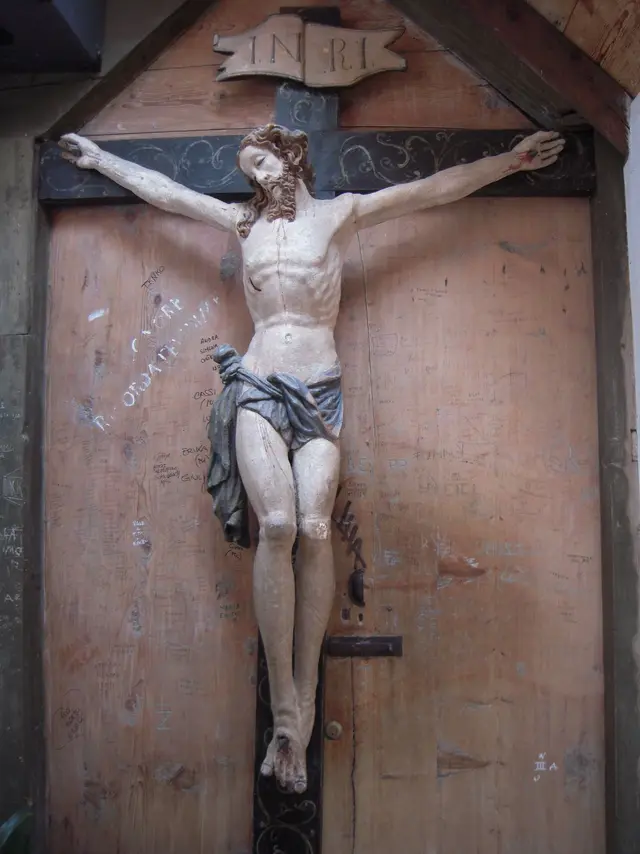
 

Attachments

  • DSCN5387.webp
    DSCN5387.webp
    376.4 KB · Views: 28
with gray tones I see it hard. Also by hand it is not easy even with dedicated sw with subdivide surface modeling, let alone with rhino mesh!
try with sw that recreate the model from the photos.
There's this, photomodeler scanner, see if there is a trial or student version, you can try it.
or there is the david laser scanner, to scan objects, a sw and a laser line. of the sw there is a free version, but you have to get a video room, and the laser, which you can take for a few euros, at least the cheapest ones.
if you want to face direct modeling, at least use blender o truspace, very suitable for organic modeling, highly recommended, both free. attention that if you import the model so made in rhino will be polygonal and to smooth it you have to use a sw specifically to reverse engineering, tspline (the trial is fine) is suitable for these purposes. (it would also be suitable for modeling directly in subdivide surface nurbs within rhino)
 
Hello everyone!! I'm a little in crisis because I can't shape a statue of a hanging Christ (I attach the photo)...I've seen that a method could be that of the gray tone mesh or the rhino displacement plugin. Does anyone know any other method more effective and faster?? thank you very much in advance....with your suggestions :smile:
My best wishes!
they surrendered, in front of a couple of butts (use "circle"), fior di "ammazzasette" equipped with superfighi and superveloci. to shape a Christ on the cross like that you will have to blaspheme in ancient Aramaic and for this reason, given the object of the modeling, I do not think you will receive help from above:smile:
 
My best wishes!
they surrendered, in front of a couple of butts (use "circle"), fior di "ammazzasette" equipped with superfighi and superveloci. to shape a Christ on the cross like that you will have to blaspheme in ancient Aramaic and for this reason, given the object of the modeling, I do not think you will receive help from above:smile:
He shouted, perhaps on the subject there was a little misunderstanding, the proserpine buttocks are also made to cad.
the problem is the time, if bernini put us several years to make the rat of proserpine, it is not that at cad you hurry it in a day.
modeling "artistic" means making thousands of surfaces and doing this takes time.
even to shape a single hand ... it takes time and a lot of handle, because 99% of caddisti is accustomed by force of things to model plates, bolts and plates and not even know where to start doing such a thing.
If I had a few months of time I would enjoy accepting the challenge, but you have to keep in mind that modeling from scratch and without a scan would mean having an eye and a sense of proportions as a real sculptor... I don't know if I explain.
 
He shouted, perhaps on the subject there was a little misunderstanding, the proserpine buttocks are also made to cad.
you would "do" is more appropriate:tongue:
If I had a few months of time I would enjoy accepting the challenge, but you have to keep in mind that modeling from scratch and without a scan would mean having an eye and a sense of proportions as a real sculptor... I don't know if I explain.
explain perfectly! :finger: and it is precisely for that reason that at the time I broke the spheres of seeing model of the car sides and of the domes, decanted as the non plus ultra of the superficial modeling, and I enjoyed bringing back with my feet on the ground someone who swallowed a little too much with tangences, curvatures, zebra striscie and other beasts of the municipal zoo:smile:
now it is enough to write the word "chiappe" that almost everyone here understands the deep meaning of it... :smile:

Hi.
 
I think there are better software than others to do things. modeling the human figure is perhaps the highest task that those who care about modeling 3d "non-mechanical" arises, usually using subdivision surfaces or sculpting software. even with software like mudbox or zbrush, or with a tool based on subdivisions such as lightwave or 3dstudio, or the same maya, human modeling is "the top" to which a modeler can ambire. Therefore my advice is to point on the most suitable tool, and if just one has to do "pretty and good" (which however "rare happens") there are poser or daz3d that serve "only" to make humans and have models already ready and easily customizable: if you have no experience of modeling for subd starting with the human figure is like wanting to learn how to model for surfaces (in a cad) starting from the shell of a car!

Palo

ps: other point of reflection: in the magazines of 3d "non-mechanical" I always shiver when I see modeling cars with subd... is fast and practical, but there is no control over how the surfaces flow, there is no planning and changing things is a nightmare medium.
 
I think there are better software than others to do things. modeling the human figure is perhaps the highest task that those who care about modeling 3d "non-mechanical" arises, usually using subdivision surfaces or sculpting software. even with software like mudbox or zbrush, or with a tool based on subdivisions such as lightwave or 3dstudio, or the same maya, human modeling is "the top" to which a modeler can ambire.
but with software that mentions the surfaces of the famous butts:smile: are beautiful if you make the rendering or animation, but the 3d model is a rough polygonal, or are beautiful because they are of quality we say "automotive", and then you can export them in a cam to run a 5-axis working center and produce hooks of the proserpine in mirror finished titanium?
In the magazines of 3d "non-mechanical" I always shiver when I see model cars with subd... is fast and practical, but there is no control over how the surfaces flow, there is no planning and changing things is a nightmare medium.
So I have to deduce that you have no control over the surface. and in that case how do you make her the "mathematic" of the famous ass of which you are so exquisite?
 
but with software that mentions the surfaces of the famous butts:smile: are beautiful if you make the rendering or animation, but the 3d model is a rough polygonal, or are beautiful because they are of quality we say "automotive", and then you can export them in a cam to run a 5-axis working center and produce hooks of the proserpine in mirror finished titanium?
the concept of subd is this: you have a polygonal model "rozzo" whose vertices represent, however, the knots of a superfice "type nurbs" (discussed the approximation are not a mathematician, let's say that they are not just nurbs) or beveled, fluid and continuous, whose level of "smussity and cleanliness" depends on how refined the rendering of polygonal ( I say polygonal "representation" because however below there is a geometric definition that refers to the nodes I mentioned before.

I have no idea if there is a way to export a subd surface in a cam without polygonalizing it, or as pure mathematics, like chrork chrome surfaces ( http://en.wikipedia.org/wiki/catmull%e2%93clark_subdivision_surface ), a bit like exporting an iges model does not expose the tiled version used to represent it on screen, but the "pure" version that "sta below" (technical terms to iosa today eh...)

So I have to deduce that you have no control over the surface. and in that case how do you make her the "mathematic" of the famous ass of which you are so exquisite?
you have a "of a certain type" control that is different from the one to which a car shell modeler is used. using subds is like shaping wax, moving the vertices and "cutting" the model where you need more detail. the problem is that you add details and control points that you will not be able to change smoothly. example: you modeled a hood using a few control polygons, you have a good control over the shape, even if you can't control angles etc, but if you add polygons (increases the subdivision) to have more details (for example to make an air grip) then you will not have few easy to control polygons, but many uncomfortable polygons to control.

said this, for human models, ask if the curvature is constant or not, do "to the eye" and read "to view" by moving the control points in great freedom. using subds is like shaping clay with hands, there are also smoothing algorithms that you can use as to smooth shapes.. .

Palo
 
but just to make it understandable, since each of us uses different terms depending on the program used, for subd what do you mean ? is a subd file?
 
no subdivide surface is a smooth polygonal model inside the sw in use, you see them smoothed only there, if you expose you will see the polygons, which are more and less, depending on the level of subdivision. in maya the subdivides can be converted flight into nurbs, tspline, plugins for both rhino and maya, you can do the same thing also of imported polygonal models, not only can you model directly in subdivide with nurbs, method similar to that used in caia, increasing the detail, that is the number of subdivisions only where it serves, unique feature. But forget the precise mathematicians for these things do not serve, if they are the object of design, we must always put our hands back to it, so I think that there are less passages in the casket seen its precision.
 
no subdivide surface is a smooth polygonal model inside the sw in use, you see smoothed only them
It is not so, the "poligonal model" is a control structure that "guides" a underlying mathematics. It's like saying that a cloud curve with its control vertices is a polygonal curve that you see smooth only in the software, it's not so, there's under a very precise mathematical definition. that then to see her need to tire her is another speech.
t-splines are an evolution, the best thing is that they can "cut" in half polygon unlike catmull clark, but the fact remains that these detail additions are not flexible, the ideal would be to be able to go "to and back" between the levels of detail.
said this, I think catia implements subds only as a system to create a "culpted" form on which to draw curves and surfaces with traditional methods

Palo
 
but just to make it understandable, since each of us uses different terms depending on the program used, for subd what do you mean ? is a subd file?
l'stl is a "tassellato" format ( http://www.sicam.com/main/techinformation/stlfileformat.asp ), triangolarized we say, is not subd, is the polygonal representation of a mathematical surface. exactly as when you "freeze" or export a subd (or a nurb surface or an iges) in triangolarized format.

example to understand us:
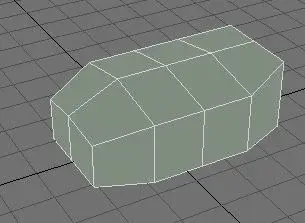
attachment.php
This is a polygonal model, very rough, which I will use as "bug" to control the subd
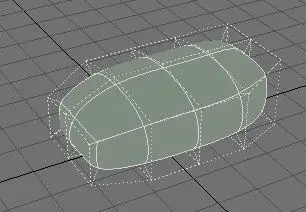
attachment.php
This is the same model in subdivision. the tops of the original model are present as control points, but the surface is now a mathematical definition "liscia" that I can change. the vertices can also have different "weights". I can "pass" from the raw polygonal representation to the subd quickly, and change the vertices in both situations for comfort and rapid modeling
attachment.php
this is instead the model "tassellato" or freezato if we want. It is again a polygonal model, no longer subd, whose quality level is linked to the precision with which the twelfth occurred. could be a stl file.
until the software in use recognizes the subds there is no need for freezarle and you can maintain the original polygonal structure and underlying mathematics, but often in software for special effects it is not possible to trim the subd without resorting to artificial (type perfectly eliminate polygons)
 

Attachments

  • 2010-06-02_093115.webp
    2010-06-02_093115.webp
    10.1 KB · Views: 59
  • 2010-06-02_093256.webp
    2010-06-02_093256.webp
    13 KB · Views: 57
  • 2010-06-02_093323.webp
    2010-06-02_093323.webp
    12.3 KB · Views: 58
you have a "of a certain type" control that is different from the one to which a car shell modeler is used. using subds is like shaping wax, moving the vertices and "cutting" the model where you need more detail. the problem is that you add details and control points that you will not be able to change smoothly. example: you modeled a hood using a few control polygons, you have a good control over the shape, even if you can't control angles etc, but if you add polygons (increases the subdivision) to have more details (for example to make an air grip) then you will not have few easy to control polygons, but many uncomfortable polygons to control.
Okay, got it. in this sense I defined the model created with subds
said this, for human models, if the curvature is constant or not
:eek:
that to make the rendering of some puppet, of a cartoon rather than of avatar one can take care of the quality of the underlying model can also stand on us, it has to be, because what counts is the visual result; If "below" to the image of a fluent hair, there are actually a number of cylinders or chissenefrega cubes :smile: But to think that human or organic models, as such, do not need sophisticated surfaces, at least seems an insult to anatomy.
to remain on forms only seemingly elementary, have you observed well how an apple is made and how the peduncular cavity where the petiole is grafted, on the opposite side, joins the glass? even in the general asymmetry of the fruit, do you see discontinuity of the beautiful curvature? :rolleyes:

Therefore, I repeat that the famous (or infamous...) discussion of the "proserpine cloves" was about the real feasibility of a 3d mathematical model, such as the original (for quality and realism, it does not necessarily affect the copy) modeling in manina (no reverse...) with loft, blend, sweep etc. the various surfaces.
"to the eye" and smooth "to the sight" by moving the control points in great freedom. using subds is like shaping clay with hands, there are also smoothing algorithms that you can use as to smooth shapes.. .
Unfortunately I do not know these software and these modeling techniques, but from what little I have understood and from the examples that you have posted I think that the aging of that type of shapes leads in general to excessive roundings not easily controllable, and however the final result are polygonal models, not mathematical surfaces (iges... )
do you have some links where to download examples of modeling of anatomical parts (no extraterresti and various monsters... :wink:) made with these techniques?
 
Okay, got it. in this sense I defined the model created with subds

that to make the rendering of some puppet, of a cartoon rather than of avatar one can take care of the quality of the underlying model can also stand on us, it has to be, because what counts is the visual result;
Look, I don't agree on the tone you kept... Consider that in most commercials and films with special effects all vehicles (cars etc.) are made in maya or similar software with subds, so to say that only "toast, pizzas" are made I would say that it is a little exaggerated. then I would never "project" an automotive surface with subds, but "moulding" is more than feasible.
Moreover it is precisely with the subds and with the "pupazzetti" that the "quality" of the underlying model is extremely important, where with quality it is understood in this case the possibility to have a topology of the subd "fluida" and smoothly, suitable to be animated for deformations etc.
But to think that human or organic models, as such, do not need sophisticated surfaces, at least seems to me an insult to anatomy.
to remain on forms only seemingly elementary, have you observed well how an apple is made and how the peduncular cavity where the petiole is grafted, on the opposite side, joins the glass? even in the general asymmetry of the fruit, do you see discontinuity of the beautiful curvature? :rolleyes:
subds are not "un sophisticated" surfaces at all, they are even more sophisticated than nurbs in some ways. the continuity of curvature is guaranteed by the mathematical structure of the subd, the "control" of the curvature is left to the ability of the "sculptor". the apple above you do well with the subds, better than with the cad probably. a woman's body shaped with nurbs as it was used in softimage times gives you a thousand problems in the animation phase, a subd mdoello is a fluid and deformable "skin".
Therefore, I repeat that the famous (or infamous...) discussion of the "proserpine cloves" was about the real feasibility of a 3d mathematical model, such as the original (for quality and realism, it does not necessarily affect the copy) modeling in manina (no reverse...) with loft, blend, sweep etc. the various surfaces.
I repeat, when softimage was not yet xsi (talk of years ago, geological era in the world of special effects) the bodies were modeled with nurbs and splines, but today no healthy chart of mind would do more such a thing, the subds are much more suitable for these situations.

Unfortunately I do not know these software and these modeling techniques, but from what little I have understood and from the examples that you have posted I think that the aging of that type of shapes leads in general to excessive roundings not easily controllable, and however the final result are polygonal models, not mathematical surfaces (iges... )
do you have some links where to download examples of modeling of anatomical parts (no extraterresti and various monsters... :wink:) made with these techniques?
It is true that a great "manic" is needed to control a very detailed subd, and in general the subd models are difficult to change "back" (that is, they are not designed with subds ;d). the final result, however, are not polygonal models, unless it "congeals". the result is always a mathematics, as the nurbs are a mathematics, does not change much in this case (except trimmability;) )

to give even better the idea, this is a modeling film of a subd head in lightwave 3d (lightwave was pioneer of this technology with the "metanurbs")
http://www.youtube.com/watch?v=_s_tmpb2ulafor female bodies, there is a nice 3d professional file focusing on this, although the figure is a little cartoon. find models to download is difficult, but you can find tutorials and renderings on the network. a way to get an idea is to take a look at the results obtained with poser that is based on a proprietary subd implementation, human models are very good.
Believe me, it's really hard to "fight" the subds when it comes to modeling human bodies, maybe only mudbox and zbrush can overcome them, but only for the incredible level of detail that add

Palo
 
Perhaps it is not clear the concept of surface quality, in terms defined by industry.
the nurb surfaces are not accepted by industry, if they have to realize a car body shop or the hull of a motorcycle.
the only accepted surfaces are beziers and on this there are no alternatives.
on this if you want to deepen the topic, without taking religious wars... there are already too many.
 
Perhaps it is not clear the concept of surface quality, in terms defined by industry.
the nurb surfaces are not accepted by industry, if they have to realize a car body shop or the hull of a motorcycle.
I have said several times that subds are not used for industry, although many cads are incorporating them (magari come tsplines) to facilitate initial design. But it is also true that the subds are not nurbs or bezier's principles, I do not know which of the two approaches more, if someone has the basis to explain it to him.
Moreover alias if not erro is based on nurbs and industrial design is quite used, so maybe for the subd there are other "nicchies". but said all this, if I had to shape a human figure with bezier surfaces, well I think I would rather give myself to the hyppic :d

maxopus but in fact why the nurbs are not accepted? nothing religious wars for charity is only to understand better:) I hope indeed that all 'I despair about the subds that I have done is not understood as a war of religion :

Palo
 
that to make the rendering of some puppet, of a cartoon rather than of avatar one can take care of the quality of the underlying model can also stand on us, it has to be, because what counts is the visual result; if "below" to the image of a fluent haircut there are actually a number of cylinders or chissenefrega cubes. But to think that human or organic models, as such, do not need sophisticated surfaces, at least seems to me an insult to anatomy.
Look, I don't agree on the tone you kept... Consider that in most commercials and films with special effects all vehicles (cars etc.) are made in maya or similar software with subds, so to say that only "toast, pizzas" are made I would say that it is a little exaggerated.
Sorry, it wasn't my intention to diminish the results you get with maya &c. However, when you wrote that for human models "chissenefrega" of the curvature, my hair has been removed and in the sewer I have escaped the hyperbole beyond the sign , but I am interested simply to understand how much of the surface that is recreated with the subds etc should then be "lised" during rendering or animation.
then I would never "project" an automotive surface with subds, but "moulding" is more than feasible.
So you wouldn't do it because the quality of the surface to be sent to the molder so that he can make chips for a milionata of euro in mold :tongue: is it not acceptable or for other reasons?
It is true that a great "manic" is needed to control a very detailed subd, and in general the subd models are difficult to change "back" (that is, they are not designed with subds ;d). the final result, however, are not polygonal models, unless it "congeals". the result is always a mathematics, as the nurbs are a mathematics, does not change much in this case (except trimmability;) )
Basically, can you export your model to iges format, or vien out a polygonal model like "enri"?
to give even better the idea, this is a modeling film of a subd head in lightwave 3d (lightwave was pioneer of this technology with the "metanurbs")http://www.youtube.com/watch?v=_s_tmpb2ula
interesting...only that seems the head of the stone man of the fantastic4:smile:, which then rendered softens (it is however obscene also rendered). Maybe I'm wrong, but that kind of model is extremely rough.
I also watched other similar movies made with other software (mudbox, zbrush, 3dstudio etc) and I think the principle is the same. few polygons smoothed after in rendering or during modeling by opengl shading in real time, just to understand the final result that will be rendered.
but I go back to ask you, because this is the point that was interested in the famous ass: can you export an iges so that when I open it in solidworks (I am glad that it is worthy to do so :smile:) see it with a beautiful smooth surface and with zebra cone imbizzarrite :wink:
 

Forum statistics

Threads
44,997
Messages
339,767
Members
4
Latest member
ibt

Members online

No members online now.
Back
Top