• This forum is the machine-generated translation of www.cad3d.it/forum1 - the Italian design community. Several terms are not translated correctly.

construction method

  • Thread starter Thread starter gggfanatic
  • Start date Start date

gggfanatic

Guest
I'm trying to model:
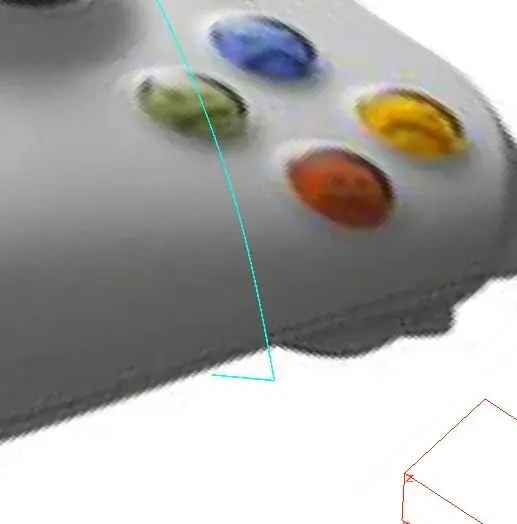
controller_xbox360_c.jpg
I know the main tools: binary square draft etc (I come from modeling in rhino) I tried starting from a sectional ball climbed with the latex to give the shape of the tips but I find it difficult to define a continuous surface with 5 curves
 
First of all the tip is one, because you should do half the model is to work on "symmetrical" layers. then what is not symmetrical do it on non-symmetrical layers.

I don't know the latex function, but I don't know if it's the right way. I would start with a "lenzuolo" that makes the upper surface with a square. this square will not have spikes or "inlets", those you then trimming the surface with other forms surfaces.

Then I would draw the bottom in a similar way (I don't see how it is done) and change these two surfaces until the intersection curve is what I like.
do this you have the basic piece to add details.
 
you can also try with section skins for the 2 side parts and then join them with a free form blend
You won't be able to control the surfaces anymore!
..maybe then deforming a sphere you can do the "siluro". then the cuts and attacks of the squares in tangenza that connect it to the diametral plane.

If you do a ball, you can increase as you like the number of isoparametrics and the degree, then move and scale the points to groups doing more or less what you want.
 
However, the back piece, where the indexes rest, is a cylindrical surface, which you can do with a skin. I would do with the ball only the oblong part, but I would stop it already where it opens to accommodate the big button pressing with the index.
 
The latex tool is generally used to make changes to the final model by applying to the latter of the "constrictions" to change its shape quickly, so I would exclude it. then in any case, everything depends on what type of modeling you want to get for example: class to which I would exclude, class b, or class c that I believe is what interests you. So you could start with a situation similar to the one above listed by lightning, although I think it is simpler, regarding the upper and lower part, manage more surfaces than a single "square" surface that could create flexes.
 
I can't understand the shape well
I believe that 2 images are different models
the first seems to have the two most crushed tips while the second rounded.
 
even if I think it's easier, as far as the upper and lower part, to manage multiple surfaces rather than a single "square" surface that could create flexes.
but without exaggerating with breaking the surfaces, otherwise do not go out.
Anyway, in my opinion, this is a classic class modeling object a. maybe you don't need it in this case, but in general, yes.
 
Anyway, I'm starting to model the joypad of the ps3 and if it can be of help the part that concerns "the grip" of the joypad I'm making it with a semi ball sectioned to which then I attack with 2 side curves in oblique and a semicircle left view to create the upper part. .
 
I respond to lightning.
absolutely yes..
In fact, in this type of modeling we should take into account the extrusion angles regarding the 2 separate parts that make up the joypad.
 
I respond to lightning.
absolutely yes..
In fact, in this type of modeling we should take into account the extrusion angles regarding the 2 separate parts that make up the joypad.
I would have done so anyway


the part above and the part below that meet at edge, then I would do a fillet in very thick curvature
 

Attachments

  • Immagine.webp
    Immagine.webp
    13.1 KB · Views: 14
more than a fillet, after creating the 2 parts it would be necessary to create between these "the shield" with the "fillet flange" instrument or the "tube flange". .
 
I would have done so anyway


the part above and the part below that meet at edge, then I would do a fillet in very thick curvature
more than a fillet, after creating the 2 parts it would be necessary to create between these "the shield" with the "fillet flange" instrument or the "tube flange". .
I think both roads are wrong. the part that goes in the palm of the hand is a classic style curve. to spigolo more a straight trait and then "confonder" with a fillet of great radius is what the designers of the 1930s did
In this way you get a form without "appeal" that will not attract the look of the child from the supermarket shelf, and here is that we sold a video game less.
curves must have their own character, they must not be blobs more or less deformable, more or less ergonomic and more or less initiated.
 
I think both roads are wrong.
(cut)
In this way you get a form without "appeal" that will not attract the look of the child from the supermarket shelf, and here is that we sold a video game less.
And you say little?
for me it is an excellent result, so I vote for one of the two methods that then will not sell the video game :tongue:
 
And you say little?
for me it is an excellent result, so I vote for one of the two methods that then will not sell the video game :tongue:
I think you're confusing the "excellent" and "optimal" concepts.
There was a story about it to explain the concept...two friends make a safari and are located in front of a lion, with the jeep in cloth and without ammunition. One of them starts undressing the equipment, saying "so I can run faster." the friend replies "it is useless, you will never run faster than the lion." and he: "I really need to run faster than you..."
 
I think both roads are wrong. the part that goes in the palm of the hand is a classic style curve. to spigolo more a straight trait and then "confonder" with a fillet of great radius is what the designers of the 1930s did
In this way you get a form without "appeal" that will not attract the look of the child from the supermarket shelf, and here is that we sold a video game less.
curves must have their own character, they must not be blobs more or less deformable, more or less ergonomic and more or less initiated.
I was actually thinking about it too.
But if you look at the second image I don't know if the op is a 70-year-old but the shape is that


uploaded with imageshack.usI confirm that the climbing ball moving the cv is optimal for the shape
I find myself in difficulty with the curved blend number 2 does not follow the continuity of the central isoparametric
 
Perhaps there is an even better method than the climbing sphere.
draws a curve in profile, make a surface of revolution and then the steps in the direction in which it is crushed. so at least one profile builds it autonomously and therefore with more freedom.
What do you say?

for the second point, try to set the curvature instead of the tangency, but you should first make the curve line with the central isoparametric of the ball. There is a special command, or do a rebuild of the isoparameter and align the cvs of your curve with those of that rebuilt. . I hope I've been clear
 
the method recommended by lightning is correct but I repeat the fact that in my opinion, both the upper and the lower part should be "treated" separately. . .
 
Perhaps there is an even better method than the climbing sphere.
draws a curve in profile, make a surface of revolution and then the steps in the direction in which it is crushed. so at least one profile builds it autonomously and therefore with more freedom.
What do you say?
http://yfrog.com/f/afimpugnaturaj/I would say that I finally see the light: I did a revolve and patiently moved the cv hulls until I got the shape for the tip I used a sectioned sphincter with align 2008 in curvature at the edge of the revolutionary surface. . apart from the cvs on the tip (there is no weld vertices as on 3dsmax?) I would say that it has a good shape fairly clean.
Is there a way to extract the maximum curvature isoparameter of the upper part?
 

Forum statistics

Threads
44,997
Messages
339,767
Members
4
Latest member
ibt

Members online

No members online now.
Back
Top