• This forum is the machine-generated translation of www.cad3d.it/forum1 - the Italian design community. Several terms are not translated correctly.

pair ship propeller clamp

  • Thread starter Thread starter Drag
  • Start date Start date

Drag

Guest
as from title,
there is a reference value for
Dado tightening pairs lock propeller on the axis.
conical mating with key (elica-axis)
I found nothing.
Thank you.
greetings
 
as from title,
there is a reference value for
Dado tightening pairs lock propeller on the axis.
conical mating with key (elica-axis)
I found nothing.
Thank you.
greetings
Hello, dragon.
in the morning I ask in the mechanical department how they adjust when they "get down" the propellers and then I let you know.
 
for now I managed to find a table of a propeller with adjustable blades. m48x3 clamping screws that couple with the axis mancion, must be tightened with a pair of 140nm. However it is a value that I do not understand why the tightening of a screw m48, (without looking for classes of particular resistance) is more than 10 times greater.
Unfortunately, my ref is on vacation. If you're not in a hurry, let's wait for you to come back.
Hi.
 
Last edited:
I found another one. here the screw couple 57 is 2561nm. but it seems to me to understand that being biting screws, the torque must be referred to the material with which the hub is made.
I'll get you the pdf.
Bye.
 
Last edited:
Thank you exatem, all information is well accepted.
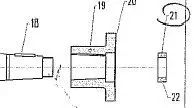
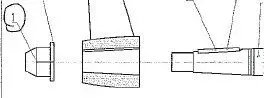
the configuration that interests me and very simple as you see in the annex,
couple of nut tightening [1] bronze on steel to convey a certain winding moment and the same thing for the nut [21] which blocks the flange (steel on steel) that mates to the inverter flange.
ps. I pulled out the niemann/winter all-powered machine constructions:cool:
I would need some simple formula for confirmation.
so far the only precise data I have (after several calls to installers and yards) are:
strings until you can, then two or three hammered on the security key:biggrin:
 

Attachments

  • Dado blocca elica.webp
    Dado blocca elica.webp
    4.4 KB · Views: 22
  • Dado blocca flangia.webp
    Dado blocca flangia.webp
    3.9 KB · Views: 83
[Finora gli unici dati precisi che ho (dopo varie telefonate ad installatori e cantieri) sono :
Stringi fino che puoi ,poi dai due o tre martellate sulla chiave per sicurezza :biggrin:[/QUOTE]hi dragon, I worked for a few years in a shipyard, and I can assure you that it is just like that.
In our case an innocent tube was used as an extension of the locking key, then the two "workers" hung up until the exhaustion.....
I wait for some less experimental reference!
greetings
 
Hello, I have seen to mount many propellers of fishing boats with an average of 2 meters in diameter and powers of about 1000 horses.
the system for the various workshops and yards is always the same: hits with a bat a key about a meter long, until the dice turns...
 
...string until you can, then two or three hammered on the security key:biggrin:
...in our case an innocent tube was used as an extension of the locking key, then the two "workers" hung up until the exhaustion.....
I wait for some less experimental reference!
greetings
...the system for the various workshops and yards is always the same: hits with a bat a key about a meter long, until the dice turns...
Unfortunately it is reality.
feel some companies operating in the industry, all confirm that the locking is done to blows of bat!
but I don't think that a designer can write on the design "seat with a bat by percuating a prolonged key with a dalmine tube."
There is no "table" to refer to, and I have to make such a table, I would point out the couple of clamping referring to the disregard of the softest material, a solution we had already talked about in another discussion (and that I carry in part).
generally the solution of the clamping screw directly on a material of lower characteristics is not recommended.
In practice, however, it is a condition that often occurs (just think of steel screws on aluminum casings).
if it is not possible to resort to a solution with mothervith made on helical insert (such as these http://www.bollhoff.it/filetti-riportati-helicoil.html) I would advise you to stick to 80% of the softest material yield voltage for the precarious screw.
to avoid unwanted changes, you can use a brake threads.
 
but I don't think that a designer can write on the design "seat with a bat by percuating a prolonged key with a dalmine tube."
:biggrin::biggrin::
But I would like :rolleyes:

in the meantime thank you all
 
do you mean the screws you look for in the photo?
 

Attachments

  • PICT3637.webp
    PICT3637.webp
    388.4 KB · Views: 22
do you mean the screws you look for in the photo?
I meant a loctite type liquid. that threaded hole of the photo, so without seeing, I don't know... or at least, I don't want to say a cabbage (a half idea I have).
 
in the threaded hole is inserted a "antisvitation" grain that presses on the propeller.... .
 
Those threaded holes, if I don't remember, are also in the propeller and serve to block the nut with the propeller. so not to let him unscrew. . I think...
 
Those threaded holes, if I don't remember, are also in the propeller and serve to block the nut with the propeller. so not to let him unscrew. . I think...
from what I saw doing, after tightening the nut (with the methods listed above), with a drill and a suitable diameter tip a small axial blind hole is created with the threaded hole present on the nut. after which a stainless grain is inserted which acts as an antisvitation.
 
from what I saw doing, after tightening the nut (with the methods listed above), with a drill and a suitable diameter tip a small axial blind hole is created with the threaded hole present on the nut. after which a stainless grain is inserted which acts as an antisvitation.
exactly what I thought.
 
I have always seen reuse the holes already present... also because the propeller dies every 3 years.. He'd become a colander. .
 
:biggrin::biggrin::
But I would like :rolleyes:

in the meantime thank you all
yesterday I was in the workshop, I am struggling with a rudder axis of which I spoke in other discussion:http://www.cad3d.it/forum1/showthread.php?t=24344I asked for your doubt and the answer was what I feared.
for the conical coupling between axis and helix to fixed blades, the locking of the "dadone" is made with huge keys and brute force (also with the aussilium of mechanical means).
would be to show the equipment of keys and "moncons" of axis that are used in the department for rectification of the propellers.
Therefore, I remain of the idea that if you have to indicate a couple of clamping, in case of different materials, I would keep on 80% of the yielding of the weaker material.
Bye.
 

Forum statistics

Threads
44,997
Messages
339,767
Members
4
Latest member
ibt

Members online

No members online now.
Back
Top