
• This forum is the machine-generated translation of www.cad3d.it/forum1 - the Italian design community. Several terms are not translated correctly.

quotate length of a belt (fixed length and variable path)

  • Thread starter Thread starter dreampippi
  • Start date Start date

dreampippi

Guest
hello to all, I ask this question:
I have a flat belt, with fixed length, example 1000mm, which runs around 5 rivii, of which 1 mobile (e.g. softness).
If you leave the question for a moment, can you quote within the belt sketch "development = 1000mm"?
according to question, derived from the first, it is possible that the coarse 5 rivii+cinghia can move based on the development of the belt, therefore according to the quota that I "posso" possibly to quote within the sketch of the belt?

I hope I've been clear. . .
Thank you!

Daniele
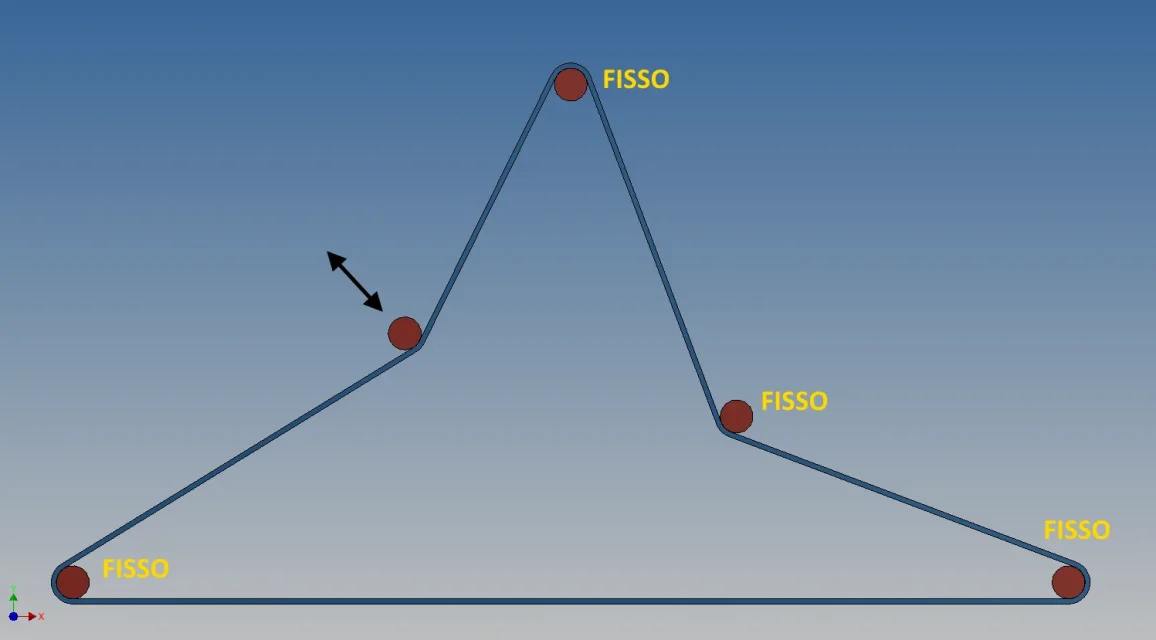
CINGHIA.webp
 
the most immediate thing is to quote all belt traits (including strings, of course as length) and sum them together by setting the sum as a parameter. Obviously, near the galoppino, the two arms will remain and the arc variable as non-parametric quotas. impose the constraints on the movement of the gallopine and is made.. .
I usually in the sketch simply put a line as long as the development with the quota indicating the development parameter: so it is more immediate to change, even if after a long time you are "forgotten" that the length is parametric.
method not perhaps very elegant, but functional. . .

for the joint handling of the galoppino, or solve by binding the galoppino itself to its corresponding axis in the part of the belt, or amounts the position parameters imposed in the belt and colleagues together (screened "parameters" together and at the bottom "link")
 
wait... a few steps to the first part... the measurements of the arches "before and after" the galoppino (see that they are variable) and it is not necessary to immediately put the length of the longest stretch near the galloppino. Obviously, having fixed points, the quotas will already be almost all "non-parametric".
then you have to do an operation... imposed "developmental" as the sum of all traits except the longest on the sides of the galoppino. impose a "developed" parameter as the actual length of the belt you want to get and the length of the longest stretch near the galloppino as "developed - developreal". is not the solution valid in 100% of cases, but inserting consistent values should work.
 
the most immediate thing is to quote all belt traits (including strings, of course as length) and sum them together by setting the sum as a parameter. Obviously, near the galoppino, the two arms will remain and the arc variable as non-parametric quotas. impose the constraints on the movement of the gallopine and is made.. .
I usually in the sketch simply put a line as long as the development with the quota indicating the development parameter: so it is more immediate to change, even if after a long time you are "forgotten" that the length is parametric.
method not perhaps very elegant, but functional. . .

for the joint handling of the galoppino, or solve by binding the galoppino itself to its corresponding axis in the part of the belt, or amounts the position parameters imposed in the belt and colleagues together (screened "parameters" together and at the bottom "link")
:finger:: finger: stesso million Methododo
 

Forum statistics

Threads
44,997
Messages
339,767
Members
4
Latest member
ibt

Members online

No members online now.
Back
Top