• This forum is the machine-generated translation of www.cad3d.it/forum1 - the Italian design community. Several terms are not translated correctly.

comparison on processing

  • Thread starter Thread starter ceschi1959
  • Start date Start date

ceschi1959

Guest
Good morning to all,
I detect with nx a behavior that does not convince me about a particular processing.
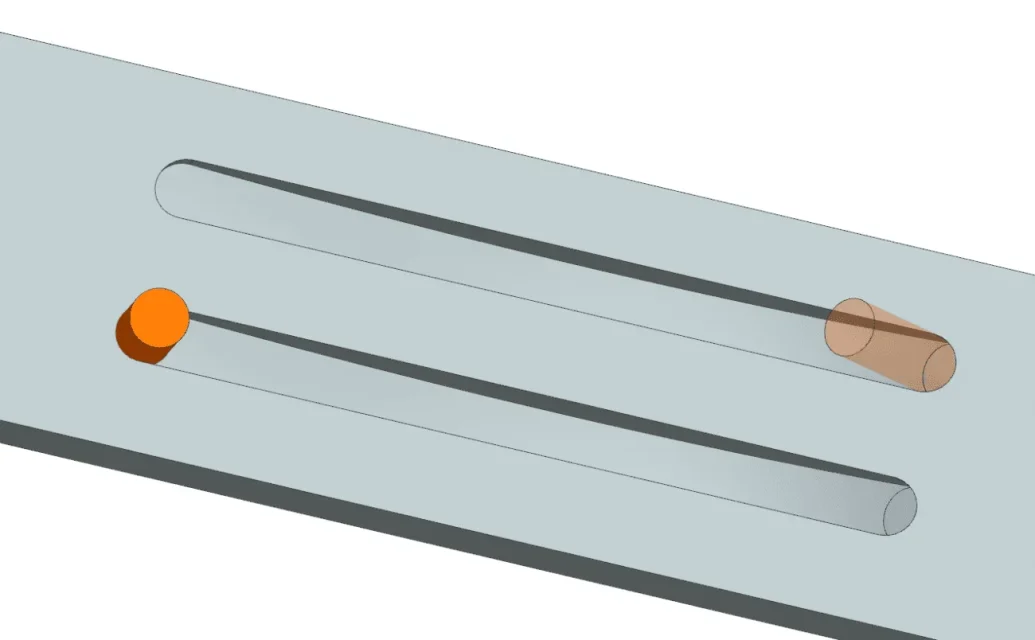
in nx this processing is called swept volume and simulates the behavior of a milling that moves along a path.
processing covers an arc of 40° symmetric, the dimensions of the 'cold' and the block are purely indicative and do not affect the result.
brake d=20 mm block 600x80x60
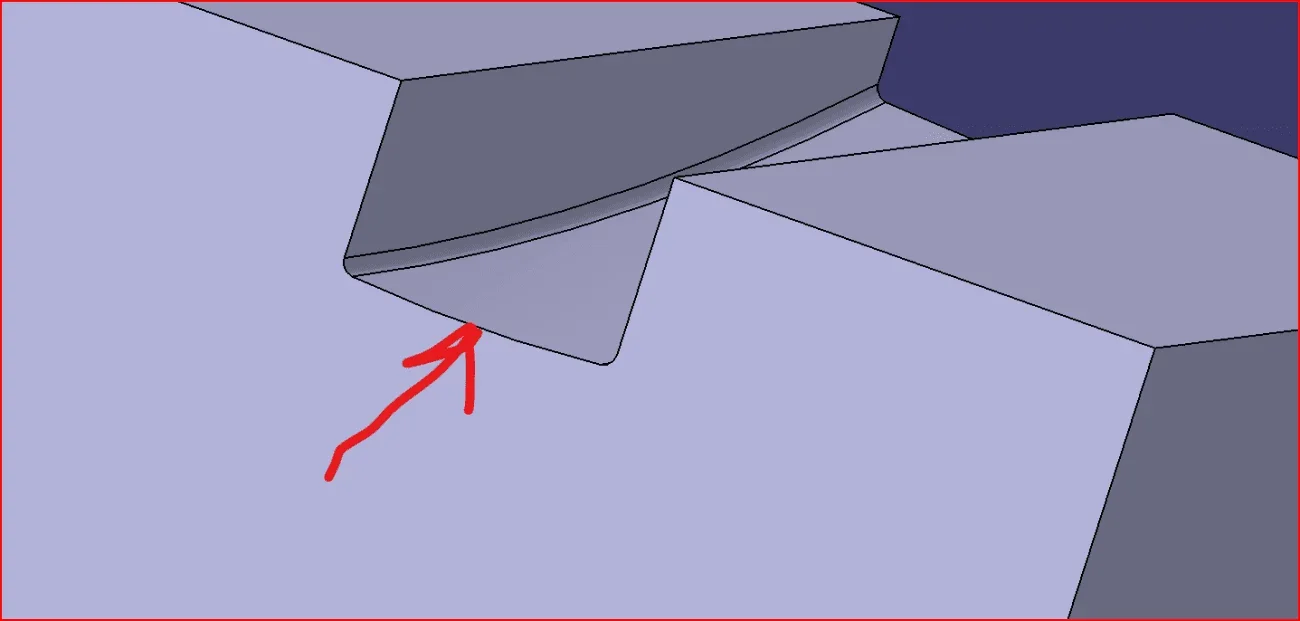
I attach image of the parameters of processing and result (the arrow shows what does not convince me).
I ask cat users, create parametric, inventor, solidworks and solid edge (if they have some time) to recreate this processing and show the result.
Thank you in advance who will contribute.sv1.webp
 
But is it a workable in reality? Is there any problem with the rear side milling of the milling mill?
 
holding the tilted cut of 1st compared to the radius of the path goes ok (as I think the miller actually does, to avoid the above heeling.
1618474908907.webp
 
But it's not the same path. the path must be a circle arc and at the beginning and end the tool must be immersed in the solid.
Okay, I got it wrong. in this case the axis of the cutter can never be perpendicular to the curve as I seem to guess is considered in the first image because it would always be as from the extremized image attached.
this in reality, while in solidworks also doing the sweep curve the footprint you do not see as long as you make an extra race in and out.
 

Attachments

  • 3.webp
    3.webp
    14.6 KB · Views: 17
Okay, I got it wrong. in this case the axis of the cutter can never be perpendicular to the curve as I seem to guess is considered in the first image because it would always be as from the extremized image attached.
this in reality, while in solidworks also doing the sweep curve the footprint you do not see as long as you make an extra race in and out.
the problem with solid edge (and I also think nx) is that the surface that you see at the end of processing is a plan, which is absurd in reality, even accepting to keep the tool orthogonal and making it heel. However, I understand that swx also suffers from the same problem.
 
the problem with solid edge (and I also think nx) is that the surface that you see at the end of processing is a plan, which is absurd in reality, even accepting to keep the tool orthogonal and making it heel. However, I understand that swx also suffers from the same problem.
I think he does the same thing because the kernel is the same.
the strangest thing is that if you do the processing by putting 'the mill' in b instead in the flat islet remains in b!!!!@cacciatorino Can you do this? Thank you.sv2.webp
 
the problem with solid edge (and I also think nx) is that the surface that you see at the end of processing is a plan, which is absurd in reality, even accepting to keep the tool orthogonal and making it heel. However, I understand that swx also suffers from the same problem.
I think it's an exquisitely cad problem because in fact starting and coming with the internal tool to the piece a half of the tool not "work" then leaves the footprint.
but in reality you will not go vertically and then do interpolation, but you will enter and exit beyond the piece; then there will also be the fact, as it says @cacciatorino , which will hold the milling slightly inclined compared to the axis of the curve so as to avoid working the inserts in the back
 
Thank you. @vittori But please, since I don't think catia uses parasolid, would you do me the exact same work I've posted? I want to see if the same flat surface remains from you.
Thank you.
There is a curious tendency to neglect details that mislead the used cad :roflmao:
 
I think he does the same thing because the kernel is the same.
the strangest thing is that if you do the processing by putting 'the mill' in b instead in the flat islet remains in b!!!!@cacciatorino Can you do this? Thank you.View attachment 61693
I had deleted the file and I don't want to do it again now, maybe later. a question: is the apparently correct working part a cylinder sector or some strange double-curve surface?
 
Thank you. @vittori But please, since I don't think catia uses parasolid, would you do me the exact same work I've posted? I want to see if the same flat surface remains from you.
Thank you.
Yes, then I'll try and let you know,
However, I have never seen a function specified in post #1, and I think that modeling the simulation does not get the same result.
I will try with hypermill that should return the real image of the processing because it takes into account the geometry of the tool
 
Last edited by a moderator:
as not said.. with hypermill I can't simulate because I don't have the advanced 5assi processing license, I have a 5assi but not advanced.
 
I would try (possibly) to use a circular milling cutter (inclining 90° the piece). the fresata made so is definitely "scaletated"
 
I would try (possibly) to use a circular milling cutter (inclining 90° the piece). the fresata made so is definitely "scaletated"
It is a theoretical exercise on how to perform a boolean subtraction between two solids, not a real milling!
 

Forum statistics

Threads
44,997
Messages
339,767
Members
4
Latest member
ibt

Members online

No members online now.
Back
Top