• This forum is the machine-generated translation of www.cad3d.it/forum1 - the Italian design community. Several terms are not translated correctly.

help dimensioning front palate mini carriola cingolata

  • Thread starter Thread starter saldocarpentiere
  • Start date Start date

saldocarpentiere

Guest
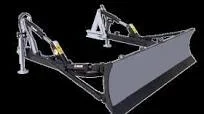
Hi, my name is vincenzo, I'm a metal worker. I live in the campblade dozer.webpI would like to design and realize the front blade for a mini-carriola cngolata. They sell it on the market but I think they are a little weak, they are designed to push the snow. I would like to make one to level the gravel for the path and to fill holes or track footpaths you could kindly help me thank
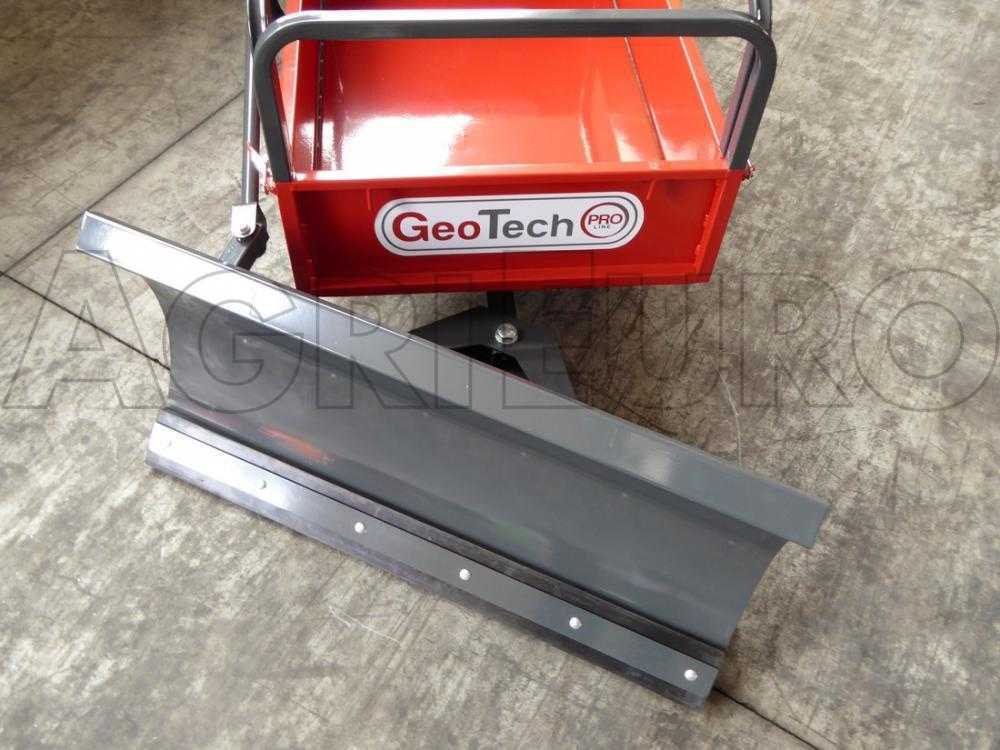
pala-neve.jpg
carriola cingolata.webp
 
Bye. without advanced notions and computerized computing tools like fem you can not determine much. Moreover, it is necessary to calculate in some way the force necessary to push the gravel.
first buy one, weld a flat plate in front and put some welded coasts in reverse. alternatively build it from scratch with thicknesses greater than the original.... thickness 8-10mm.
 
thanks for the kind explanation x coastline fall backwards what do you mean?
 
I'm sorry if I allow myself... What the hell, looks like now without a fem analysis you can no longer design anything, I miss a simple shovel for the gravel.
I ask myself: If you are all experienced designers here, possible that, for an application like this, you haven't looked a bit on certain things? possible that there is need to shake the fem? I worked for 10 years in a medium-heavy facility company designing in 3d and the fem would have used it at most 4, or 5 times to validate some projects. for the rest we have always done things to the eye. i.e. after a while designing, one knows that to hold that weight, that trave measure can go well, or that sheet thickness is sufficient, without needing calculations or fem analysis.
 
If you are red mario that you do the thing in the garage do as you want, honors and/or charges are yours.

if the company "green" commissions you a product, you have at least 2 roads (idem if you are the technical internal office):

- sections we have always used (they went well before, they will be fine now). Maybe you're putting 40% more materials than you need, but maybe it costs less than a precise calculation. Perhaps instead a small condition has changed that however produces a peak of stress that "breaks" something, perhaps fatigued. if you are the external designer, at the 2nd request of substitution broken piece writes the legal to fix a "tranquillo meeting" clarifier,

- calculation of all elements, for "all" hypothesized conditions: in material theory (costs) optimized and no problem. customers who do not ask for replacement broken pieces and reputation saves.

in certain sectors (saw machinery, for example) it sails the first system. already only going on the carpentry machines, from the indestructible monobloc frames in cast iron pre-year 70 has passed to the folded sheets, with a saving on the material cost frames of....boh, 800%?

ps: I made calculations for wooden structures (tects, houses, catwalks) for 18 years. when I was asked a "flight" section in the yard, at the bar, in the office, in the car etc. the answer was, although not, that "by engineer": depends.

beams in service class 1, 2 or 3? what load you want to put (the real one, not the one on the card). eternal or cyclical? that deformation suits you (often with wood is the most limiting aspect)? 1/150 because it is the roof of the 10 hens or 1/600 because over tiles and you want to do the spa?

16xh40cm or 20xh60cm initially have the same odds. .
 
Last edited:
yes, yes, but it seems clear to me that the friend balancecarpentr who wants to design and build the shovel for the gravel, will use it for personal use to spread the gravel of the own driveway and does not intend to produce it in series in thousands of pieces with so much certification and guarantee. therefore the first answer of his question: "it takes the fem analysis," it seemed rather unapproached.
 
Well yes, for my use, I would buy one of those already made, so the big one is (touchs, lifting etc).

Then I would climb to the back of the reinforced coast (vertical and/or horizontal according to the nerve and structure of the sheet), to the worst by making a cardboard blade and shaping the coasts with the flexible, if you do not have a plasma from hobbisti.

But he asked how to do it in a forum of engineers, basically.

I think that if he wanted to do it "wide sleeve", he didn't ask on the forum: he went to the iron carpenter, and he looked at the thicknesses that seemed appropriate to him (maybe tempering the lower blade), talking about it with the same blacksmith.

I therefore assume that those who spoke of fem analysis considered that the spannometric hypothesis was to be discarded already in departure (see previous point).
 
thank you for your precious interventions maybe I see on the net how it was conceived and maybe the most robust cup excuse me if I took advantage of your patience
kimg0342-jpg.462527

kimg0343-jpg.462528

458858-91c81a36b38f82af61f99a7df28a6580.jpg

md500-jpg.462551
thank you again excuse me if I have bothered you
 
I'm sorry if I allow myself... What the hell, looks like now without a fem analysis you can no longer design anything, I miss a simple shovel for the gravel.
I ask myself: If you are all experienced designers here, possible that, for an application like this, you haven't looked a bit on certain things? possible that there is need to shake the fem? I worked for 10 years in a medium-heavy facility company designing in 3d and the fem would have used it at most 4, or 5 times to validate some projects. for the rest we have always done things to the eye. i.e. after a while designing, one knows that to hold that weight, that trave measure can go well, or that sheet thickness is sufficient, without needing calculations or fem analysis.
Since we are not capable, put the formulas and make the calculation. so we also learn.
 
thank you for your precious interventions maybe I see on the net how it was conceived and maybe the most robust cup excuse me if I took advantage of your patience
kimg0342-jpg.462527

kimg0343-jpg.462528

458858-91c81a36b38f82af61f99a7df28a6580.jpg

md500-jpg.462551
thank you again excuse me if I have bothered you
For example, the first image you posted used a c for the long that stiffens little if I push inside the bucket but stiffens so much if I pin the bucket on the ground. If you join the vertical sheets surely comes a nice rigid reticulate.
 
type of counterfeit of plate ribs of stiffening ribs. maybe handkerchiefs, thank you for your precious advice excuse me for the trouble1724750308274.webpAs for fixing , do I fix it with bolted support, or do I recommend swivel type zipper with a central adjustable pin?
 
If your need is to spread gravel, fill holes and track paths, more than to a snow shovel, you should be inspired by dozers of mini-excavators whose function is that and has a profile more suitable for this purpose.
for fixing I don't think you need to be swivel.
 

Forum statistics

Threads
44,997
Messages
339,767
Members
4
Latest member
ibt

Members online

No members online now.
Back
Top