meccanicamg
Guest
Here we are with a little puzzle.
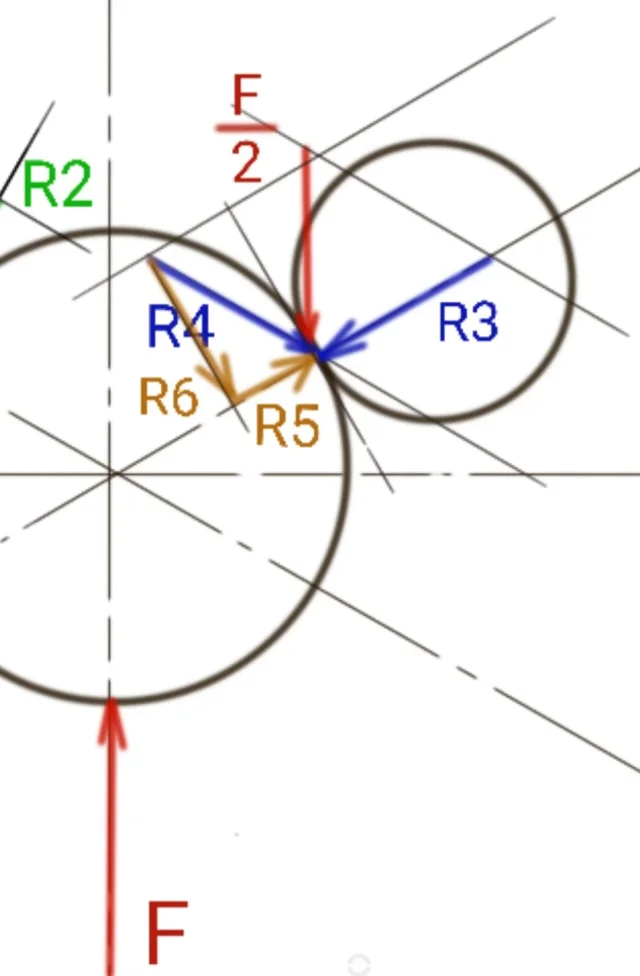
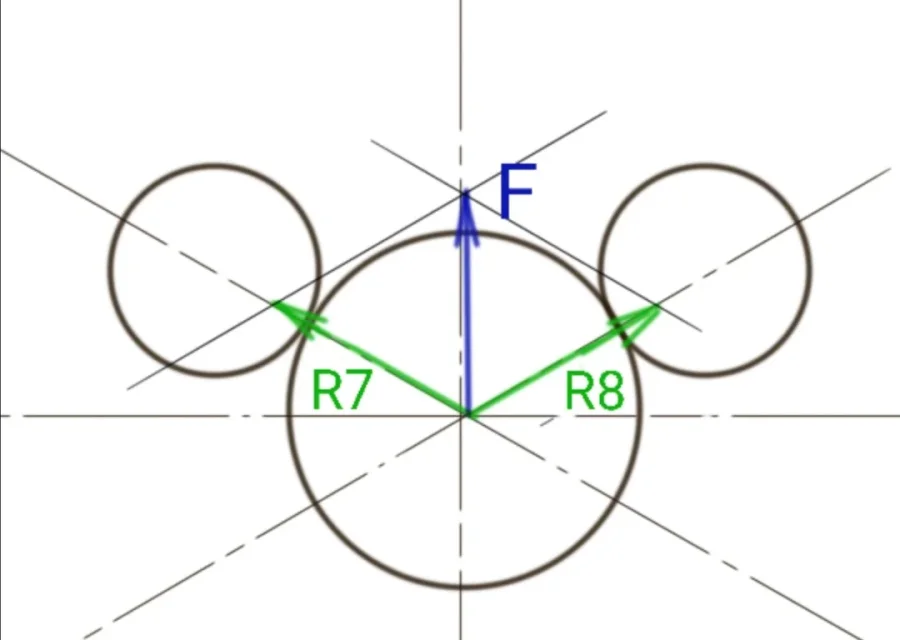
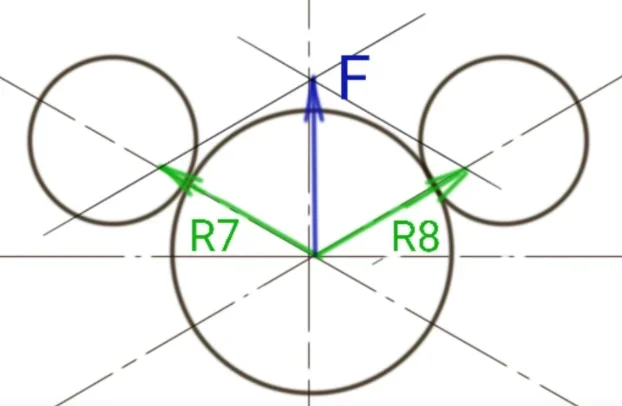
I have three wheels: one in the bottom big and two small in contact. on the big wheel there is a force upwards of f.
to determine reactions to small wheels, how do I break forces? as a model on the left or as a model on the right?
I feel like I've become no longer able to find the way.
then how do I compose to calculate the result on the bearing? r3 and r1 are already radial. r2 is perpendicular to r1 and therefore opposes rotation. r4 should be decomposed along the perpendicular of the radial and parallel line to be added with r3. On the other side should I do pitagora between r1 and r2?
Or isn't it okay? Can you give me your opinion, please? I'm losing myself in a glass of water.
I think the right solution is the right one.
I have three wheels: one in the bottom big and two small in contact. on the big wheel there is a force upwards of f.
to determine reactions to small wheels, how do I break forces? as a model on the left or as a model on the right?
I feel like I've become no longer able to find the way.
then how do I compose to calculate the result on the bearing? r3 and r1 are already radial. r2 is perpendicular to r1 and therefore opposes rotation. r4 should be decomposed along the perpendicular of the radial and parallel line to be added with r3. On the other side should I do pitagora between r1 and r2?
Or isn't it okay?
Can you give me your opinion, please? I'm losing myself in a glass of water.I think the right solution is the right one.
Last edited: