• This forum is the machine-generated translation of www.cad3d.it/forum1 - the Italian design community. Several terms are not translated correctly.

aid

  • Thread starter Thread starter PIdotEM
  • Start date Start date

PIdotEM

Guest
Hello everyone!
I have two questions about this rule:

1.
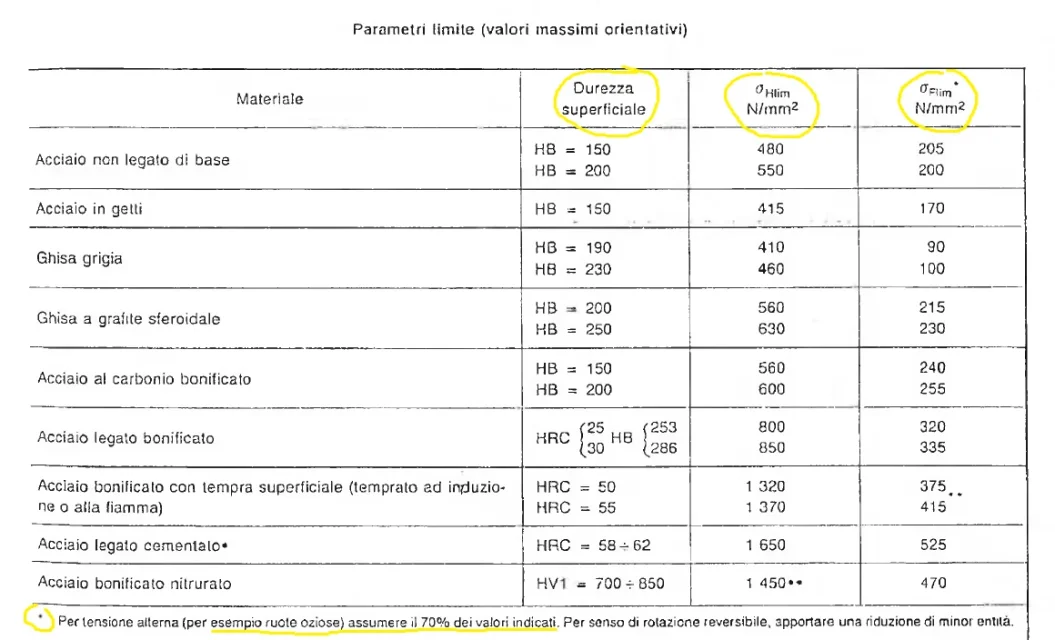
I should check an idle wheel (for a reverse wheel) but in one 8862 I found only a reference to this type of wheel (σflim for the idle wheel equal to 70% of the values in the table). is this the only shortness to use in the verification of these wheels?

2.
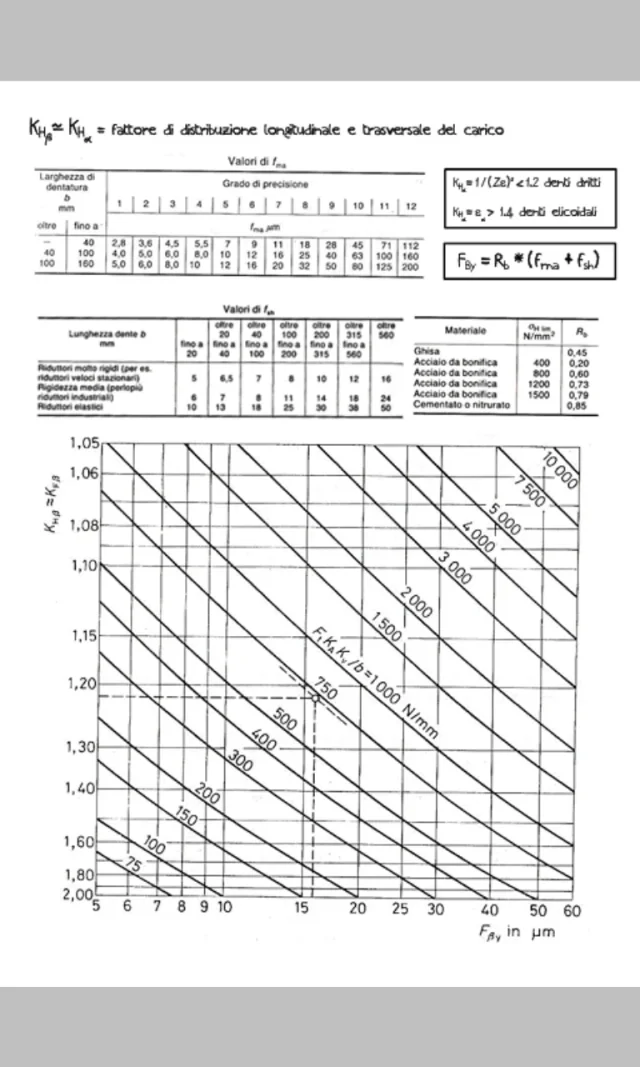
I should calculate fβy and according to the norm you have to pass by the coefficient γ and therefore by k, the latter is tabled but only in the case of s/l<0,3. I have attached the figures for greater clarity, the case that I am interested is "reduction with entry of the torque moment t on the lazy side" but unfortunately the s/l that comes out is greater than 0.3 (for precision 0,43). How should we behave in these cases? norms do not contemplate this eventuality.
8862.webp8862 2.webpThanks again for the help.
 
why don't you get it from the formula that I posted you as an image in the other post? I'll fix the formula.
 

Attachments

  • wp_ss_20150826_0002.webp
    wp_ss_20150826_0002.webp
    78.3 KB · Views: 47
Thanks again for the help. As I have to submit a report justifying the choices made and the rules that have been given to me this page I do not find it, I wanted to understand if there was a way to find the same coefficient with the rules that the professor gave me. If you could pass the file from where you took the image that posted me so as to uniform the choice of coefficients?
 
Thanks again for the help. As I have to submit a report justifying the choices made and the rules that have been given to me this page I do not find it, I wanted to understand if there was a way to find the same coefficient with the rules that the professor gave me. If you could pass the file from where you took the image that posted me so as to uniform the choice of coefficients?
the file is a pdf of my university notes and postures. those formulas are shown on the manual of the engineer of the hoepli.

However also in iso6336-1 there are references to three methods of calculation of the distribution coefficient. ...so it's a bit of a dancer.
 
thanks a thousand mechanicalmg! I saw on the iso6336-1 that there are more ways to calculate the coefficient and reported the method c reported the case that I was interested (now I will try to implement the calculation).

with regard to the idle wheel, in addition to considering the characteristics of the materials to 70%, are there other shortcomings to consider?
design and verification must be done all at the same time for these wheels? because for now I have considered them in pairs (I apologize for the bad image but I think so is clearer)Retro.webp
 
there is no verification all together, you always have a wheel that integrates with the duck, a contact zone and exchange of forces. that situation occurs.
the idle wheel I have never seen make 70% of the characteristics of the material. the oziosa wheel will have teeth geared with a wheel and teeth geared with the other wheel. will be well known forces to check separately. only the calculation of the duration will have a sort of reduction of the hours of life because you will have to accumulate the two actions at each turn.
 
I had actually thought to decrease the number of hours of operation.


This 70% decrease I found on 8862
View attachment 41523
valid only for the flexional voltage limit...as indicated.
However, it does not have great reliability and those numbers are not exactly the same as those of iso 6336. In fact, it is usually considered differently the real stress and not that limit.
 
Good morning.
I intend to purchase the norm uni 8862 since the iso 6336 I own in English is too complex for me.

I have seen that it consists of three parts:
uni 8862-1 / uni 8862-2 / uni 8862-3

is it necessary to buy all three parts to be able to verify according to norm?

greetings
 
hi, I too thought to buy the norm uni 8862, however as I was told by others is an old norm and not updated, now I am making a spreadsheet for the standard iso by method c and it is not so complex, it is just a little slender... Another difficulty is that, as you said, you are in English. .
 
Thanks for the answer. .
I am aware that it is a bit dated, but if the cost is not excessive rather than using nothing I would acquire.

The doubt is if one of three is enough.

My aim is to take familiarity and verify what size.

Say hello. .
 
if you open the regulatory page on the site there is a brief description of what they treat. 3 to say are learning exercises.
 
True, my initial idea was to buy the 3 visa, as you wrote, which are exercises.
then taken from doubt and not wanting to wrong the purchase I decided to ask on the forum if it was useless to buy only one.

Thank you.
 
usually the exercises are done after learning the matter to verify that you understand it.
of exercises for the analysis of the gears I don't think there are problems to return on the net; in the forum was discussed at the end and every request was analyzed and discussed.
In my opinion if you are convinced that you know the subject covered in the norm it makes no sense to take any of the 3, if you are convinced that you know the subject but you want to have some consulting material you will need the first two, if you are not convinced that you will need the first two.
Ultimately it seems to me that whatever your case is the uni8862 -3 is the least important one.
 
Good morning.

I do not know how to calculate the thickness of the tooth shown in the figure I attach.
the only formula I managed to find is the one reported in the annexed pdf.

Is there a clearer formula that also takes into account the x correction and angle of the propeller?

the thickness I have to calculate is that on the diameter of foot?

20200910_215422.webp
 

Attachments

The calculation of the tooth thickness is a little complex sincerely. I also bypassed the calculation using the yfa and ysa charts directly.
If you want to really calculate the thickness at the base of the tooth you need to look for all the geometric formulas of the evolving construction.
the simplest way would be to use a program that already makes the calculation of geometry....as I have already spoken several times.
the parameter qs It's already curved....if you parameterize it in excel you can get the discreet equations that approximate the thing well.1600017230360.webpthis curve is made with bending radius 0.375*mn.
With this chart, you'll be able to calculate what you need.
 
I tried to verify a gear with a simplified 8862.

I attach the exercise with relative graphs from which I extrapolated the values of the coefficients.

the first part and how they taught me to dimension with lewis and hertz.

In the second part I have tried to verify, I do not know if I have correctly interpreted all calculations.
, corrections and suggestions.

thanks for the continuous sharing of your knowledge.
 

Attachments

Forum statistics

Threads
44,997
Messages
339,767
Members
4
Latest member
ibt

Members online

No members online now.
Back
Top