• This forum is the machine-generated translation of www.cad3d.it/forum1 - the Italian design community. Several terms are not translated correctly.

ball/flying valve gear motor

Enrico Povolo

Guest
Good afternoon to all,

I'm a 22-year-old electronics graduate. I started following this community about a year ago, when I started this project and I have to say that it was very helpful. as I told you the mechanics is not my bread, so I hope you can forgive my mistakes. I studied it independently before proceeding in this sense but I realized that the more I became more aware of how little I really know.
This does not scare me, but I recognize that I have embarked on a path not difficult for my preparation. Now I'm in there and I have to finish the job, alone or with someone's help.Top_2020-Dec-07_12-54-27PM-000_CustomizedView2015378441.webpwork in the irrigation industry and as an accessory to our devices we also provide servo-commands with electronics on board for the handling of ball valves/flying. this product has always had too high production cost and therefore a year ago I tried to see it again. since then I have made two versions: the first with plastic box, scooter with endless screw and some parallel axle gear; a failure. the second, to make up for work, with box obtained from the full of aluminum with costs again unsustainable. now I opted for an epicloidal reduction: scooter with straight teeth gear and some planetary stage.
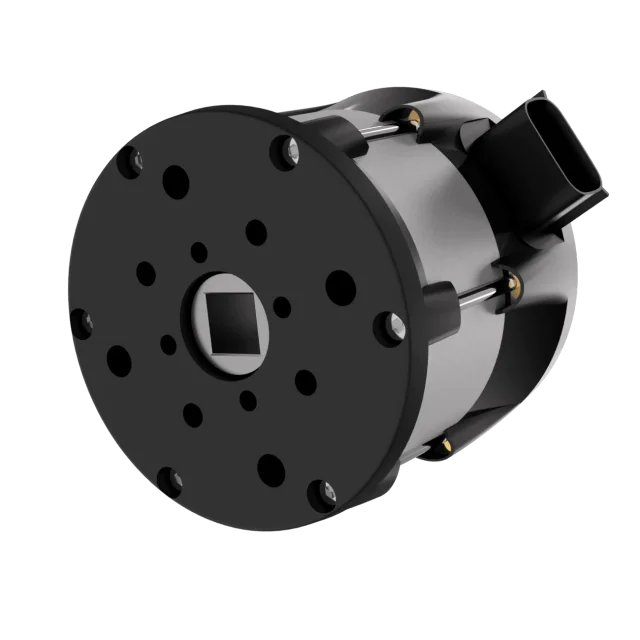

output power

consider a manufacturer of Italian valves “omal”, they recommend:
  • 50 nm for ball valves up to 2” and butterfly up to 3”
  • 100 nm for 4” and 5” butterfly valves
  • 200 nm for ball valves 2”1/2 and 3”
so I chose to have two models: 50 nm and 200 nm.

(for shaft and valve flange refer to the iso5211 standard attached)


power input

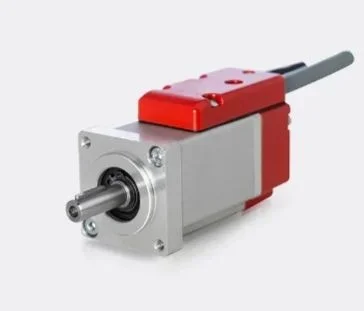
I chose a bldc scooter with these specifications:
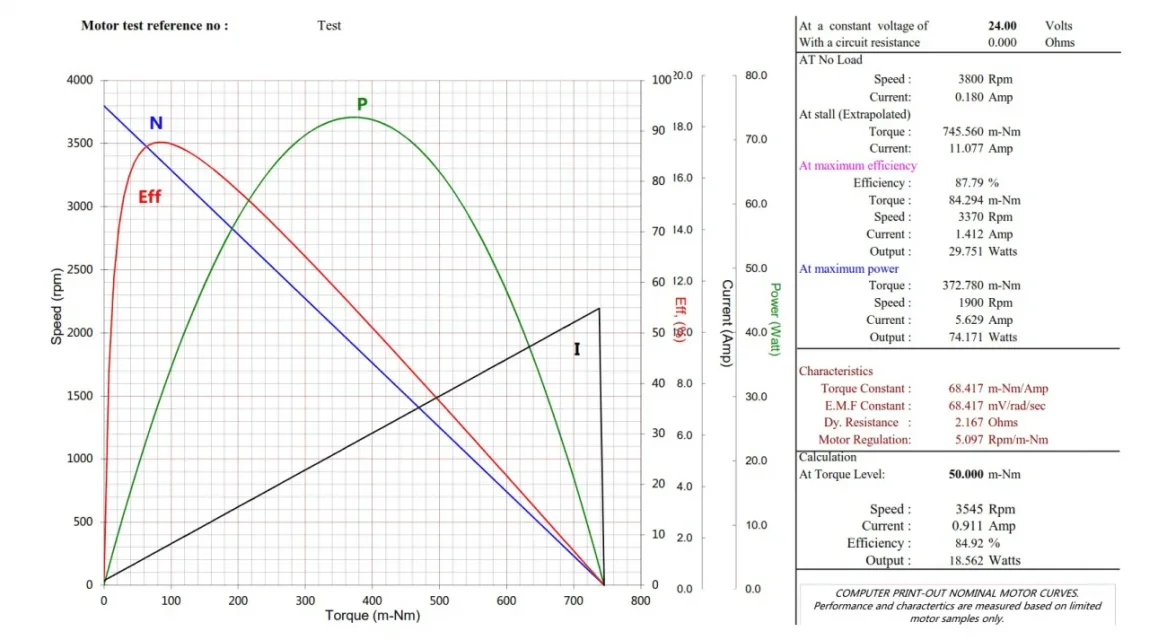
  • in maximum efficiency produces about 90 nmm to 4000 rpm
  • at maximum power produces approximately 360 nmm to 2000 rpm
(maximum unreachable power because the absorption would be too high for this application, we could reach up to 200 nmm)

custom output shaft with straight teeth gear z15 m0.75 b5 (sun).
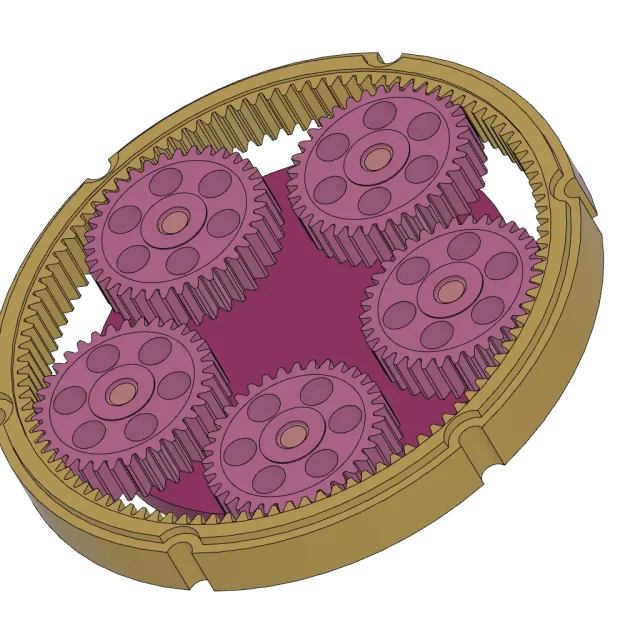
Top v23.webp50nm model reduction

3 identical stages, stacked and made of sintered
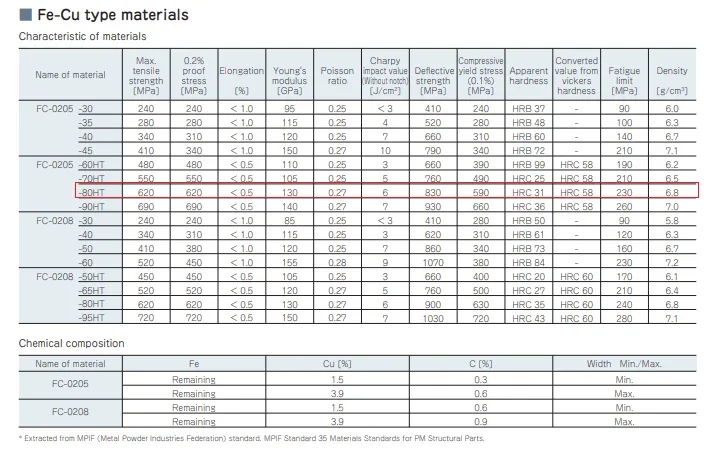
(material fc-0205-80ht):

No. 1 ring: z105 m0.75 b8

No. 3 planet: z45 m0.75 b4.5

No. 1 sun: z15 m0.75 b5

total reduction: ( 105/15 + 1 )^3 = 512


the suns following the first stage are incorporated to the carrier-planets where three thorns of diameter 5mm h7 will be set. the thickness of the door-planets is 3mm. there will also be a “horse” in steel from 0.5mm to separate the stages.Top v232w.webp200nm model reductionSTG5 v27.webpin addition to the previous 3 stages

No. 1 ring: z105 m0.75 b8 (the same)

5 planet: z35 m0.75 b7.5

No. 1 sun: z35 m0.75 b8

total reduction: (( 105/15 + 1 )^3 ) ( 105/35 + 1 ) = 2048

in the carrier-planets will be set five thorns of diameter 5mm h7. the thickness of the carrier-planets is 4mm.


1- I have not foreseen any type of bearing to knock down the costs, only lubrication (recommendations? ).

2- I'm not sure about the sizing, I did some calculations but very blandi. there were too many coefficients, to me incomprehensible, to be considered and at some point I abandoned them.

3- I do not know what tolerances to insert and where to insert them (I assume it is better to work on the planets).


I'd like to have any of your feedback. I will be immediately present to answer any questions of your clarification, I imagine I have left many details.

Please do not send me back to other calculations because I would not have the preparation to deal with them but especially time. This week I absolutely have to ship the designs to make plastic and sintered molds.


Thank you.

enrico povolo
 

Attachments

for motors, I would say that the choice is good for having the possibility to manage them as cc engines even if they have the possibility to have a regulation similar to the pulse train.

already the first thing I see from the pictures, without reading in depth is the speech of the epicloidal with 5 satellites. I can tell you that to ensure that all 5 work together, very high precision is needed. Normally, on large objects like a shoe box.... 3 satellites are used and in the most pushed cases up to 4 satellites, such as red gearboxes and bonfigloli.

realize 3 stages of identical epicycloidal means to optimize the cost of the pieces, but all components must resist the maximum torque of the last stage. Alternatively, you make 3 different stages (which you do on industrial gearboxes).
reducer t2=50nm.the mechanical characteristics of your mixed iron/black sintered material are these:
1607362119299.pngpractically behaves more or less, so at first analysis, like a c45 reclaimed.
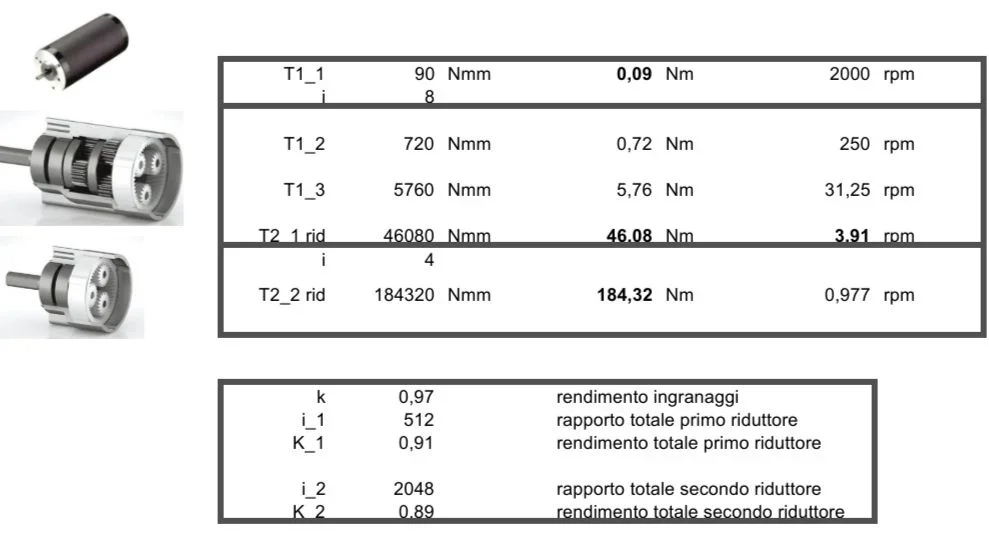
if you enter with 90nmm and do i=8*8*8=512 you get with unitary performance about 46nm....about those you need.

I saw that you used a different formula to calculate the reduction ratio, but if it were true that you do more than 500 reductions for each stage ... do three stages 500*500*500= you would get a tide of knm...
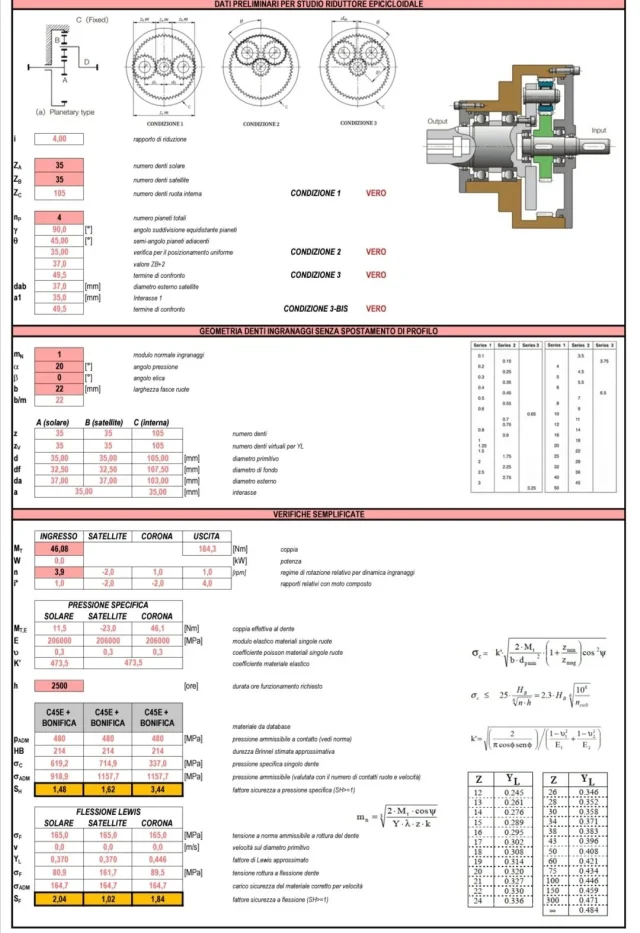
1 stage (ok)1607362752629.png2 stage (ok)1607362872727.png3 stage (no)1607362992529.pngas you can see, with these mechanical and geometric characteristics that I used for calculation we can not have resistance to bending and wear / fatigue.
so either we better investigate the sintered material or the third stage is weak.
Keep in mind that I am using the basic formulas for bending and wear, so I am not applying complex and strict rules that would lead to even more precise results (they would say that it does not hold).
khk gear advice that has the online computer of the various gears, you register for free and you can count. also on the site there is a beautiful guide that explains everything, even epicicloidali. If you look at my posts on epicicloidali that we did this year you would have references, however as you see, I'm analyzing here without remands, unless you want to walk alone.
I believe that some mistakes you made not considering the right couple/turns of each stage and the fact that each pair of gears has 0.99 yield...and eventually you lose in 3 stages at least 10% of the input power.

It is good that you do not put bearings, but a pin must be able to work with a material or at the same hardness if high (spine cemented with sintered at high superficial hrc 52/60hrc) otherwise there must be something bronze or plastic (see boccole igus).

Surely the synthetic lubricant, fat enough fluid can give you more system life and capillary lubrication.

I only saw now that I calculated with width 5 mm.... I should have calculated with the absolute minimum of 3 objects... which is 4.5 therefore even worse.
reducer t2=200nm.starting from the previous pre-pair...with the last i=4 report we arrive with unit yields to an output pair of 184nm...more or less we are.
1607364221325.pngEven this poor stadium suffers cursed.
in all cases, the calculation I used provides for a duration in 2500 hours that affects only the specific pressure duration and therefore, you might think to reduce the actual hours of operation depending on the requirements of the application.
with regard to lewiss is the strength to bending... and if there is good... if there is not even two laps.
 
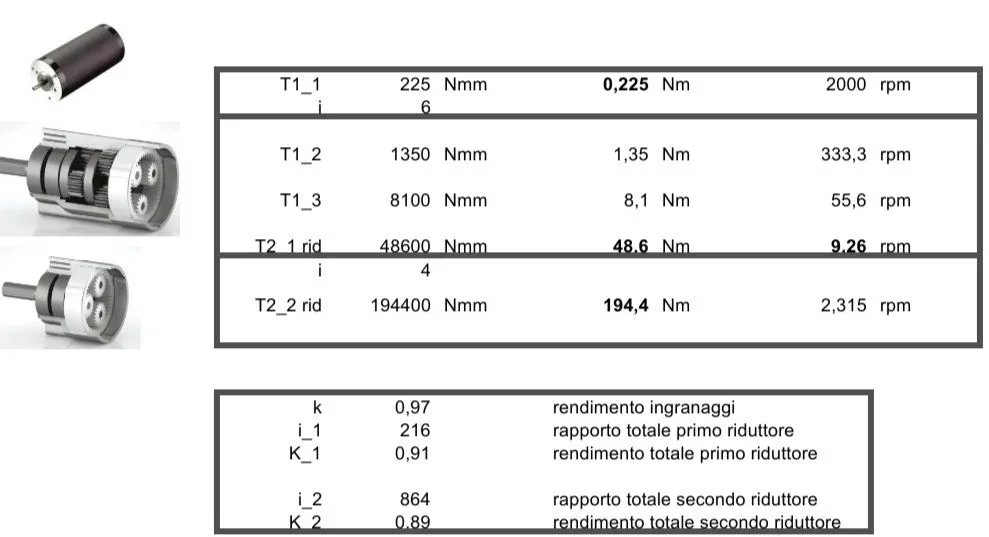
the main data can be summarized below, so as to list pairs and running turns. Moreover, it can also see a performance, using a slightly more realistic value, as it becomes the torque increase that serves the engine.
Screenshot_20201207_204758.jpgI read medicated with t2 the outgoing couple and with t1 the incoming couple at various stages and gearboxes.

if you have some time you can help us @ pietro2002. all comments are welcome.

for engines I am looking at these brushless qui for an idea.
 
Last edited:
you can do different things. for the first stage, reducing to 1000 hours you can increase the width of the band and you get to decent results.Screenshot_20201207_212622.webpwhile the second stage has to be made a lot bigger and with higher module.Screenshot_20201207_212643.webpThis is a little my point of view, without much deepening the type of sintered material you are using.

According to these calculations, changes are necessary.
you can also try to build a prototype, mount it and do n opening cycles....see if it dies or not. then launch production.
 
Thank you very much for this thorough analysis.

tomorrow I will feel immediately if you can have better as material.

regarding the engine this is an indicative chart:1607380183621.webpCould an acceleration/decelection ramp help?

question by ignorant: the calculations you have made, according to the formulas attached, consider only a couple of gears in hold? or do they already realize that there are more gears in grip at the same time?

question by ignorant n°2: Since the planets made by the same sintered mold precision affects so much?

hours of operation
in most applications the valves move 90° every 12 hours.
admitting that they work 365 days a year for a minute a day would be about 6 hours a year.
I don't know if this could change anything.

This beautiful calculator you use, or have you created, can I find it somewhere?
 
I see to answer you by order:
- acceleration and deceleration ramps are useful for transferring the torque without shock but it is not that it makes you recover 50% transferable torque capacity especially if the tooth does not carry the load
- for the calculation of wear the satellites are considered in taking, therefore the actual number of teeth in socket
- all gears must be made precise, or better must have a very regular tooth profile because more satellites gear with solar and crown and if you are not always in grip all the necessary teeth, you have an overload of the teeth in socket and you wear or break the tooth
- definitely with a base hours of about ten hours a year, so let's say 20 hours before exit of two-year warranty, we have that wear is very limited and therefore raises the coefficient of wear. But....the fact remains that the bending does not hold the small tooth.
- the calculator I use is a excel sheet embedded in a large shrink calculation project to which I have been working for about three years
 
I try to put myself in the debate, I have made a general idea of the problem and here I do not go into technical merit, but I am on the general.
to develop such a reducer, if you do not have the experiences, it seems very risky, to be positive success can have a low percentage and consequently a good percentage to fail.
Mine is not a criticism to diminish someone's will or abilities, but it just doesn't improvise on certain things.
If you do not have the skills in the company or undertake to hire them, or if this is not possible, you make some commercial agreement with those who already have the knowledge to solve the problem in an acceptable way in terms of time and cost.
making moulds for sintered gears has costs, going to the market with an unfunctioning product has economic costs and especially image costs.
the game is worth the candle? I'm sorry if I've tedied you, but sometimes before we dive into the calculations, it's better to have a broader view of the problem, so take the road less rough, and while doing so you're wrong.
 
If you only have 90° rotations, why not use an actuator?

for bearing speech, you could use self-lubricating bushings, considering that as I imagine there is the risk of contamination from dirt are the best choice.
 
Good morning, I leave from your first message: you have to operate ball/fly valves, and the current system does not work and has been replaced with a system too expensive, your purpose is to operate the valves at a reduced price, right?

I think the starting date should be the maximum cost you wouldn't want to waste.

sincerely before designing a three-stage reducer, I would try to see what's already existing, if you only have to rotate 90 degrees a storm, there are a lot of electrical or hydraulic actuators, which probably cost less than all those gearboxes.
 
hi pietro, what you say is true but backing is no longer an option. I already put my face. I'm not here to ask for moral support, but professional.
a trade agreement is well accepted.

hi stevie, some applications require larger rotations, if not complete.
I know and have already used igus, I do not exclude them. I have not predicted seals, I try to avoid contamination with profiles along the circumference.

hi bip, the selling price of this product is about 70 euros for the 50nm version, at least I have to pay half. making some accounts are: 6€ engine, 3€ plastics, 3€ per stadium and 8€ electronics.
 
@enrico povolo Did you try to look on the market like others told you? there are rotating electric actuators for valves already ready to be mounted on the standardized attack, both for 90° and wider rotations: I quote two or three, whom I know and have used personally (there are many others):
 
hello paul, difficult to find the price, they cost for charity the right but I would not be able to sell them.
electronically it is a somewhat more complex project. Meanwhile we communicate with the servo through canbus, then we have 2 digital inputs, an analogue for 4-20ma sensors and a power output. He is not a simple servant with an end.

Anyway. . .

My two main problems are a correct sizing and tolerances to be applied.

There are endless solutions to this problem, I just need to find a tangible one. . .

For example, without overturning all my designs and keeping, therefore, the same outer diameter of the crown (now 90mm), I could opt for a module 1 with 75 teeth, with 15 teeth sun the reduction per stage would be 6. I'm getting a little high, but is it viable? I suppose so.
the highest initial cost is the crown, I would like to keep it equal in all stages.
 
hi pietro, what you say is true but backing is no longer an option. I already put my face. I'm not here to ask for moral support, but professional.
a trade agreement is well accepted.

hi stevie, some applications require larger rotations, if not complete.
I know and have already used igus, I do not exclude them. I have not predicted seals, I try to avoid contamination with profiles along the circumference.

hi bip, the selling price of this product is about 70 euros for the 50nm version, at least I have to pay half. making some accounts are: 6€ engine, 3€ plastics, 3€ per stadium and 8€ electronics.
Well, I don't think you'd lose your face, I admire you so much because an electronic guy who came to do what you did is to respect.
In companies the important thing is to get to the result, but people must be able to reach a result. I don't know what your reality is, but if a 22-year-old electronics has to design a 6-stage epicyclical reducer. I don't understand anything wrong.
 
hi, I took a look at this discussion, since this topic is particularly interested in me, I took a quick look at the calculations of mechanicsmg, and it seems to me that it did not alter the elastic properties of the material, which is not a steel, could have altered the result of the calculations? regarding bending resistance, leaving unchanged the geometry of the gears can not increase the band width and just?
 
to make two calculations:

hypothesizes an entry with the engine of 0.2 nm to 3000 rpm

reduction after 3 stages: 1/512

neglecting yields:

: 102.4 nm to 5.86 rpm

going to the site khk gear and assuming to use for the reducer sun from 200 nm, a

gear z= 34 module = 0.8 band = 8

rectified teeth and treated induction, surface hardness 55 hrc

max transmissible torque = 7.9 nm

max torque transmissible to wear = 1.71 nm

even if it is likely to multiply by 5 (number of satellites) such values, we are far from being able to

endure the 102.4 nm incoming!
 
How beautiful that you are all interested in this theme. That's what our enrico needs.
we can answer some details:
- actually using the elastic module that is about half 130000mpa, improve wear values, but only 5%
- regarding the transformation from module 0,75 to module 1... keeping the outer diameter crown equal, means that the reducer does not become larger and this means that there is no place to transmit and develop greater power. therefore in order to be able to transmit to bending more power it is necessary to make the biggest reducer. It is true that by decreasing the reduction ratio, it passes less couple and therefore you might think you can do it.
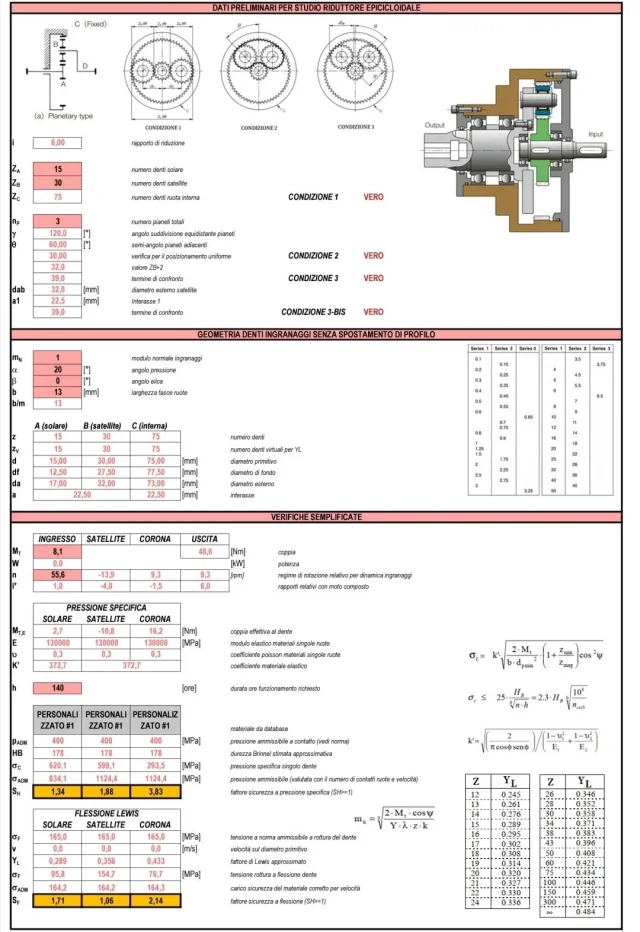
- we think to make three stages with i=6 for each stage it is necessary that ilotire eroghi 225nmm to 2000rpm and therefore the calculation scheme is as follows:Screenshot_20201208_135326.jpgthen we immediately verify the third stage of the first reducer:

I reduced the hours to 140 considering that the competition makes 100 thousand cycles with less than 5 s/cycle. to wear we are and to bending also.... but you have to get the engine and then consume a little more current.
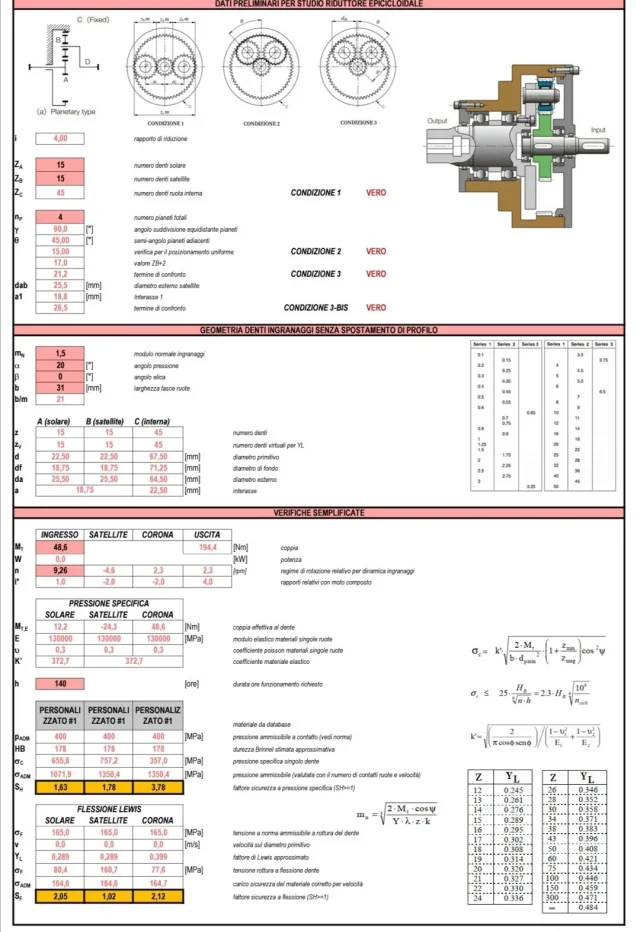
However if you still use the inner wheel to make the stage with i=4 there is no we do it and then either wear the 28 mm band for the 200nm reducer or a set of gears totally different.Screenshot_20201208_140630.webpthe fourth stage to have the 200nm out should be with 4 satellites and module 1.5.Screenshot_20201208_142633.webp
 
among the many things however try to see to buy steel gears cemented by cmercio. khk gear has as many as you want....maybe you can have small stuff at low cost.
 
always a spannometric calculation, for the reducer of 200 nm, do not wield if you do not go at least on module 1.5!
 
if you go to the site khk see that there are crowns m1.5 from : 100, 80, 60 and 50 teeth.

If I were you, before mobilizing the sintering, I would try to make a prototype with the details purchased from khk, see the result, take any changes and then parts.
But it's not a two-minute job. .
 

Forum statistics

Threads
44,997
Messages
339,767
Members
4
Latest member
ibt

Members online

No members online now.
Back
Top