lorenzoneri
Guest
Hello everyone
I am new to the forum,
in the past I have tried several times to learn the use of some cfd program, but with little results.
I would have a question to which probably experts like you will be able to answer without even opening the cfd program.
I am a model of remote boats,
in particular those called hydro,
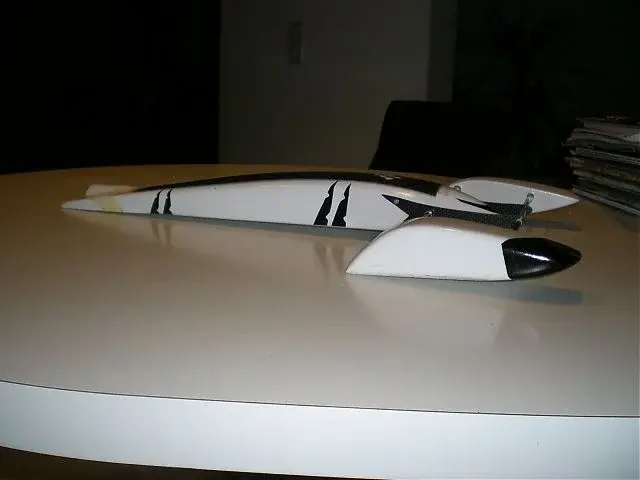
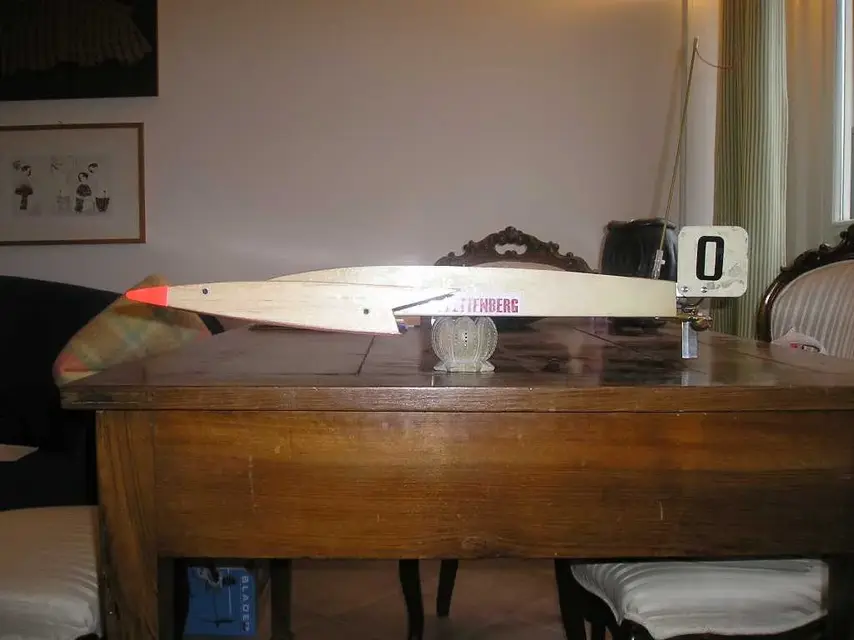
as you can see in the attached photos are set up by a central body and two side boots.
in planata the points of support are only the extremities of the boots and the stern husk, which sink only a few millimeters.
my question is, what is the best aerodynamic configuration of the boots?
there are two schools of thought, that of the photo to (white hull)
and that of the photo b with the "tail" up (wooden hull).
considered traveling at 80km/h on a firm surface (water)
what interests is the least possible resistance to progress.
thanks in advance,
Lorenzo
I am new to the forum,
in the past I have tried several times to learn the use of some cfd program, but with little results.
I would have a question to which probably experts like you will be able to answer without even opening the cfd program.
I am a model of remote boats,
in particular those called hydro,
as you can see in the attached photos are set up by a central body and two side boots.
in planata the points of support are only the extremities of the boots and the stern husk, which sink only a few millimeters.
my question is, what is the best aerodynamic configuration of the boots?
there are two schools of thought, that of the photo to (white hull)
and that of the photo b with the "tail" up (wooden hull).
considered traveling at 80km/h on a firm surface (water)
what interests is the least possible resistance to progress.
thanks in advance,
Lorenzo