• This forum is the machine-generated translation of www.cad3d.it/forum1 - the Italian design community. Several terms are not translated correctly.

channel coupling

  • Thread starter Thread starter cal022
  • Start date Start date
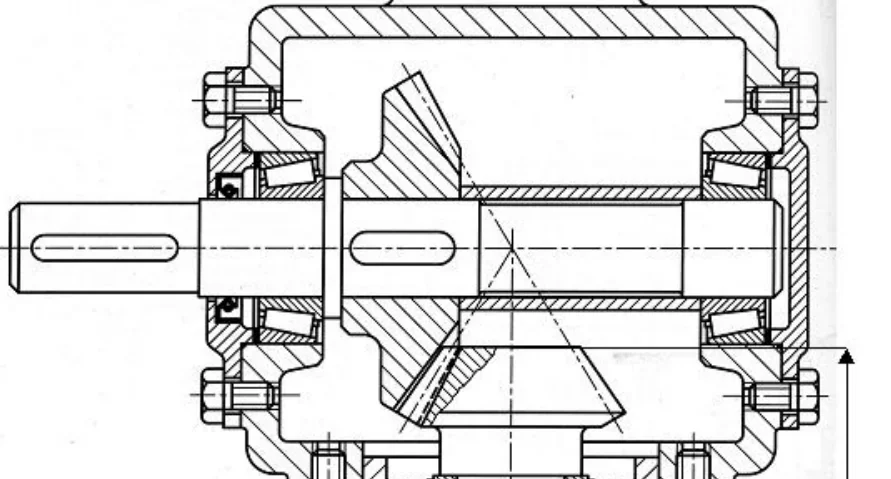
the only thing on which I am not sure is the beginning of useful stretch of channel, which begins from the spacer, which however is not channeled, so I do not know why always on that representation of unified example, compared to the hub, in the tree first begins this useful trait...
 
if the diameter of the spacer hole is equal to or slightly higher than that of the outer diameter of the grooved shaft is correct that the grooved tract begins under the spacer because it does not create impediment and guarantees the line of what you climb after. if instead you start the useful trait after (at right) of the spacer you can not slip a grooved female piece because you plant where the milled ray begins. see my images of the beginning.
 
if the diameter of the spacer hole is equal to or slightly higher than that of the outer diameter of the grooved shaft is correct that the grooved tract begins under the spacer because it does not create impediment and guarantees the line of what you climb after. if instead you start the useful trait after (at right) of the spacer you can not slip a grooved female piece because you plant where the milled ray begins. see my images of the beginning.
you're right, too, the hub would be nestled
 
one last thing, and then I let you go ahahah (incidentally I thank you because you helped me very much and I owe you):
the remaining parts of the overall (e.g. the right cap) are all right?
Would the frame work well?
 
one last thing, and then I let you go ahahah (incidentally I thank you because you helped me very much and I owe you):
the remaining parts of the overall (e.g. the right cap) are all right?
Would the frame work well?
I can't find mistakes especially things that aren't good.
Well....to get rid of you....contribute in the various posts that are on the forum 😉
 
I apologize if I re-disturb you but tomorrow I have the exam and I had a few doubts about two things I would ask you and that once again I did not find in my book: Should I put a lubricant seal ring, the most correct position in the overall in question where would it be?
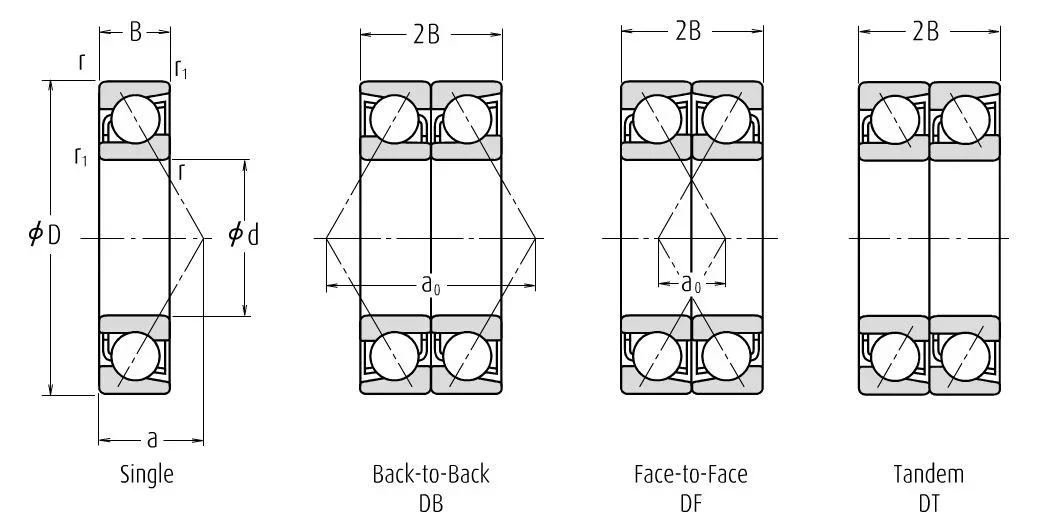
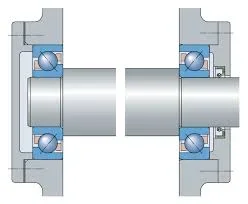
and then, if I wanted to use two oblique ball bearings in tandem contact, with a stress that eventually came from the right, I should have blocked the double bearing both on the inner ring and on the inner ring from both sides? or as if it were the dx bearing of an ad or configuration, then left on the outer ring and right on the outside?
 
for the lubricant seal, it is done as in all gearboxes in the left lid.
look at this image of your colleague from another post:1724868172993.webp
 
if the left bearing making hinge replaces it with two oblique contact ball bearings you must lock them together.
see db or df. 1724868560866.webpif you use dt and push to dx move the tree and it's not okay.
 
I apologize if I re-disturb you but tomorrow I have the exam and I had a few doubts about two things I would ask you and that once again I did not find in my book: Should I put a lubricant seal ring, the most correct position in the overall in question where would it be?
and then, if I wanted to use two oblique ball bearings in tandem contact, with a stress that eventually came from the right, I should have blocked the double bearing both on the inner ring and on the inner ring from both sides? or as if it were the dx bearing of an ad or configuration, then left on the outer ring and right on the outside?
here I realize that in the last sentence I messed up to explain myself, I wanted to say “to left on the outer ring, and to right on the inner ring”
 
Calm down. If the left bearing that is currently stuck axial it must be even if you put a rock....3 bearings.....
right there is the roller bearing that allows axial shift.
is an isostatic system.

push right or left do the same.
 
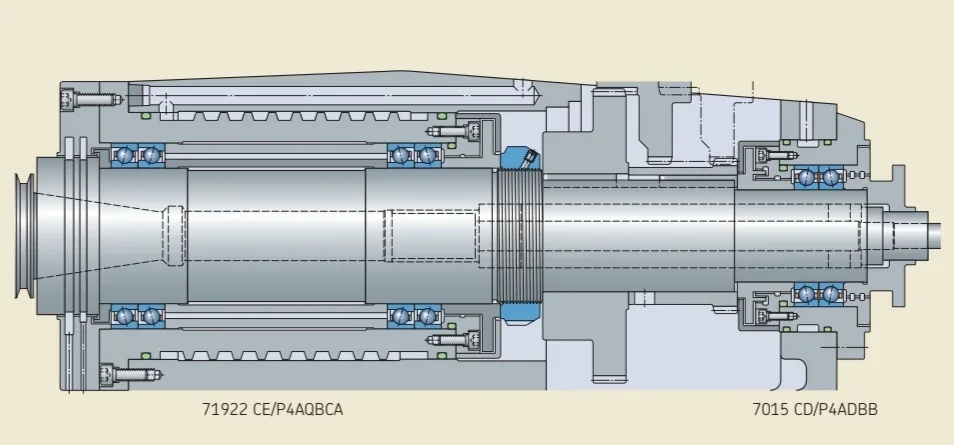
ok, but if I have a carter with inside a tree and want to use a configuration of tandem contact bearings because there is perhaps a certain oblique push in which points of the rings the locking of the bearings takes place?
 
ok, but if I have a carter with inside a tree and want to use a configuration of tandem contact bearings because there is perhaps a certain oblique push in which points of the rings the locking of the bearings takes place?
the explanations you find by looking for "skf super precision".
Screenshot_20240828_232146_Samsung Notes.jpgScreenshot_20240828_232449_Samsung Notes.jpgScreenshot_20240828_232512_Samsung Notes.jpgthe oblique thrust is always radial and axial. therefore an oblique contact brings better than a pure radial.
rings are always one inside and one outside.
I don't understand your question. You always have to block everything.

If you put two bearings that react in the same direction, they are still stuck in one verse.

the tandem bearing on one side shows everything, so there can not be a tandem and a roller on the other side.
 
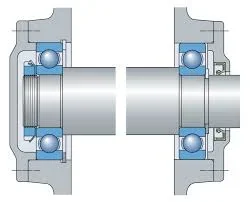
in the third photo if you see the tandem bearings on the right are stuck on the inner ring from the wreath and the shoulder while the outer ring is blocked only on the left where there is that additional component that blocks, while on the right is free; But the other tandems, like in the first photo you sent, are stuck on the left side of both sides, so I was wondering what they were blocking completely or not at the left and at the right
 
in photo 1: left and right basket as if it were a:1724881734726.webpin photo 3: left recessed with dx unilateral tandem (packed to charge the two bearings between them because otherwise who keeps them at a distance to work together?) and right contrasts as it was:
1724881627342.webp
 

Forum statistics

Threads
44,997
Messages
339,767
Members
4
Latest member
ibt

Members online

No members online now.
Back
Top