• This forum is the machine-generated translation of www.cad3d.it/forum1 - the Italian design community. Several terms are not translated correctly.

copy body into a multi-body

  • Thread starter Thread starter Psikokite
  • Start date Start date

Psikokite

Guest
Good morning to all, they are at the very first weapons with inventor, but also with the paradigm of parametric cads.
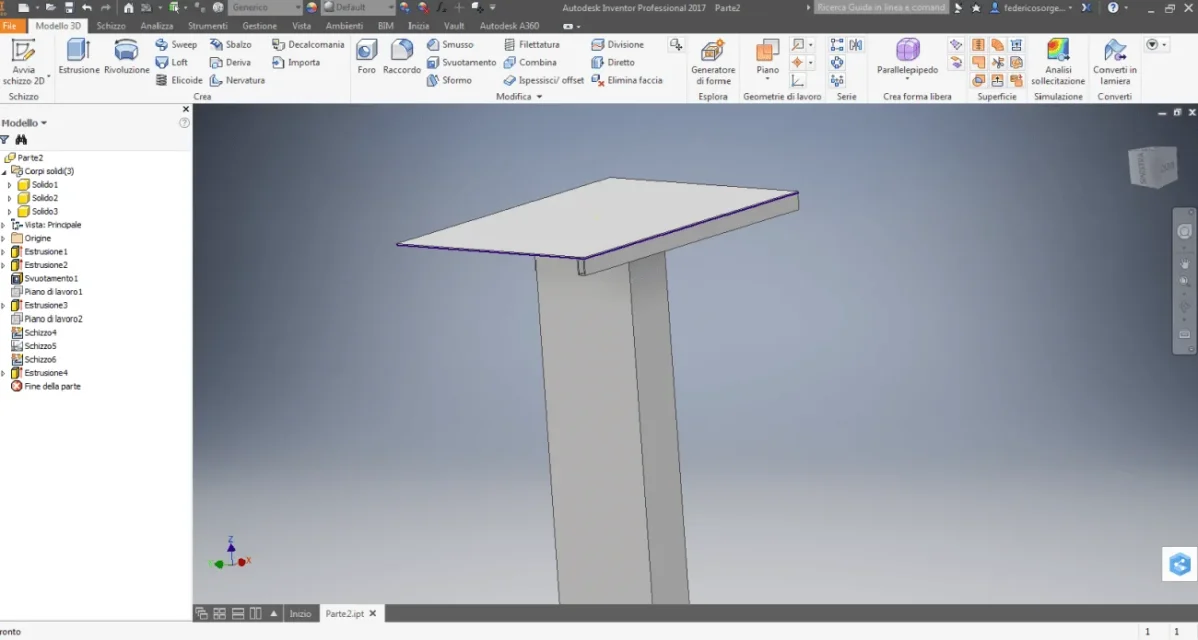
I hope the image is clear. If you want to copy the horizontal tubular under the sheet, then use it on the other three sides what should I do? the case in question is very simple, I ask to understand how I should behave in case they were complex or particular bodies.
Thank you.
 

Attachments

  • Immagine.webp
    Immagine.webp
    47.5 KB · Views: 28
What you see is a part, I think I understand, but you're creating a set.
in a set you can insert the same component n times, binding it as it is necessary.
 
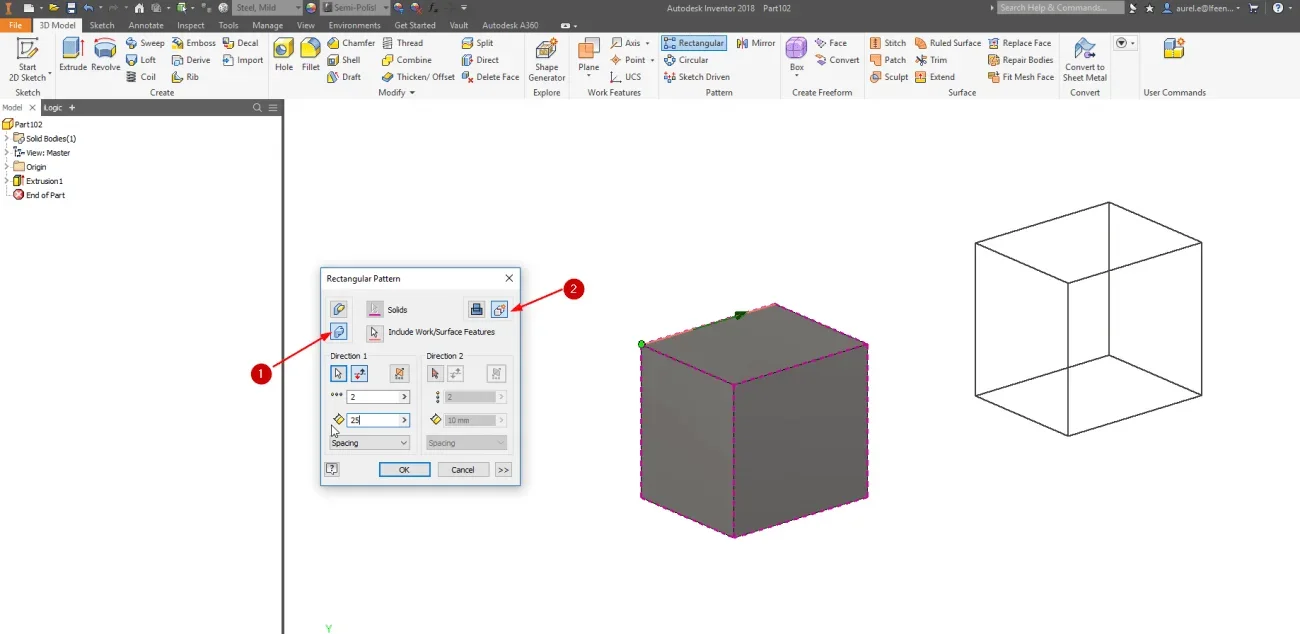
in a multibody you can use body pattern by selecting the buttons as in quoesto screenshot:2019-02-21 11_54_26-Autodesk Inventor 2018.webplater you can use move body to move the new body that you can also edit.

in unn together simply do ctrl+c, ctrl+v (painting pair) and set relationships.
 
do not use a multi-body to make an assembly: created separately the various parts (.ipt) and then creates a assembled (.iam).
 
do not use a multi-body to make an assembly: created separately the various parts (.ipt) and then creates a assembled (.iam).
I disagree. The multibody is one of the most stable ways to have a parametric set in inventor. there would be to discuss the non-propprit standard way as psikokite is creating the second body...
 
I disagree. The multibody is one of the most stable ways to have a parametric set in inventor. there would be to discuss the non-propprit standard way as psikokite is creating the second body...
to make assemblies were invented, on purpose, the assemblies.
the multibody serves for more.
also why how do you manage a distinct multibody?
 
to make assemblies were invented, on purpose, the assemblies.
the multibody serves for more.
also why how do you manage a distinct multibody?
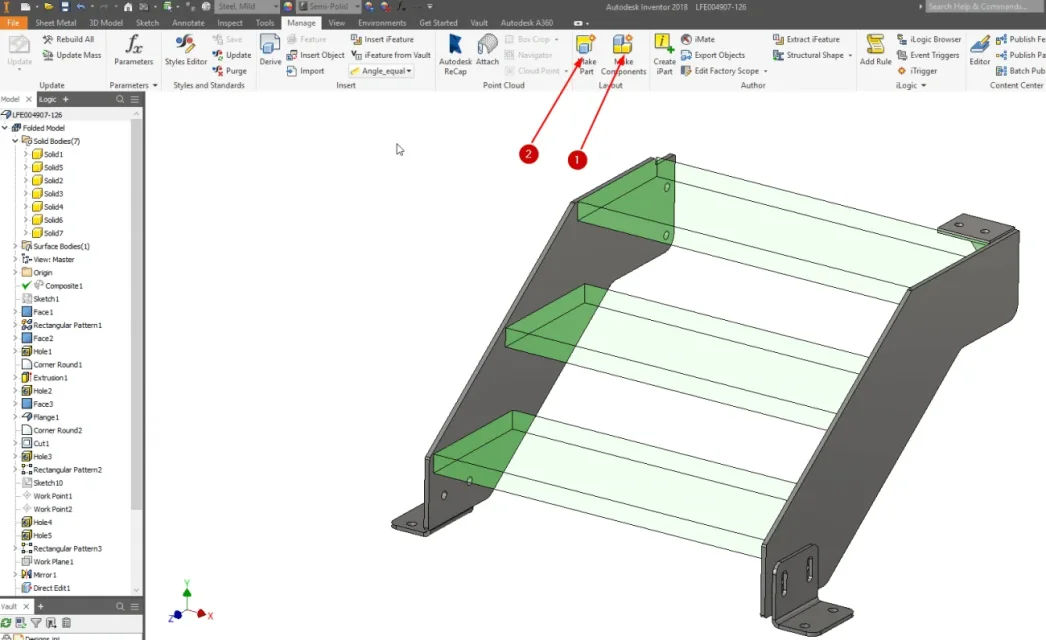
The multibody will be the master. create your own set using the make components command (or make parts).2019-02-21 14_11_49-Autodesk Inventor 2018.webp every modification in the master is transferred to the children. The axieme remains solid. especially useful when continuous changes and components are expected to be related to each other.
Take a look here:
https://synergiscadblog.com/2014/07/29/inventor-multi-body-part-modeling-part-1-of-2/
the multibody serves for more.
..can I know for what other reason do you use multibody?
 
Last edited by a moderator:
to me it seems a little orthodox thing: not being able to put constraints between the parties is not an advantage, indeed. management of materials becomes impossible, inserting library parts also. I don't see advantages.
 
The multibody will be the master. create your own set using the make components command (or make parts).View attachment 52621 every modification in the master is transferred to the children. The axieme remains solid. especially useful when continuous changes and components are expected to be related to each other.
Take a look here:
https://synergiscadblog.com/2014/07/29/inventor-multi-body-part-modeling-part-1-of-2/..can I know for what other reason do you use multibody?
For example, when I need to model ducts.
In that way model all the form I need to turn off the rest of the part, eventually I do a boolean subtraction and away.

I now no longer use inventor but it is a method I still use.
I still don't agree on the use of the multibody to axle me, you have an extra file to create/manage and I don't see advantages.
indeed, you probably have problems in material management, distinct etc, as reported by exxon.
 
to me it seems a little orthodox thing: not being able to put constraints between the parties is not an advantage, indeed. management of materials becomes impossible, inserting library parts also. I don't see advantages.
each applies the software to its needs.
I'd say that the multibody is absolutely to try, experiment, and decide if it can be useful.
 
I use the multibody only to have the commercials in a single ipt, with the constituting bodies manageable well during the table masses (e.g. bearing with the internal and external rings that will be treated and the spheres no).
what with a unique ipt can't do and it's not the case of wasting iam with ipts connected.
For the rest I avoid them as the plague, there is no connection to the parameterization that will make me change my mind.
then everyone has his needs and habits.
I would never recommend a novice to start approaching inventor with the multibody, I started from rel 5.3 and arrived until 2014 before appreciating its characteristics, only for the use described above.
 
In fact, besides our friend said that it is at the very first weapons also in the use of the parametric.
the best thing to do would be to start from the abc, not only of inventor but of the use of the parametric cad.
 
Thank you all. My main problem is how the workflow in parametric works, which is totally you different from the non- Parametric house that I have always used. for the moment I have departed with a set and I have created the various parts. If I create different .ipts and have the need to have references regarding a part that is in another .ipt, how do I get a projection of that outside?

other small question, excuse the off-topic, could you recommend me some text or online resource to understand what is the right line of work with the parametric? If I begin to study it for my own facts, trying and retrying, maybe I will have results, but I always fear not to have the right way to operate.

sent by my notes 3 using tapatalk
 
What do you mean by references?
you can "import" into your ipt several things from another side.
parameters, sketches, geometry, the solid itself.
You do it with the "derive" command, select the file from which you need entity and then choose from the window what to import.
 
to give a targeted response, you must know what kind of products you treat.
I personally never use adaptive sketches, which are useful but very dangerous, in addition to weighing down the model on which you work.
 
if you can be useful, know that the logic "parametric" you do not learn in front of the cad, but (as it has allowed to transpare stefanobruno) along with the planning concepts of the design and therefore depends on the type of product. but also from other factors such as whether it is projects developed by the individual or team, if the same are subject to update, whether unique pieces or serial production, and much more.
 
Thank you all. My main problem is how the workflow in parametric works, which is totally you different from the non- Parametric house that I have always used. for the moment I have departed with a set and I have created the various parts. If I create different .ipts and have the need to have references regarding a part that is in another .ipt, how do I get a projection of that outside?

other small question, excuse the off-topic, could you recommend me some text or online resource to understand what is the right line of work with the parametric? If I begin to study it for my own facts, trying and retrying, maybe I will have results, but I always fear not to have the right way to operate.

sent by my notes 3 using tapatalk
Take a look here: https://www.autodesk.com/autodesk-u...ssembly-modeling-techniques-2013#presentationIf you understand English better, but there's a video anyway. one of the recommended techniques is the multibody that in my opinion is a very useful tool when the parts depend on the geometries of the other components. If you say you have time to try and try again, it won't be hard to understand and consider when you need it. the possibility to have multibody multi-thickness has been requested by users for years to autodesk, and is considered one of the greatest improvements of the 2018 version.
 
the multibody was created by autodesk as many users coming from solidwork felt the need. has copied however badly as in solidwork you can do directly separate from a multibody, while autodesk does not. I use multibody only for standard objects in our catalog, but I do not use them to break them or make them distinct.
 
I agree that the multibody is suitable for those assemblies intended not to be in any case divided. skf, for example, creates the models of their bearings.

I prefer to edit those parts too to have the relative movement of the components and assign them different materials that are then kept at any level. this increases the number of files to manage, but if you have a good organization of the libraries, you do not even notice their existence.

the distinct, even if a little bit slender in inventor, allows to manage assemblies and subaxis in all the ways thinkable, while the multibody are in this penalized, definitive reason for their use only in narrow and well defined areas.
 

Forum statistics

Threads
44,997
Messages
339,767
Members
4
Latest member
ibt

Members online

No members online now.
Back
Top