• This forum is the machine-generated translation of www.cad3d.it/forum1 - the Italian design community. Several terms are not translated correctly.

correction model

  • Thread starter Thread starter baleritec
  • Start date Start date

baleritec

Guest
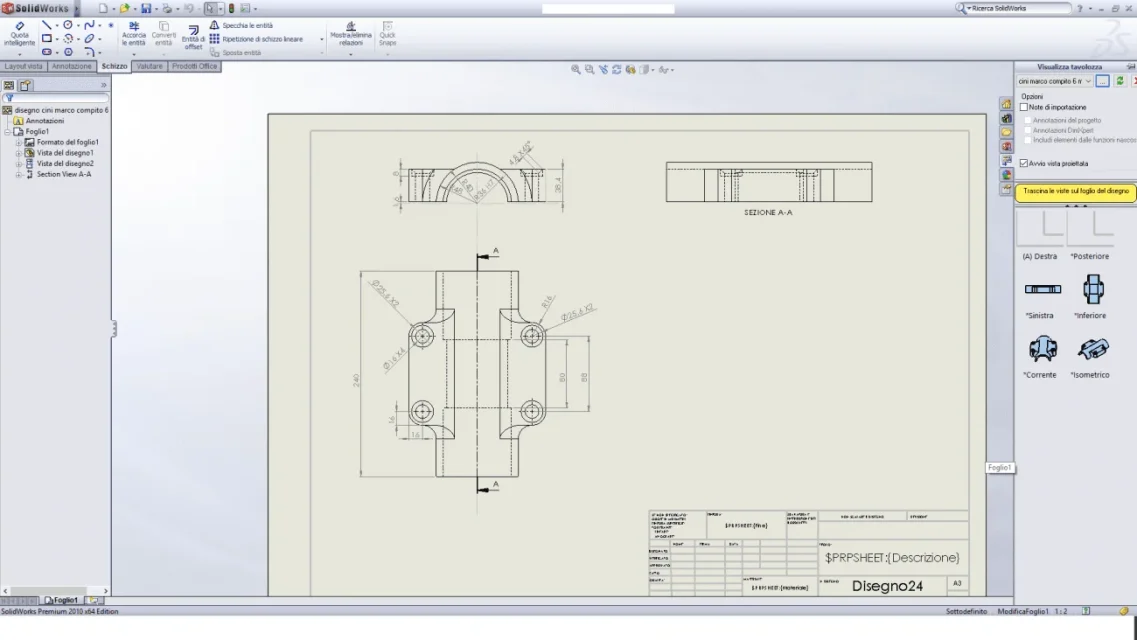
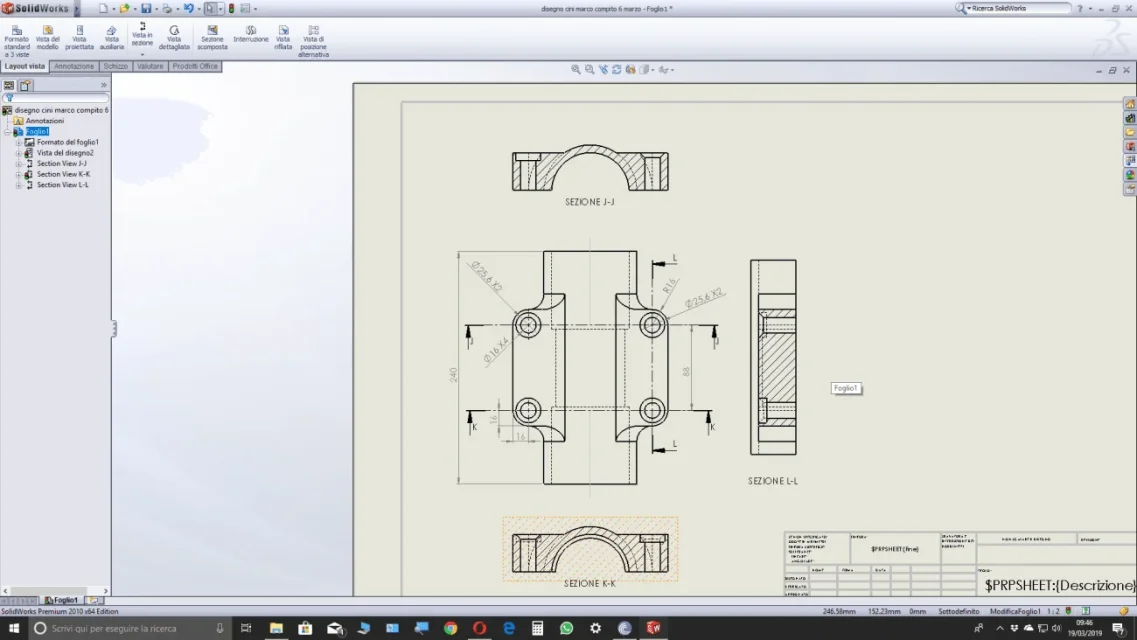
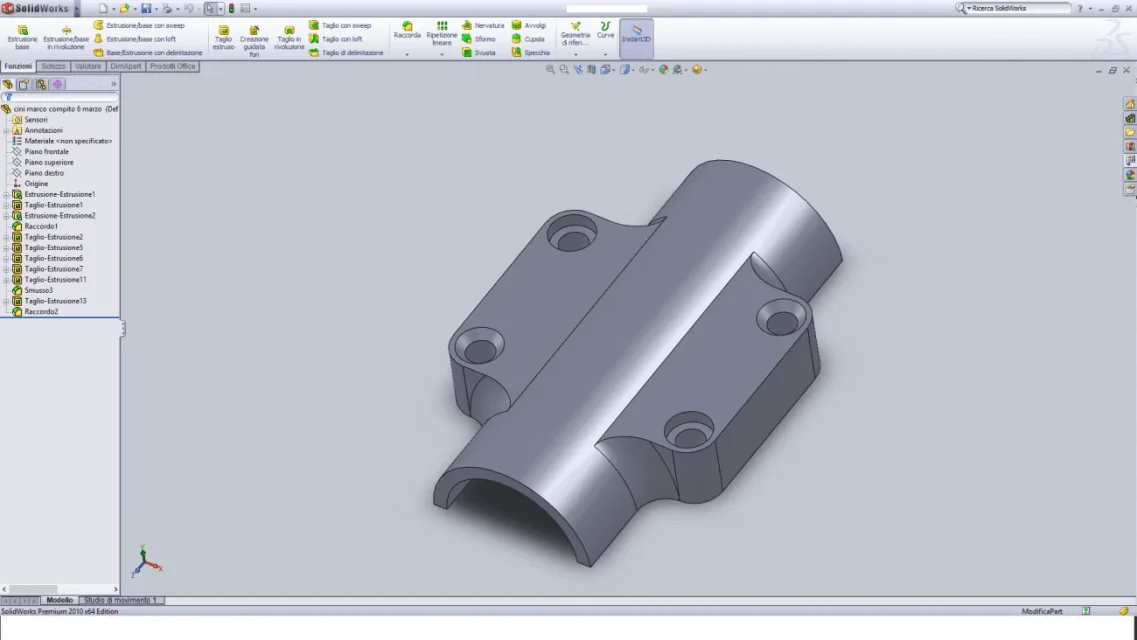
Good morning to all, I would like to correct this task together (ites): In the meantime, I would like to know if you think the quotas are right: to then insert also geometric tolerances and a view in section (which I already put, but I don't know if it is right):

model: Screenshot (173).webpdrawing:
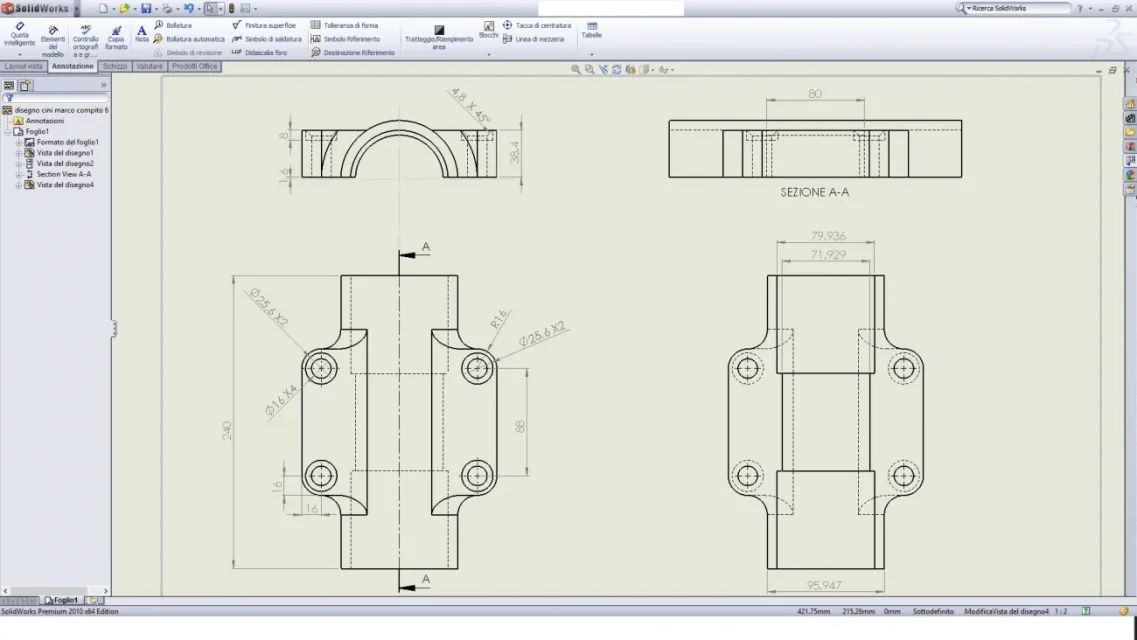
Screenshot (172).webp
 
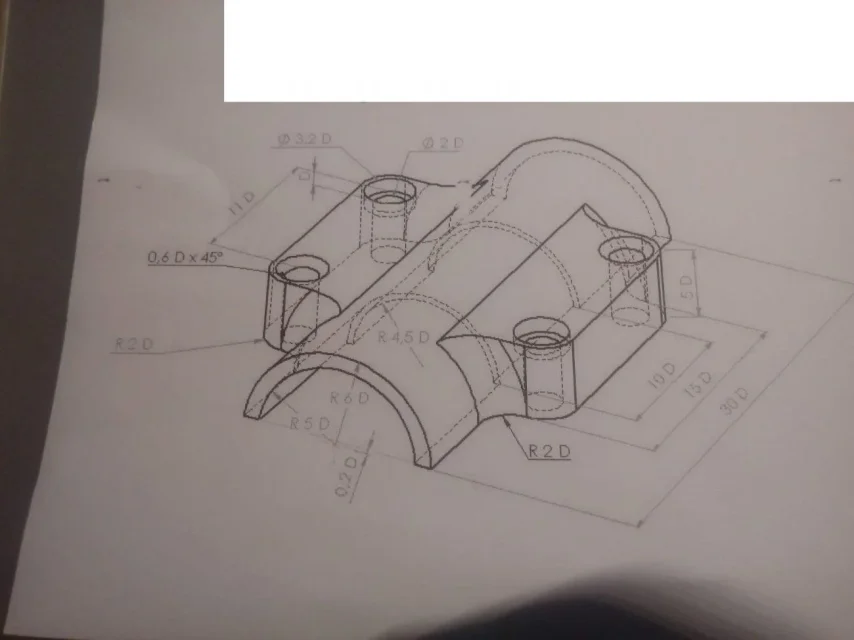
this is the initial design that gave the prof, from which to obtain the model and the design; d = 8
unnamed.webp
 
We do well the screenshots... you make a beast effort to read the drawing

read the countless other posts, some also recent, where you always say the same things
no hidden geometries are listed
quotas should not be repeated

in your case:
the section does not make sense and does not even have the samples
the sections serve to highlight parts of the model, if you put the hidden lines you do not understand a patch
even if they are semicircles the diameter is quoted and not the radius
the smmussi do not quote in that way

too many, too many, quotas to be able to say something better about the design. tolerances are the last of the problems
 
Last edited:
geometric tolerances and view in section are required in the task, so there must be force.

1) Are the views I put right?
2) I repeated the diameter quota 25.6 because they are 2 hollow holes and 2 blades, is it not correct?
3) I have listed the rays because the cut is 0.2*d from the center

thank you anyway, I take the design and place it (that you see better)! !
 
1) Are the views I put right?
as I wrote no. the section is not right
I repeated the part of diameter 25.6 because they are 2 hollow holes and 2 blades, is it not correct?
no because no is clear what you want to communicate. if there are different holes, they must be rendered indisputable.
therefore two sections perpendicular to the a-a line and passers for the holes centers (the space is)
3) I have listed the rays because the cut is 0.2*d from the center
This means that you have to quote the eccentricity of the hole center and not that you have to quota the radius.
above all the h7 tolerance referred to radius 36 and very different from that referred to diameter 72
 
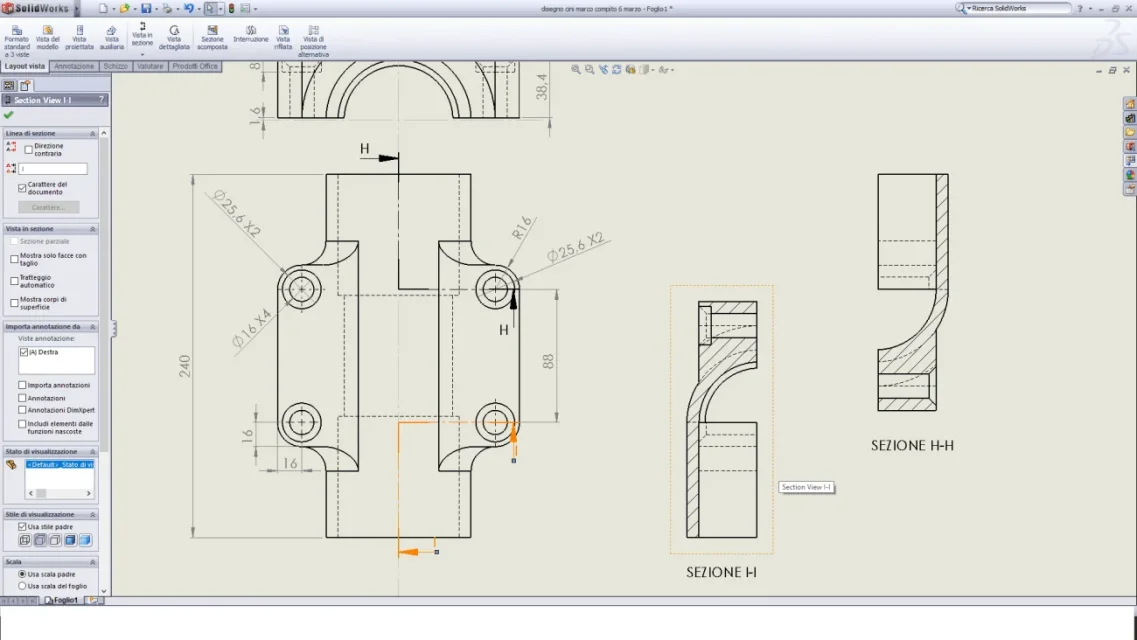
Screenshot (174).webpI added a view, why don't I know how to quote the inside depths, which section should I take if not that?

edit; I saw after posting the post above.
 
I make clear about what I have to do:

- use the assigned number as a value of d = 8
- insert geometric tolerances.
- use if necessary and/or appropriate sections.
 
that 4th view you added doesn't need anything and you don't understand where it comes from
 
Why do you ask for help if you don't follow how much you are advised and explained?
 
I mean if it's not as good as I did, what views do I have to put beyond the sections (if it's okay according to you)?
 
section l is superfluous because it repeats the section j and k.
remake the section to which you mistakenly removed.
I repeat it once again, in the sections there are no hidden entities because they make the view unclear.
 
in a particular of the genus, which is most likely derived from fusion, it is not used as references the external edges because little precise. therefore horizontally that 16 of the hole in the lower left do not work well; is quoted from the axis and indicates the axis as centerline
vertically it is quoted from the edges in which a processing will be put in any case to define the depth of the processing r40
 
I see so much confusion, and I think so many basic concepts are not clear.

if the objective of the exercise is to give evidence to know how to model starting from the image in the isometric view provided, we may be
if instead it is to create a functional table ...
speaking in general seems to me that, as often happens to those who start, you want to give too much information on certain points and then neglect fundamental data in the quotation of the drawing. So before I put the tolerances (the geometric ones, then...) I would start with dismarcating the basic concepts.
for example: only in the second table is the width (95 and broken). but in no table I see the total quota, including the 2 " fins". will they be the same? will they be symmetric compared to the cl? will they be different?

I hope that the criticisms will be made constructively


ps just yesterday I passed from the bookstore hoepli and I saw a text that practically contained only practical examples of technical drawings of various components, and it was also well done.
It would serve as bread.

Unfortunately I do not find, even on the site of the editor, the reference. I'll mark them next time.
 
I see so much confusion, and I think so many basic concepts are not clear.

if the objective of the exercise is to give evidence to know how to model starting from the image in the isometric view provided, we may be
if instead it is to create a functional table ...
speaking in general seems to me that, as often happens to those who start, you want to give too much information on certain points and then neglect fundamental data in the quotation of the drawing. So before I put the tolerances (the geometric ones, then...) I would start with dismarcating the basic concepts.
for example: only in the second table is the width (95 and broken). but in no table I see the total quota, including the 2 " fins". will they be the same? will they be symmetric compared to the cl? will they be different?

I hope that the criticisms will be made constructively


ps just yesterday I passed from the bookstore hoepli and I saw a text that practically contained only practical examples of technical drawings of various components, and it was also well done.
It would serve as bread.

Unfortunately I do not find, even on the site of the editor, the reference. I'll mark them next time.
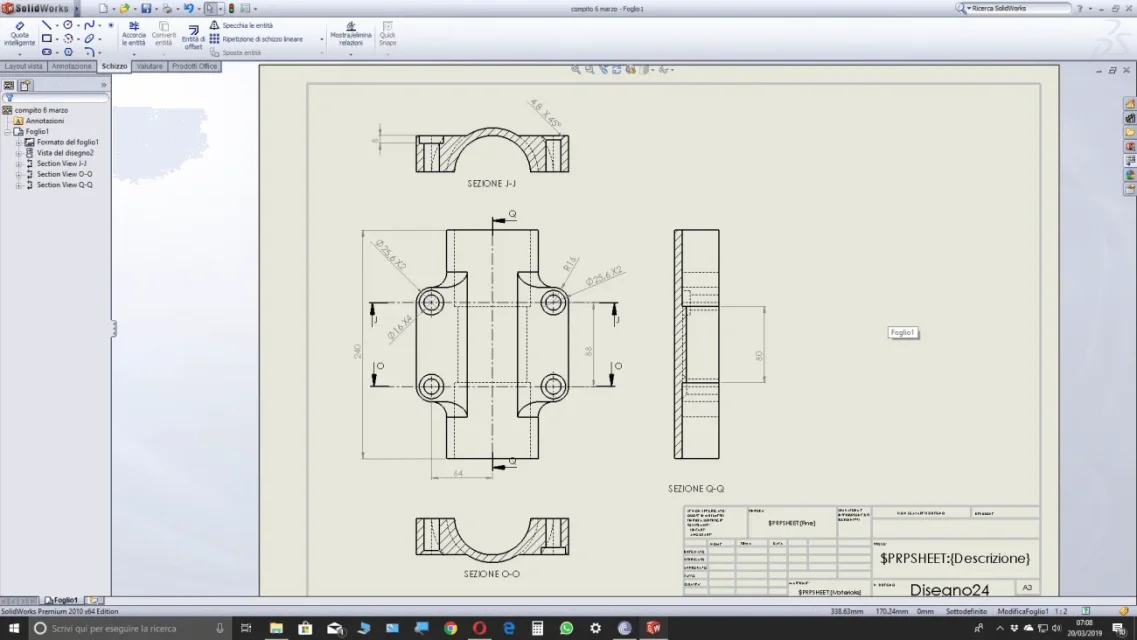
Good morning, I quoted the holes in width compared to the axis and arranged the views, I can't quota the diameters in "eccentricity" as he said massive, do I have to quote the distance between the ends of the circles?

then I do not understand why the section now called "q-q" deep now gives me the view vertically, first with the same method put it up and horizontally.
@ironmike I don't know what you mean with "95" can you be clearer?
Screenshot (185).webpare symmetries, should I remove a passing section for the holes?
 
or instead of one of the sections I can put another perpendicular to the q-q, which cuts in 2 equal parts the piece, so that it can also give the diameter of the internal shrinkage?

edit: remove hidden lines from the q-q section
 
Last edited:
the eccentricity is quoted from the center to a known reference, in your case from the lower floor that will be worked (you can also see it in that isometric design)
then I do not understand why the section now called "q-q" deep now gives me the view vertically, first with the same method put it up and horizontally.
this unfortunately you may know only that you have seen; but I point out that the previous section did not have the sampling so I think it was not a section.
continue to put hidden lines in the sections
I don't know what you mean with "95" can you be clearer?
it does not seem difficult; read your second table, look for the quota 95 (you have put a few will be easy) and you will find that the definition of the surrounding geometry is missing (the fins as specified by ironmike. Moreover that quota is wrong because it is a circle arc so goes the symbol of diameter.

the odds of the holes remained almost identical, you must correct them
 

Forum statistics

Threads
44,997
Messages
339,767
Members
4
Latest member
ibt

Members online

No members online now.
Back
Top