
• This forum is the machine-generated translation of www.cad3d.it/forum1 - the Italian design community. Several terms are not translated correctly.

electrical grippers

  • Thread starter Thread starter Simon_SB
  • Start date Start date

Simon_SB

Guest
Good morning, I'm an engineering student and I'm doing a thesis on electric pliers.
in recent years in fact they are taking more and more gripper foot operated by electric motors in replacement of the old pneumatic clamps used for years in automation. looking at the catalogs of the leading companies in the industry (schunk, smc, festo, gimatic...) I have seen that there are several design solutions: in some cases you prefer to mount the motor inside the body clamp and in other cases externally, different types of motor are used (brushless, step-by-step...) and of mechanisms of conversion of the bike (tilted plates, endless screw, gearboxes...), in addition to the range of racing and forces that are variable. To enrich my research I would like to understand what is behind these choices, why prefer a type of engine or a specific principle of conversion of the bike to another?
On the other hand, on the user side, does anyone have experience with these products ?
Thank you.
 
If you refer to pliers as ee of a robot, in applications with electric caliper that I saw, the Prince motivation is essentially precision. an electromechanical dynamic is considerably easier to model than a pneumo-mechanic. This is because the models that take into account the air are not very precise (often do not take into account turbulence or compressiveness). Therefore for developers and designers it is easier to calibrate effective controllers in case of electric motors. In this way it is also possible to implement force controls, for taking delicate objects etc...
the second motivation is the components. a pneumatic clamp needs its system, an electric clamp, with the progressive miniaturization of electronic components becomes more “sustainable”.

in any case if you have to take parts from pallets or tape to 80% you use the suction magnet or air tube, without any complications
 
It is nice to see that they are given to develop also thesis from the interesting content.

I confirm that the general direction in automation is what you described, i.e. the gradual transition from pneumatic drives to electric drives. the questions you ask are too wide to give an exhaustive answer: because a tilted plane system is used instead of a quadrilateral equivalent, depends on a large number of tropo factors.

about the motors you can say more: the main difference between brushless and step-by-step (we key them so, although in fact the step-by-step are brushless as well...) is the existence of a reversal ring. the brushless commands it to go there, and if it does not come for some reason, it tells you; the step-by-step works with an open ring: I command you to go there, but if you don't get there, you don't know, and the worst thing is that you think you got there.

the cost is the factor of balancing: obviously brushless cost more than step-by-step (considering also its controls). hybrids have been seen with step-by-step motors, but without obvious advantages.

consider these only introductory notes, to answer your questions would not be enough... Thesis.
 
I confirm the pleasure of reading technical arguments on design and technical choices of such applications.
not having your expertise, I only express myself in saying that in some industrial fields, the compressed air in the department has long been wanting to make it disappear, and I refer first to the pharmaceutical sector, where the productions happen in white rooms, and also in the food sector prefer not to have applications that use compressed air
 
Thank you so much to all, I understand that my questions are a bit wide but I'm trying to learn as much as possible on the pliers and their operation, both to improve my thesis obviously and because I'm passionate about the topic.
Does anyone have any direct experience with these products?
 
Does anyone have any direct experience with these products?
I have direct experience with these products. use, not design. What is the question? You want to know where the electric is better than the tyre? control of the grip force, control of the junction geometry (it is not always necessary to open the clamp completely), reduction of cycle times (for the same reason). You want to know where the tire is better than the electric? It costs less, it has more strength, it can stay in grip without overheating, it has less "roba" that can break.
Why do you use tilted planes instead of parallelgrams? for example to make the clamp more compact. the dimensions of the "mangiano" caliper working volume of the robot, the smaller, the greater the grip.

ask more precise questions, you will have more detailed answers.
 
I confirm the pleasure of reading technical arguments on design and technical choices of such applications.
not having your expertise, I only express myself in saying that in some industrial fields, the compressed air in the department has long been wanting to make it disappear, and I refer first to the pharmaceutical sector, where the productions happen in white rooms, and also in the food sector prefer not to have applications that use compressed air
depends on the air you can filter it and the stainless steel cylinders are much more easily available and cheap than equivalent stainless engines.
simon_sb a couple of months ago there was an interesting 3d on replacing the pneumatic rotational movement
with an electric actuator from an eye. then there would be the world to say about self-built pliers for specific automations.
 
depends on the air you can filter it and the stainless steel cylinders are much more easily available and cheap than equivalent stainless engines.
simon_sb a couple of months ago there was an interesting 3d on replacing the pneumatic rotational movement
with an electric actuator from an eye. then there would be the world to say about self-built pliers for specific automations.
Thank you, I will definitely take a look!
 
depends on the air you can filter it and the stainless steel cylinders are much more easily available and cheap than equivalent stainless engines.
simon_sb a couple of months ago there was an interesting 3d on replacing the pneumatic rotational movement
with an electric actuator from an eye. then there would be the world to say about self-built pliers for specific automations.
air for implementation should be "lightly oiled" as prescribed in manuals of almost all tire grippers. apart from deoliation costs, it would also be counterproductive.
 
the principles of operation of the pliers, whether air or electric or hydraulic are different in many respects, depending on whether you want stiffness and strength, opening speed, partial opening, two synchronized fingers, more synchronized fingers, motion reversibility or not, etc.

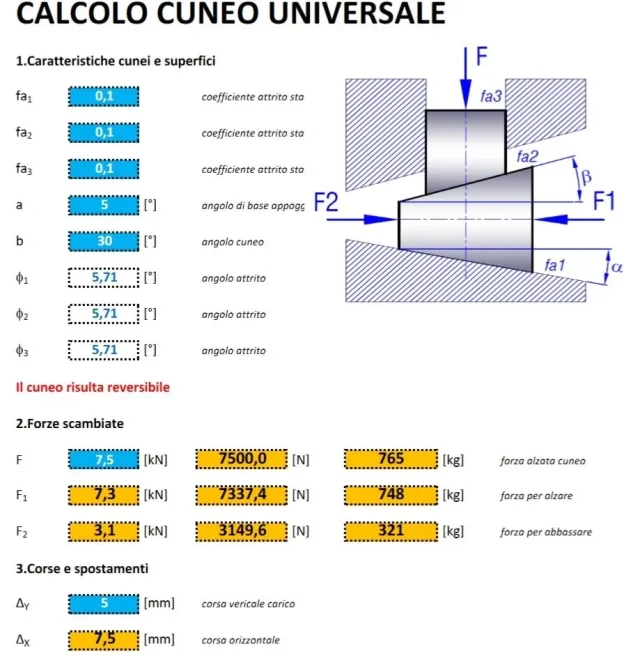
with the piano inclinato for example, they commonly realize all the pliers that must express the maximum strength and how against have narrow strokes. it is possible to sync two or more fingers and the reverse call is carried out with the springs if I have a hydraulic or pneumatic actuator. If there is a screw command that advances the snail you can have positioning accuracy but clearly if you want high forces you have to put a mechanical gear reducer and controls it with a step-by-step motor that controls speed and torque.IMG_20190511_225542.webpHere you can see that relationships are between races and forces. For example, f1 is the hydraulic or screw-driver command that moves one of 2..3....4...in force f to take an object.

as in all mechanics, depending on what you want to study the most appropriate solution to get the result.
 
the principles of operation of the pliers, whether air or electric or hydraulic are different in many respects, depending on whether you want stiffness and strength, opening speed, partial opening, two synchronized fingers, more synchronized fingers, motion reversibility or not, etc.

with the piano inclinato for example, they commonly realize all the pliers that must express the maximum strength and how against have narrow strokes. it is possible to sync two or more fingers and the reverse call is carried out with the springs if I have a hydraulic or pneumatic actuator. If there is a screw command that advances the snail you can have positioning accuracy but clearly if you want high forces you have to put a mechanical gear reducer and controls it with a step-by-step motor that controls speed and torque.View attachment 53477Here you can see that relationships are between races and forces. For example, f1 is the hydraulic or screw-driver command that moves one of 2..3....4...in force f to take an object.

as in all mechanics, depending on what you want to study the most appropriate solution to get the result.
hi this pattern is very interesting, changing the angle of the tilted plane we can change the output force and the stroke. Would it be possible to have it in excel format to be able to use it? Thank you.
 

Forum statistics

Threads
44,997
Messages
339,767
Members
4
Latest member
ibt

Members online

No members online now.
ciao
Back
Top