
• This forum is the machine-generated translation of www.cad3d.it/forum1 - the Italian design community. Several terms are not translated correctly.

equation: tree length.prt=length tube.prt+50

  • Thread starter Thread starter reggio
  • Start date Start date

reggio

Guest
hi, taking back an old speech, I remember that with inventor it was very simple to connect the various dimensions between parts, to the vary of one varied also the other, there was then the appreciable possibility to use the tables of excel (potentially medium) to relate the various measures with "ifs" or the data chosen from external tables.

with sw I find and I found in the past many difficulties to do the same things (remember my swx report of August 08 "the excel tables created by sw can not save on the net but only in c:\ local" remained dead letter and never solved or answered :36_1_28:)
and so I wanted to ask you how you deal with the problem:

excel? ?
Equations :|?? ?
or
configurations :(((??) ?

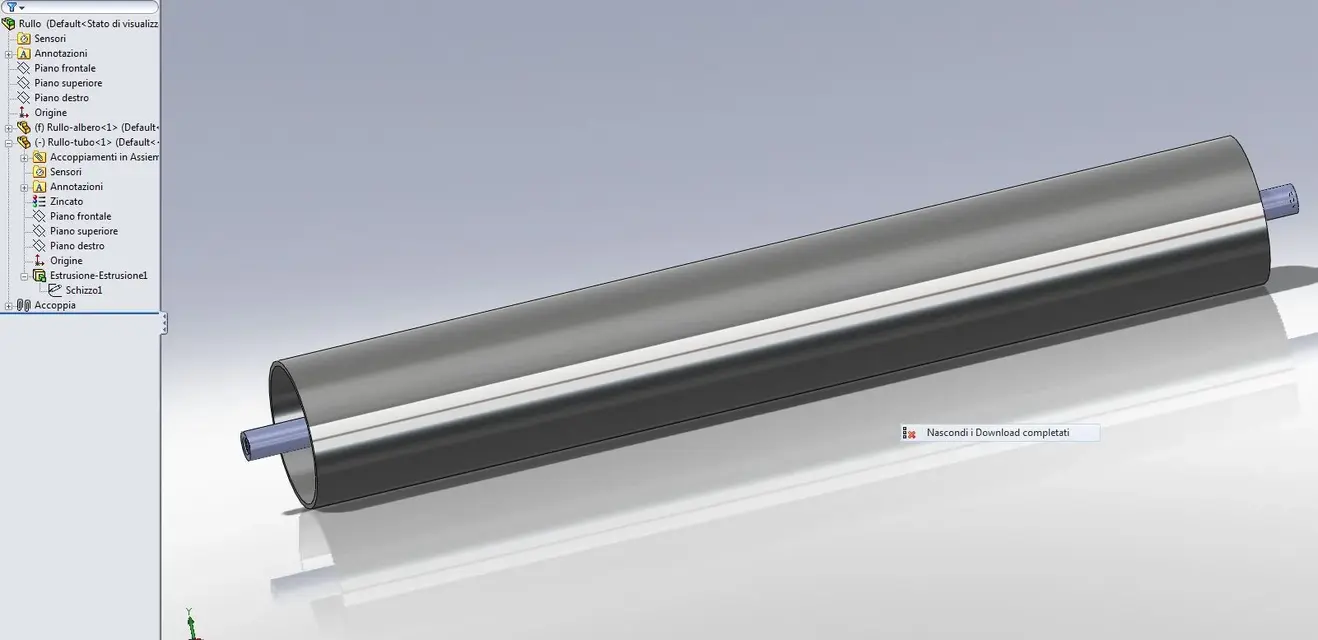
I attach banal example of a tree that will have to stay longer than 50mm than the tube at the varying length of the tube.
 

Attachments

  • Rullo.webp
    Rullo.webp
    55.9 KB · Views: 32
  • Rullo.zip
    Rullo.zip
    22 bytes · Views: 16
hi, taking back an old speech, I remember that with inventor it was very simple to connect the various dimensions between parts, to the vary of one varied also the other, there was then the appreciable possibility to use the tables of excel (potentially medium) to relate the various measures with "ifs" or the data chosen from external tables.

with sw I find and I found in the past many difficulties to do the same things (remember my swx report of August 08 "the excel tables created by sw can not save on the net but only in c:\ local" remained dead letter and never solved or answered :36_1_28:)
and so I wanted to ask you how you deal with the problem:

excel? ?
Equations :|?? ?
or
configurations :(((??) ?

I attach banal example of a tree that will have to stay longer than 50mm than the tube at the varying length of the tube.
that zip is empty (at least, I download/unpack an empty folder)
 
..but as you point out that example is very trivial;
a simple equation where the tree=lrullo+50
 
I attach banal example of a tree that will have to stay longer than 50mm than the tube at the varying length of the tube.
as sampom has pointed out this is an example that serves little because it is so elementary that it can be solved in many ways fun, all effective.
without disturbing any equation I would make the central shaft as extrusion in two directions from the middle plane of the outer cylinder and with final condition of each extrusion an offset of 50 mm from each of the faces of the head of the outer cylinder.
 
I go with my battle horse: the sketch layout! apart from this banal example I project all in topdown maintaining a great control of the asses and never use excels or equations.
 
that zip is empty (at least, I download/unpack an empty folder)
...:confused:. I try again.. .
..but as you point out that example is very trivial;
a simple equation where the tree=lrullo+50
... but I have 2 separate parts (shaft and roller) put in a set: how do I create the equation the tree=lrullo+50?
...this is an example that serves little because it is so elementary that it can be solved in many ways fun, all effective.
... I would make the central shaft as an extrusion... a 50 mm offset from each of the heads of the outer cylinder.
Yes it is true the example was trivial to simplify, but it did not help me understand.
We always stay with the same example and try to explain better:
the parts are 2 (as I explained only now above, tree and pipe in a set)
and imagine having to do for example this calculation (which with excel would be very trivial):se ltubo HCFC0 allora lalbero=ltubo+20, se ltubo HCFC300 allora lalbero=ltubo+30,
ltubo agraria400 allora lalbero=ltubo+40, altrimenti lalbero=ltubo+50

I go with my battle horse: the sketch layout! apart from this banal example I project all in topdown maintaining a great control of the asses and never use excels or equations.
..I tell the truth, the topdown method seems promising, but the few times I tried it there was always qlc that could not do (securely x my poor knowledge), but I think the example above se ltubo rigid0 allora.. . Can't be faced with the sketches, can you? What do you think?
-------------------------------------------​
I mean, where do I want to go parare? I would like to be able to parameterize my machines and (for now) I believe that the only effective method is the use of excel sheets that "speak" between them and "change" values... (I currently make quotes with excel sheets starting from 5/10 inputs and giving as a result weights description and machine price... swx should have allowed me to create the total also using the same data..) only that at mè excel of sw on the net does not flee and use it locally creates huge problems because all the parts are and must stand on the net (at the disposal of all the assemblies of all ns technical).

But I would like to take a step at a time (after creating a parametric machine I would have the problem of having to codify each different length/size of each part...) and try to create this didactic example roller in the best way.

Now (I think) I was clearer and I hope I didn't make the usual confusion, so I ask you how I could parameterize this roller?
 

Attachments

the equations allow to set conditions "if". you have to set them first together and then when you build the parts you refer to the equations of the axis.
Moreover in a sketch of layout you can insert quotas 0, the important thing is not to refer to 0 a line, but a distance between two points.
from the point of view of my experience I find the equations comfortable but rather unstable I must have performed the "pack and go". the excel tables I use in some cases very much weight the files and often they create problems.
the solution we are adopting most now are layout sketches partly controlled by equations.
 
hi, taking back an old speech, I remember that with inventor it was very simple to connect the various dimensions between parts, to the vary of one varied also the other, there was then the appreciable possibility to use the tables of excel (potentially medium) to relate the various measures with "ifs" or the data chosen from external tables.

with sw I find and I found in the past many difficulties to do the same things (remember my swx report of August 08 "the excel tables created by sw can not save on the net but only in c:\ local" remained dead letter and never solved or answered :36_1_28:)
and so I wanted to ask you how you deal with the problem:

excel? ?
Equations :|?? ?
or
configurations :(((??) ?

I attach banal example of a tree that will have to stay longer than 50mm than the tube at the varying length of the tube.
You asked the same question again and you were already given the answer.
The table speech works and I wrote it to you.
The solutions are different and I'll take them back for the umpteenth time.
1) topdown
2) internal or external equations of the file (from 2011)
3) data table
4) driveworksxpress
 

Forum statistics

Threads
44,997
Messages
339,767
Members
4
Latest member
ibt

Members online

No members online now.
Back
Top