• This forum is the machine-generated translation of www.cad3d.it/forum1 - the Italian design community. Several terms are not translated correctly.

flattening ground surface

  • Thread starter Thread starter drake
  • Start date Start date

drake

Guest
Hi guys, I'm not expert at all on how to handle the plates with sw and now I need to flatten the helical sheet of a spiral staircase. I modeled the scale that parapeted a sheet of 3 mm.
this sheet should be divided into 3 parts to allow it to enter the yard. When I modeled the scale I made a solid sweep along a propeller and then I cut it into the three pieces. Now they asked me if I could give him the development of these three pieces.
I went into trouble because I have no experience on this.
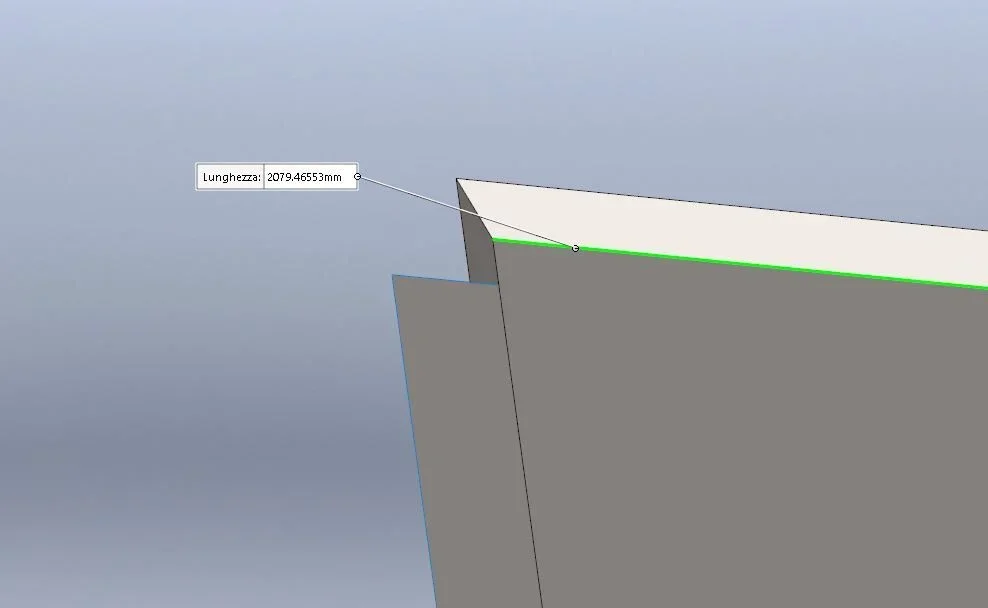
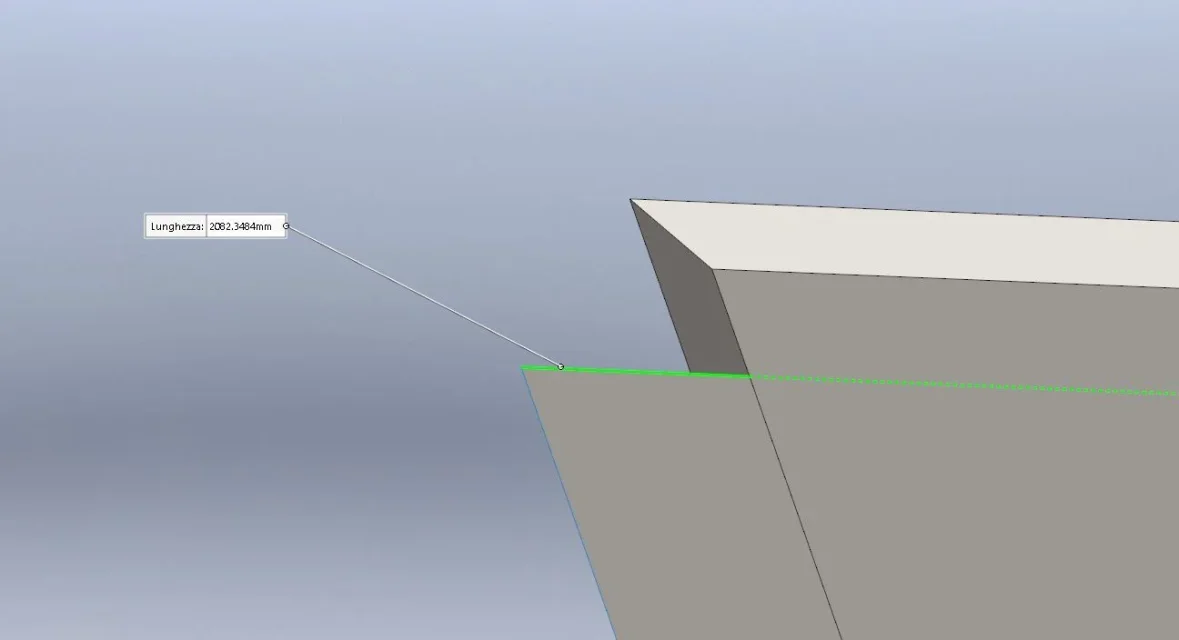
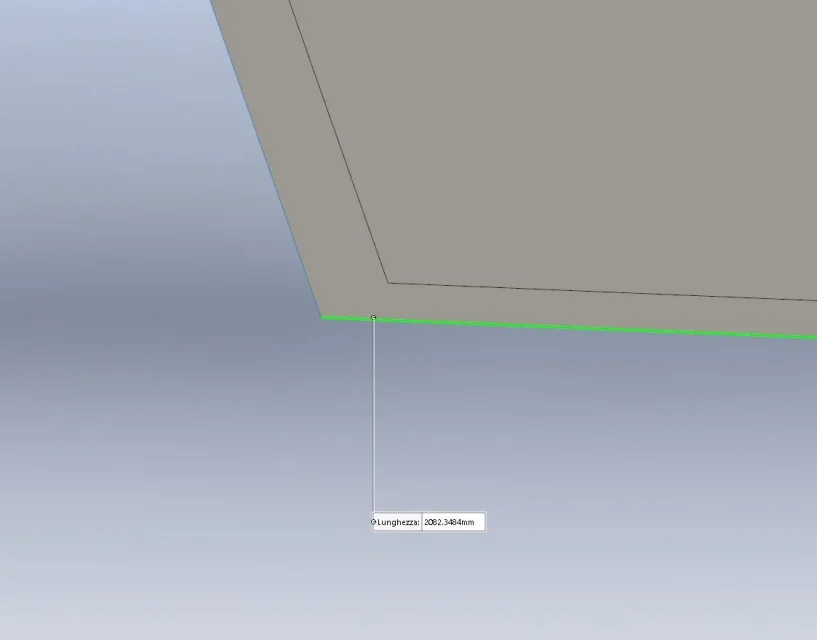
I thought of creating an offset surface on the face of the helical solid and then using the flattening function of a surface. I obtain a flattened surface in this way. then seeing on the forum I saw that there is an adiscussion on how to flatten a sheet like mine. I tried and saw that the results I get with the two methods are different read? that is, there is no perfect correspondence of the two models, as shown in the figureCattura.webpthe difference of the curves is about 3 mm, i.e. 2079 versus 2082. I don't know if it can be an important value in this case.
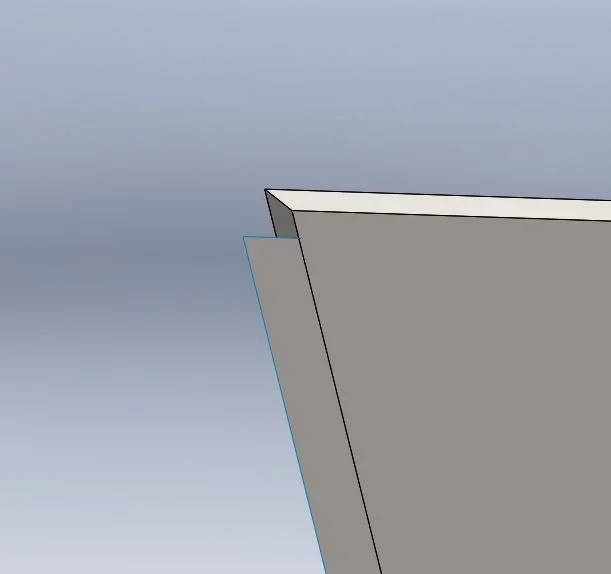
Before delivering the developments, I wanted to be sure of what I'm doing. How do you advise me to proceed? Thank you.
 
Last edited:
the flattening of the sheet also takes into account the withdrawals because it is inherent in the bending of the sheet while the flattening of the surface does not believe that it takes into account. the difference should be be there.
 
for a test try to remake a portion with the loft sheet function and compare the result
 
thanks massive, in fact it is so sure because with the loft function of the sheet (the one that you see with the thickness in the photo) I get the piece "smaller". so I recommend flattening the pieces after generating them with the loft function of sheet, instead of those generated with flattening of the surface?
 
the piece made with the loft is equal to that obtained by flattening the sheet metal?
 
then there are small differences. . I attach images to make you understand. .
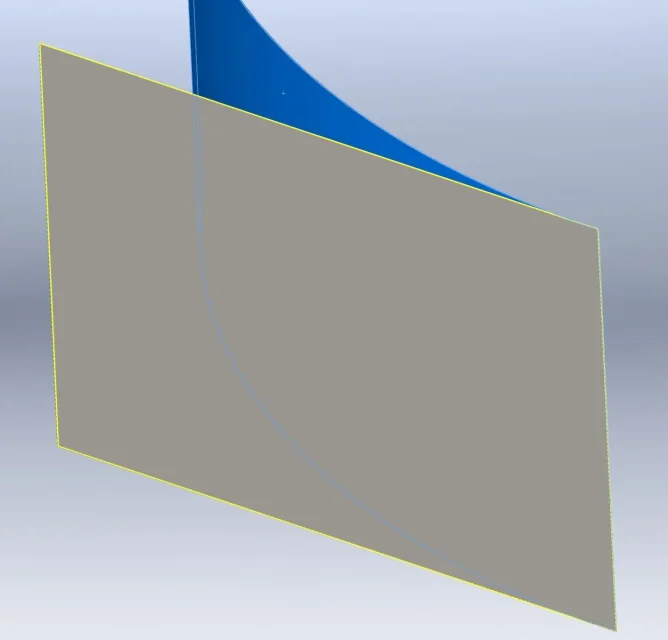
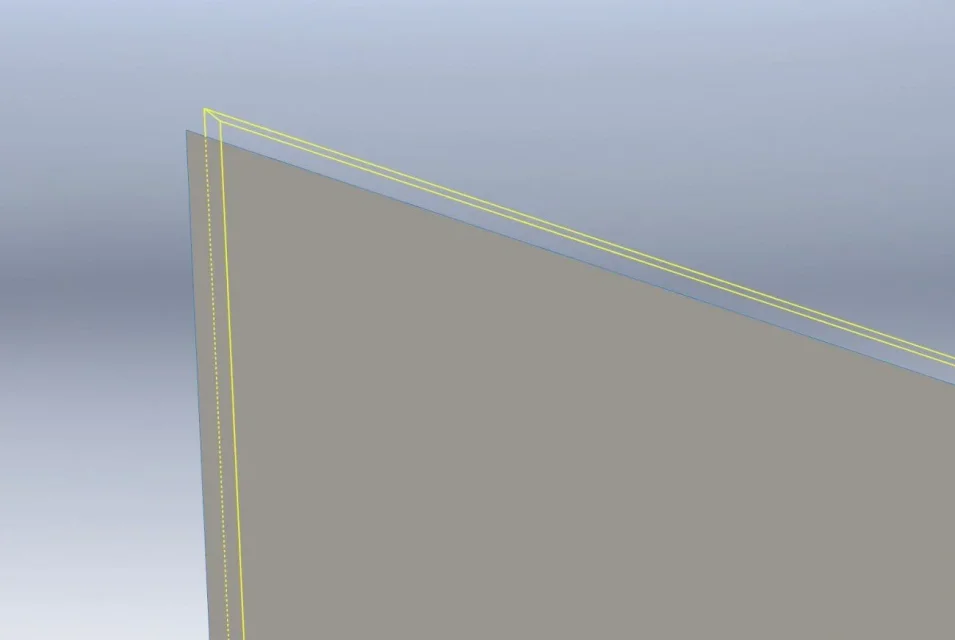
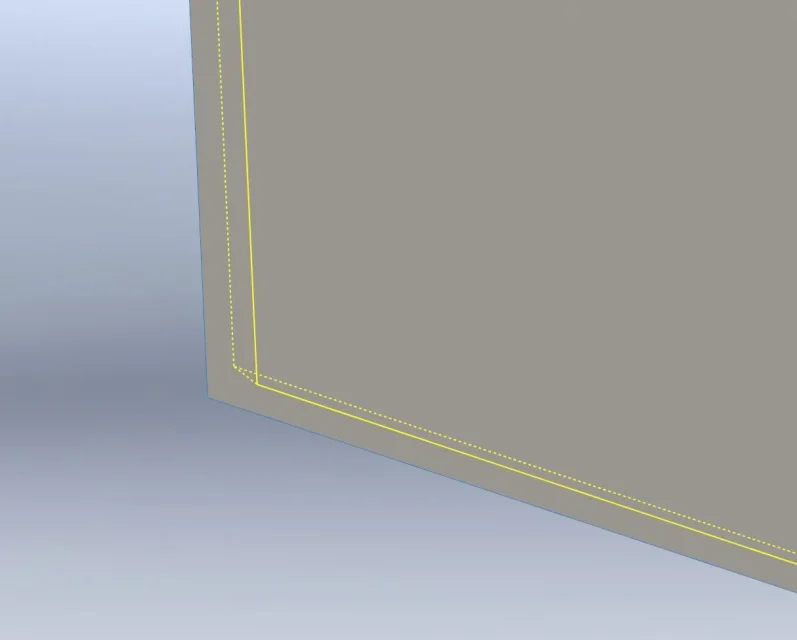
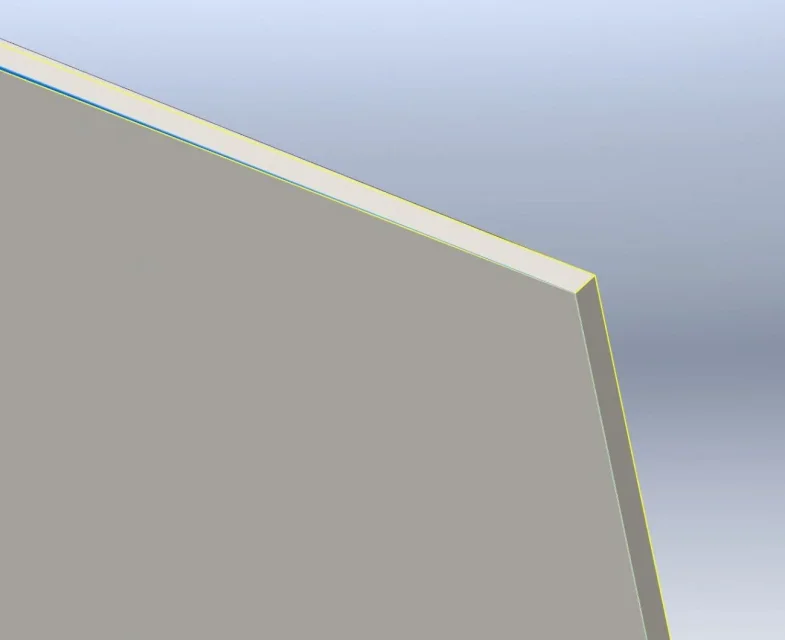
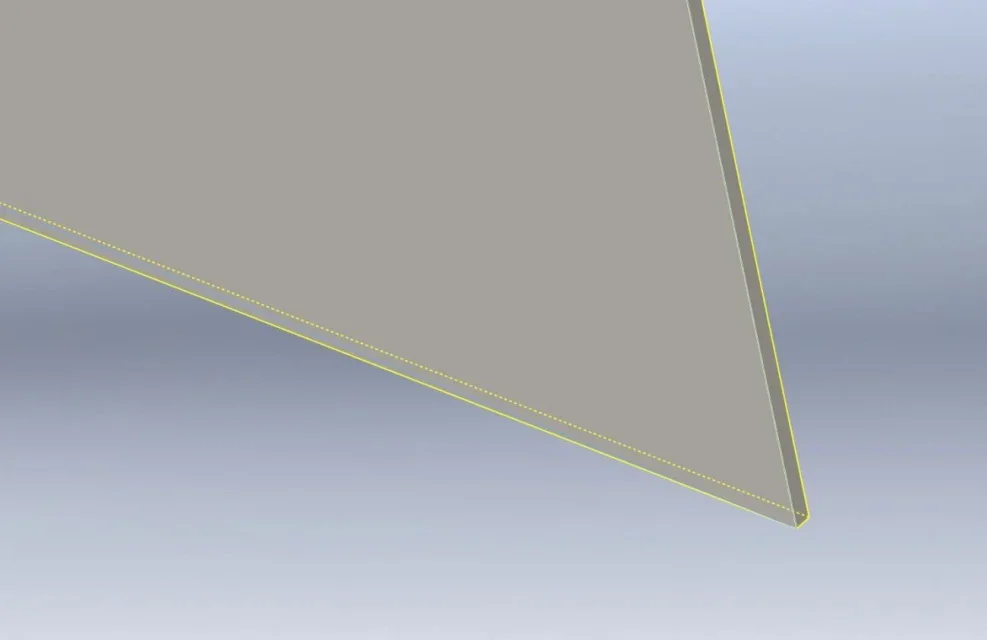
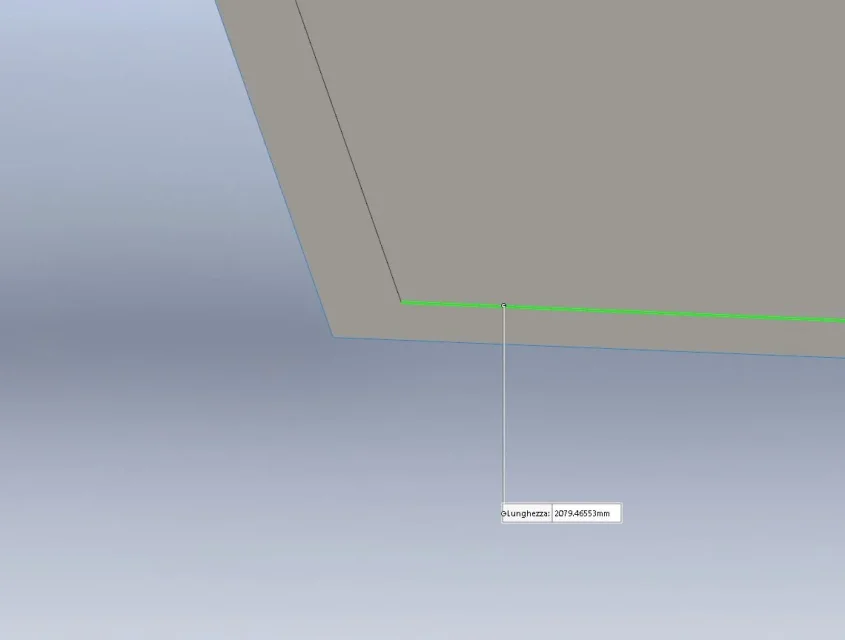
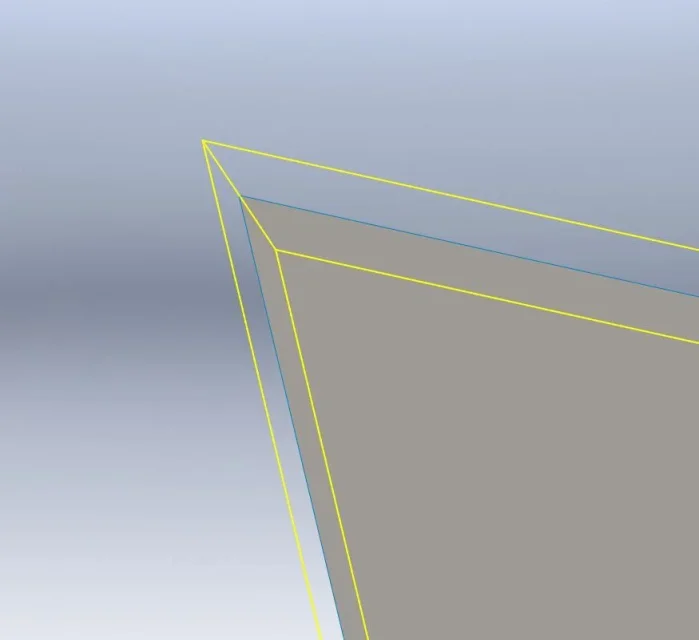
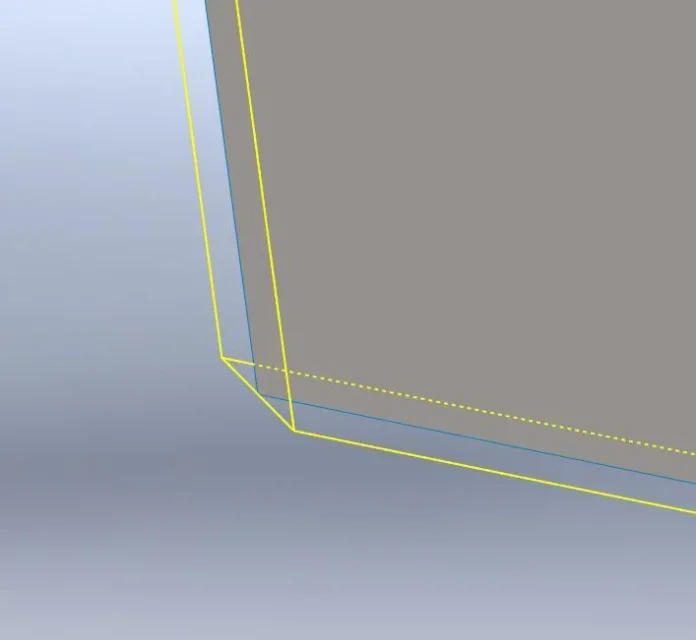
Here you can see the two opposites, the yellow one is the sheet with the alternating command flat display with the right button on the loft sheet, the grey one is the flattening of the superifice (command that I used because I found it in the demo version of solid just installed on the new pc. is the premium version not of the professional I have). so if I need it I can only use it for a few more days;)1.webpbelow the differences in the top part and then in the bottom part...2.webp3.webp4.webp5.webpThe following measures which, as you can see, are slightly different from those obtained by flattening the surface.6.webp7.webp8.webp9.webp
 
the development of the sheet does not occur according to an external surface. Can you try to develop a surface that is halfway between the two external faces?
 
Surely I could do the offset surface precisely with mid-thick offset. . but in cases like this, classic, with sw how is it better to proceed? Since I managed to make the real sheet created precisely with the advice I had found here in the forum, maybe it is better to do so, but I'm not sure. However when the demo mode expires I will have to do so, because as I said the flattening function of a surface there is only in the premium (thanks ds!)
 
Surely I could do the offset surface precisely with mid-thick offset. . but in cases like this, classic, with sw how is it better to proceed? Since I managed to make the real sheet created precisely with the advice I had found here in the forum, maybe it is better to do so, but I'm not sure. However when the demo mode expires I will have to do so, because as I said the flattening function of a surface there is only in the premium (thanks ds!)
The flattening function I think is quite false. in the sense that it works for a mathematics regardless of the physics of metal, but for control it can be interesting. I would not use it on one side of the sheet.
rather copy the body in a convenient position, move a offset face to reduce the thickness of the half, then develop the moved face (which would be the median face of the sheet). this should match with the developed sheet with a factor k = 0.5
 
I repeat the question, and I apologize if you answered me and did not understand; is there a difference between the development of the sheet made with the appropriate loft-lamiera command and the development obtained from the solid made through the advice found in the forum? I'm not talking about the surface.
 
There is a small difference between the command of the flattening sheet created with loft based on the advices I found here and the flattening of the surface, command present only in the premiun, made on an offset surface 0 of the external face of the helical solid. The difference is what I showed. I have to try with the attempt that said shirokko, but tonight in the demo version of sw, because I don't have the license. I hope the results are the same. then I will tell you the result.
 
I think I saw the same conversation that drake talks about, and he's talking about the loft-lamiera command. I have also seen the command of development of the surfaces that are part of the premium, and this allows to develop double curvature suprphics, which would emerge from a process of funnel.
I deduce that the algorithm is different, and since the development of double curvature surfaces is always an interpretation (planisfero docet), I think the method of sheet metal is more rigorous. then, as I said above, one can always make a verification to see if the results are similar, taking into account however also the thickness and factor k, because 3 mm on 2 meters can be explained also so.
 
flattening of the surface
then I didn't explain.... at the beginning of the thread write
then seeing on the forum I saw that there is an adiscussion on how to flatten a sheet metal like my
that I assume was not made on the loft sheet but converting the solid body. Is this development different from that of the loft-lamiera?I repeat that I am not talking about surfaces
 
The discussion is this...https://www.cad3d.it/forum1/threads/appiattire-solido-da-superficie.37003/post-419582When I say flattening the surface I mean a command of the surfaces present in the premium.
I didn't convert the helical solid to the surface, I couldn't. Maybe it's possible to do it, I'm ignorant about it. looking in the forum I found that discussion that made me understand how to create an ex novo sheet taking reference to the solid I had created. then I did both flattenings and saw that small difference, which will certainly be influential, but before giving the design I wanted to reason about it. the command on the flattening of its RFs in fact seems really created to be able to flatten complex surfaces, so it seems from the guide that is always very hermetic (from my point of view). if it is thought for complex surfaces, I thought it could be able to do to my case even if I do not have a complex superphy. then in the end I had two flattenings, one of the surface and one of the real sheet created with loft.
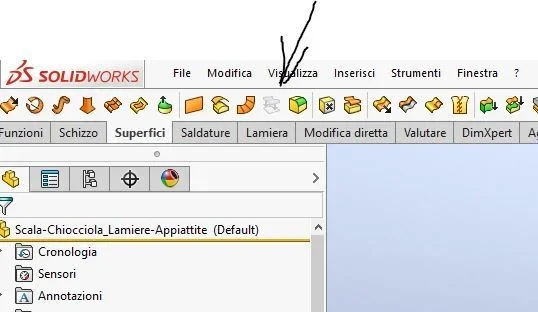
This is the command.. .Cattura.webp
 
Okay, I thought you were referring to a discussion in which a solid propeller was turned directly into sheet metal.
I found these discussions, maybe you can be usefulhttps://www.cad3d.it/forum1/threads/lamiera-ad-elica.34404/https://www.cad3d.it/forum1/threads/scala-a-chiocciola-in-lamiera-sviluppabile.13649/
Thanks massive I will take a look at the discussions.
from what I managed to try with the command of the flattening of the average surface, it seems that the result is coincident with that of the flattening of the sheet.
Just that tonight doesn't flatten me the sheet, mah. I'm definitely doing some confusion now, but I have everything to do and deliver the result.
Thank you.
 
if for the development of the loft you set as bending tolerance to use the infamous factor k and you set it to 0.5 then development is made on average thickness. therefore also the surface created on the average thickness and then flattened should be equal
 

Forum statistics

Threads
44,997
Messages
339,767
Members
4
Latest member
ibt

Members online

No members online now.
Back
Top