• This forum is the machine-generated translation of www.cad3d.it/forum1 - the Italian design community. Several terms are not translated correctly.

front triggers - spontaneous disconnection

  • Thread starter Thread starter meccanicamg
  • Start date Start date

meccanicamg

Guest
Hello, everyone. I'm dealing with a little particular issue where I can't have specific information.

in the field of industrial gearboxes, where I have two or three gears, selectable by clamp, there are triggers.

Traditionally use male/female sleeves with din 5480/5481 profile 10/15 mm long for grafting and transmitting the torque making a radial trigger joint. I'm clearly a bit accurate and it takes a little bit of strength to graft but on average I didn't find any problems of disconnecting except on models with lengths of 10mm with too much bevel/beach.Sagoma-13-300x300.webpIMG_20211229_000842.webpthe most "heavy" version goes to front frames made to slice of cake, with the sides passing from the center like these:
Screenshot_20211229_001455.webp Screenshot_20211229_004851.webpBasically, on all books and manuals, including niemann never tackles the theme of intemptive disconnection....that is the possibility that the graft can escape.

normally use pneumatic cylinders with levers moving the fork and make the selector move and graft. The actual thrust forces on the graft are normally around 50-150kg approximately and usually around 100kg.
historically in the various companies of construction of these triggers someone complains about the occasionality of the disconnection in march but never indicate what change, because, if there were bumps and so on ("the ones we did...." "to xxx we tried to do"....).

the only text that mentions the problem is the "construction of machines 2 - organs for the rotary motion of brass pomens" and we are in 1916...and says that for the triggers that present a certain propensity to the disconnect it is necessary to make the tooth with subsquadro where the tangent of the corner is worth about forty....so an angle of approximately 1.4°. also says as an introduction: the two-piece joint made with front triggers is not suitable for shocking machines.
then with subsquadro is like this:Dettaglio_denti_cambio~2.webpDomandona: why should he disengage himself?

- I have seen that on a small joint if made with 3 or 4 teeth we have high bendings for transmitted copies, in similar applications and this can be a problem
- I personally make 11 teeth radially as high as possible and with 10 mm of grafted faces arranged so the tooth can not flench or torque
- I leave air between male and female, on the walls between 3 and 7 cents of air therefore practically remains aligned always and in full contact
- I have no application with shocks
- I tested a larger model 1mw-1200rpm held with 2 tons of push in position with reversible motion and strong accelerations and shocks without problems
- also the text of pomini (certain national/international constructor inserted in the current tenova group)...says that holding 0.2 as friction coefficient and multiplying it for the transmitted torque and dividing it by the average radius I get the force that serves to disconnect ... and are not small values since the pomini says that it is as if a single tooth is loaded and does not depend on the number of teeth intake.

What could bother me? What do you think?
 
from what you wrote my doubt is related to 0.2 as friction coefficient...it seems a little high, considering that these mechanics work often, if not in the oil bath, but still well lubricated, I think more plausible a value close to 0.1

from my relative experience in particular to the machine tools all the triggers are held in place, if not from pneumatic or hydraulic cylinders, from mechanisms with spring and ball or locking pile that acts on the fork that commands the front graft, then for the graft and disconnect it is necessary to apply a certain force (it is also useful to have the safety of having completely triggered the mechanism and not to be found even half run)

at this point in the absence of shocks and vibration the only component that could cause the removal of the two parts of the graft is linked to any axial components of force caused by the dense wheels that gear in the kinematic chain
 
I think there might be too much game between a tree and a joint, especially if the joint was as rough as what appears in the figure. with the game, in transmitting the pair, the hub would tend to tilt, losing the full contact between the teeth. For proof, if you had space, I would try to make the hub as long as possible, minimizing the game between hole and tree.
 
the problem of the disconnection I think that can be attributed in most part to the presence of a strong instant overload (shock) that also produces a bounce effect. other factors such as an excessive game between teeth, their inadequate size ( quantity and size) or pressure of the pusher element (piston, spring, mechanical lever, etc.).
surely the teeth with subsquadro avoid the problem, but they have the limitation of the bike in one sense.

with the characteristics listed by you, even with the parallel flanks, I feel to exclude the problem of disintegration even with high pairs or in the presence of strong stresses, compatibly with the sizing made according to the nominal cup to be transmitted.

if you can be useful I bring back these links for insights into the subject:
(1) parametric study of a dog clutch used in a transfer case for trucks
2) gearshift simulation model of a dog clutch
 
thanks to all for your first notices.
surely if the drive on the tree is little, the average diameter of graft can swing by giving a little axial thrust because swinging. same negative effect if I have too much play on the sides of the teeth (full against empty) just as wert says.

As far as the coefficient of friction is concerned, I would also feel like putting 0.1 instead of 0.2 proposed by pomini. Probably wicker, calculating the disconnection force under load is better than using 0.2 while if I want to avoid disconnecting consider 0.1 to safety advantage.

with a little more time willingly deepen the links of tetrator.

I keep you updated. If you have other info, write that I am good for reasoning.
 
different application but always the need for grafting and disconnection of a
Engine pinion mounted on a small 5w gear motor with 5 mm shaft.
this pinion must remain normally disconnected from cinematism, the graft
only happens with the rotation of the motor that axes a drag ring to front teeth that hook the pinion and make it rotate.
when the engine stops, the drag ring unleashes axially from the pinion for
effect of a spring that normally keeps it disengaged.
in good substance I command the rotation of the motor and this must turn the pinion and when I stop the motor the pinion must disconnect and be able to turn mad.
precise that the dimensions, the couple and the forces at stake are modest!
every advice/suggestion is appreciated. thank you stefano
 
different application but always the need for grafting and disconnection of a
Engine pinion mounted on a small 5w gear motor with 5 mm shaft.
this pinion must remain normally disconnected from cinematism, the graft
only happens with the rotation of the motor that axes a drag ring to front teeth that hook the pinion and make it rotate.
when the engine stops, the drag ring unleashes axially from the pinion for
effect of a spring that normally keeps it disengaged.
in good substance I command the rotation of the motor and this must turn the pinion and when I stop the motor the pinion must disconnect and be able to turn mad.
precise that the dimensions, the couple and the forces at stake are modest!
every advice/suggestion is appreciated. thank you stefano
I suggest copying a starter motor of any endothermic engine, although you probably need stuff that turns slowly, the concepts are the same.

alternatively, just copy the rear hub of a bicycle, if the engine must transmit the bike in one direction
 
in the starter motor the insertion of the pinion takes place through an electromagnet.
instead of copying the bike hub I could use a free wheel bearing but it does not work because the bike is not unidirectional!
 
I forgot to point out that the graft device I'm studying serves for the automatic loading of the weights of a pendulum clock... but maybe it would be better to open a new thread!
 
Good morning!
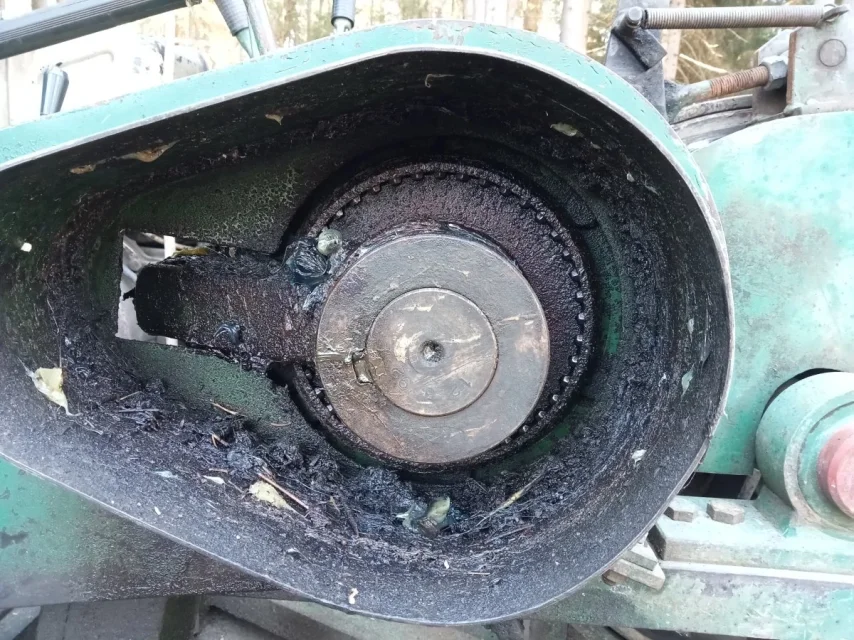
a question and your advice, I would have to replace some radial tooth grafts of a forest winch, unfortunately the manufacturer does not exist anymore. You know how to give me a tip to get a graft so , I start from a transmission shaft of the diameter of 55 mm . thank you very much nicula ...
 
Good morning @nico1970, if you look on the net there are various types of triggers suitable for multiple applications, could you attach an image to better understand what type of graft it is?
 
Good afternoon and thank you for your kind answer, to tell the truth on the net I have found nothing that ... below I attach some photos of the graft I am looking for...
 

Attachments

  • Innesto_principale_Argano.webp
    Innesto_principale_Argano.webp
    294.3 KB · Views: 32
  • Innesto_principale_Argano_1.webp
    Innesto_principale_Argano_1.webp
    274.6 KB · Views: 30
Good morning!
a question and your advice, I would have to replace some radial tooth grafts of a forest winch, unfortunately the manufacturer does not exist anymore. You know how to give me a tip to get a graft so , I start from a transmission shaft of the diameter of 55 mm . thank you very much nicula ...
In my opinion, if you remove the pieces and take them to ceba gear, they make you sample what you want. Try to hear them by phone before, so discuss the thing.
 
I agree with you @meccanicamg, it is definitely a type of custom coupling for that type of application for which, being no longer available as a spare, it is necessary to reconstruct the sample pieces or to find a company that can adapt a commercial one.
also this company should build the clutch according to your needs.
 
I don't know if my suggestion could be useful, but perhaps chapters similar to chapter 6 of the "mechanisms of innesco and disconnect" could be in Italian:
  • "machines and mechanical movements" of white young people, claudio ceccarelli, claudio melchiorri and brown Sicilian (chapter 13: mechanisms of innesco and disinesco)
  • "mechanical technology and manufacturing studies" of ulrico hoepli (chapter 2: mechanisms of innesco and disconnection)
in inglese:
  • "mechanisms and mechanical devices sourcebook" di neil sclater e nicholas chironis (chapter 5: clutches and brakes)
  • "theory of machines and mechanisms" di joseph shigley e john uicker (chapter 18: clutches and brakes)
  • "mechanical design: an integrated approach" di ansel ugural e saul fenster (chapter 14: clutches and brakes)
 
I don't know if my suggestion could be useful, but perhaps chapters similar to chapter 6 of the "mechanisms of innesco and disconnect" could be in Italian:
  • "machines and mechanical movements" of white young people, claudio ceccarelli, claudio melchiorri and brown Sicilian (chapter 13: mechanisms of innesco and disinesco)
  • "mechanical technology and manufacturing studies" of ulrico hoepli (chapter 2: mechanisms of innesco and disconnection)
in inglese:
  • "mechanisms and mechanical devices sourcebook" di neil sclater e nicholas chironis (chapter 5: clutches and brakes)
  • "theory of machines and mechanisms" di joseph shigley e john uicker (chapter 18: clutches and brakes)
  • "mechanical design: an integrated approach" di ansel ugural e saul fenster (chapter 14: clutches and brakes)
I'll try and give him a look. clearly if you have them under your hand and you can read them and give us additional details would be better 😀 if you know them.
 
I'll try and give him a look. clearly if you have them under your hand and you can read them and give us additional details would be better 😀 if you know them.
no unfortunately I do not know them and I know very little English, probably the best thing would be to ask if someone more competent than I know them and can direct you better, mine was just a point that could be useful; I think that on the internet you can also find partial pages especially of the texts of hoepli, for example of the text elements of oleodynamics I typing overcenter valves I find the page related to the treatment.

and I don't even know the subject, reading the discussion the only thing that came to mind was the change of hurth
Hurth.webp
 
I don't know if my suggestion could be useful, but perhaps chapters similar to chapter 6 of the "mechanisms of innesco and disconnect" could be in Italian:
  • "machines and mechanical movements" of white young people, claudio ceccarelli, claudio melchiorri and brown Sicilian (chapter 13: mechanisms of innesco and disinesco)
  • "mechanical technology and manufacturing studies" of ulrico hoepli (chapter 2: mechanisms of innesco and disconnection)
in inglese:
  • "mechanisms and mechanical devices sourcebook" di neil sclater e nicholas chironis (chapter 5: clutches and brakes)
  • "theory of machines and mechanisms" di joseph shigley e john uicker (chapter 18: clutches and brakes)
  • "mechanical design: an integrated approach" di ansel ugural e saul fenster (chapter 14: clutches and brakes)
Since the objective is the dente's profile speech and the possible spontaneous disintegration speech, I can tell you that on the "mechanisms and mechanical devices sourcebook" of neil sclater and nicholas chironis (chapter 5: clutches and brakes)....where the new edition is chapter 8 does not speak of spontaneous disintegration.

idem on the "theory of machines and mechanisms" by joseph shigley and john uicker (chapter 18: clutches and brakes). I have the Italian and English version....but it's the same. we talk about the same school stuff but nothing to do with the problem of spontaneous disconnection.

worse "mechanical design: an integrated approach" of ansel ugural where is the copy of the shigley and there is a hint only nominative in the dedicated chapter, because then speaks of frictionlessness.

there are references where you quail, unfortunately you do not need academy.
 
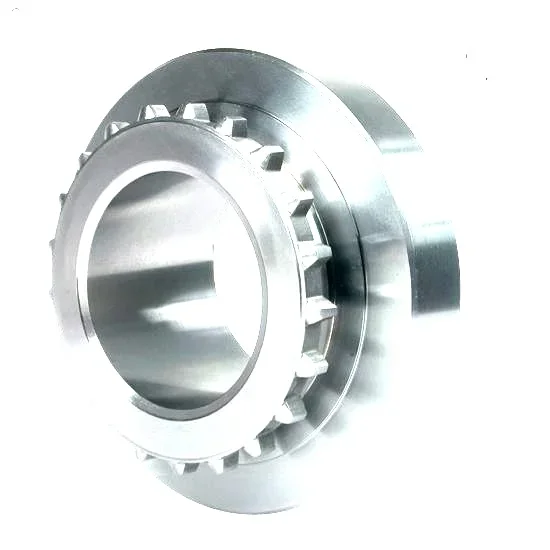
Hello, I apologize if I bring this discussion up by forcing a little the main argument, but I was asked to find a joint to disconnect to mount on an old mi60 site reducer with max torque of 95 nm, as imput I was given to choose a negative pneumatic joint (which for me means air disimpegna) and I found of the mwm but I was contested that it is too much.
I was wondering if there are companies that sell joints to radial triggers if you have already consulted, such as those of which it has been discussed, thanks for the availabilityGiunto pneumatico.webp
 
Hello, I apologize if I bring this discussion up by forcing a little the main argument, but I was asked to find a joint to disconnect to mount on an old mi60 site reducer with max torque of 95 nm, as imput I was given to choose a negative pneumatic joint (which for me means air disimpegna) and I found of the mwm but I was contested that it is too much.
I was wondering if there are companies that sell joints to radial triggers if you have already consulted, such as those of which it has been discussed, thanks for the availabilityView attachment 67932
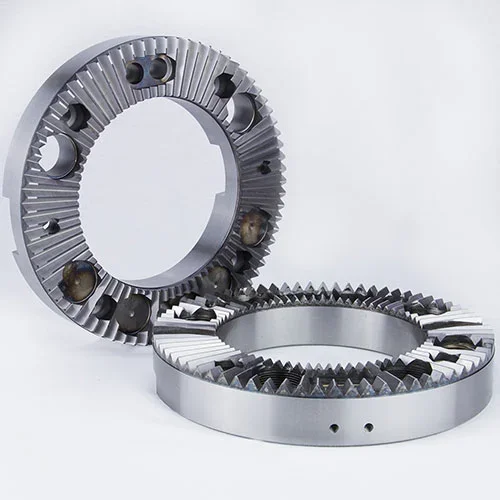
to see it like this is a frontal graft. there will be a double front hirth crown where the springs hold the two crowns in contact and the air makes them move away.
If you want to stay on something smaller, you probably have to switch to electric ones.
ANELLI-HIRTH.jpgother thing you can do is understand how the mountains on the reducer and if you can use the trees to be able to compact something.
who dispute understands of mechanics? Can you give us more directions?
 

Forum statistics

Threads
44,997
Messages
339,767
Members
4
Latest member
ibt

Members online

No members online now.
Back
Top