Damiano_-_-_
Guest
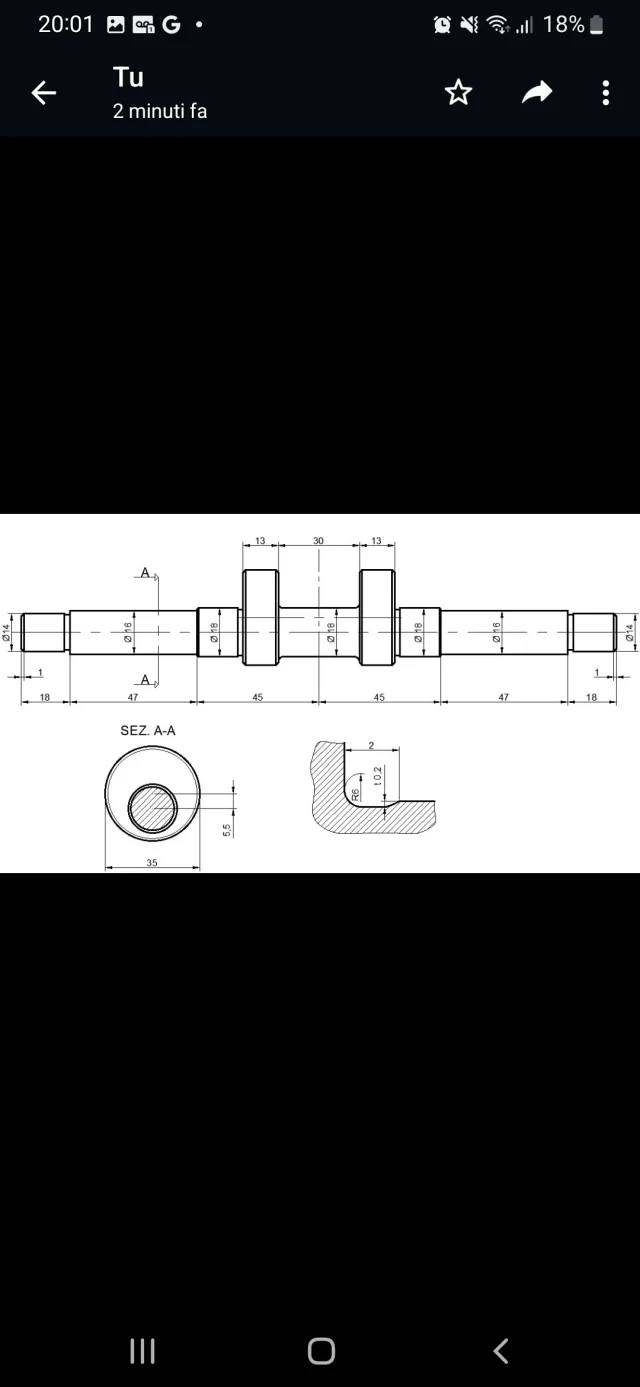
Hello, I need help, I can't find information about the quotation of the exhaust gorges.. Can anyone help me?


because I explain, I have only this table on my book, from which I do not know how to extract the measurements with which to draw then the throat.first results with a banal search. in the vademecum "baldassini" that has already been recommended you find it in the index of the section
If you have that table, you must apply it to the diameter of the tree or hole in question.because I explain, I have only this table on my book, from which I do not know how to extract the measurements with which to draw then the throat.
but how do I understand if I have to consider whether the throat is shaped and or shaped f? the delivery of the exercise tells me only to quote the exhaust throat according to the prescriptions of this table, I realized that I have to look at the line within which to place the size of the diameter of the tree, for the rest I do not know which part between the and the fIf you have that table, you must apply it to the diameter of the tree or hole in question.
if drawings with any cad you realize that you have everything to generate
consider a tree, form f if you plan to rectify the shouldering, otherwise type and. on the book is marked the typology according to the number of surfaces to be rectified that is certainly a more general indication. then if you have to rectify one or more surfaces you will have to evaluate it according to the application, a classic is based on the type of bearing that you give us for example.but how do I understand if I have to consider whether the throat is shaped and or shaped f? the delivery of the exercise tells me only to quote the exhaust throat according to the prescriptions of this table, I realized that I have to look at the line within which to place the size of the diameter of the tree, for the rest I do not know which part between the and the f
you wrote that you can't find information about quotations and not, as written above, that you can't read the table. I hope you understand that the concept is not the same.because I explain, I have only this table on my book, from which I do not know how to extract the measurements with which to draw then the throat.
Thank you very much. I had guessed it was to read like this but I was afraid I was wrong and it was more complicated than that. for the rest I apologize for not being more precise in the request for information!you wrote that you can't find information about quotations and not, as written above, that you can't read the table. I hope you understand that the concept is not the same.
then there are exhaust gorges for grinding and unloading gorges for both external and internal threads. and you have not specified in a norm or type.
as you read that table you posted:
first column is the designation of the throat that serves to indicate it on the drawing if you do not want to do the quoted detail (this comes from the fact that at the time of the tecnigraph drawing it was expensive). each designation has specific quotas
in the second column there is the diametric range to apply the designation
in the other columns there are the size of the throat.
the difference between and and f is that the first applies only on the corrections of the diameter while the second applies also on the rectification of the shoulder.
Thank you so much!consider a tree, form f if you plan to rectify the shouldering, otherwise type and. on the book is marked the typology according to the number of surfaces to be rectified that is certainly a more general indication. then if you have to rectify one or more surfaces you will have to evaluate it according to the application, a classic is based on the type of bearing that you give us for example.
If you have an exercise to do, it would be useful for you to say it and track it, so the responder can better interpret your doubts and give you targeted answers.the delivery of the exercise tells me only to quote the exhaust throat according to the requirements of this table
so can the indication of the throat go well? I think I was wrong to mark the "t" in the indication of the quota.If you have an exercise to do, it would be useful for you to say it and track it, so the responder can better interpret your doubts and give you targeted answers.
in this phrase I deduce that you already have the design and you just have to insert the quotas and not that you have to choose the type of throat to apply to a specific tree with a specific function and therefore you do not know how to dimensional its throat.
you have to copy identically to what is in the table image. Does that sound identical to you?so can the indication of the throat go well? I think I was wrong to mark the "t" in the indication of the quota.
but if I only carry what is written in the first column instead of doing all the drawing with the odds, is it okay the same?you have to copy identically to what is in the table image. Does that sound identical to you?
no as you said massive must be identical, you cannot remove at will, they are norms, they must be followed...but if I only carry what is written in the first column instead of doing all the drawing with the odds, is it okay the same?
there are also a few tolerances around....and you haven't written for 30 years to this part "sez a-a" but only "a-a".so can the indication of the throat go well? I think I was wrong to mark the "t" in the indication of the quota.
the exercise was more marked on the execution of the discharge throat therefore the part of the tolerances I left it. For the rest, my mistakes, I have taken the bad habit of using the preset axis lines from autocad that whenever, however, they must be scaled to make them visible for what they must be. However I have a problem, I cannot understand why, when mold, it does not take me the thickness of the lines I use... here are visible because I simply made the screenshot directly from the autocad card space.. But when mold does not take me the thickness of the lines. .there are also a few tolerances around....and you haven't written for 30 years to this part "sez a-a" but only "a-a".
the section line must be taken long short stretch and extreme algi thickened.
in the section view there are two cross axes....one on the center and one on the eccentric.