• This forum is the machine-generated translation of www.cad3d.it/forum1 - the Italian design community. Several terms are not translated correctly.

how would you do that? rolling blade...

  • Thread starter Thread starter simone03031986
  • Start date Start date

simone03031986

Guest
Hi.
I have been involved in the design and production of sports coltelleria articles and recently I am a sw user.
I wanted to ask which, according to you, is the best method to model the rounding and thread of a blade (and perhaps even the dorsal or counterfeit).
by means of roasting means that processing by removal of material that "finances" the blade up to the thread of the same.
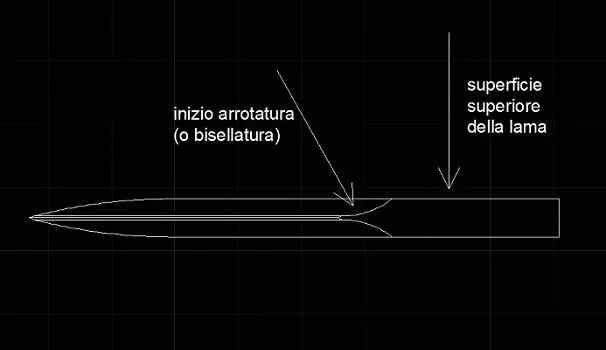
I attach an example image and a file of mine, in which, however, you can see a slip on the surface of the round.. .
Thank you, simone
 

Attachments

bhe, question raised by a man who comes from a maniago... ;-)
double biselllo or single?

bon, jokes aside.. .
I press that I don't know swx, but do you want to show the working signs? Why not apply a cosmetic?
 
I wanted to ask which, according to you, is the best method to model the rounding and thread of a blade (and perhaps even the dorsal or counterfeit).
I could not open the native file because I still use 2011, but I saw the parasolid and I think you used quanche procedure with the surfaces but with little control over the development of the same.
I wouldn't complicate my life but I would simply go with sweep cuts along paths. try it to v and path suitable to create counterfeit, roasting etc.
eventually create the fittings you need, more or less sophisticated.

I made his time a knife test, but to simulate the damask:http://www.cad3d.it/forum1/showthread.php?t=22502&page=4&highlight=damascato
 
bhe, question raised by a man who comes from a maniago... ;-)
double biselllo or single?

bon, jokes aside.. .
I press that I don't know swx, but do you want to show the working signs? Why not apply a cosmetic?
maniago, the city of knives...:-)

I'm interested in the modeling of the biscuits. But I'm curious about your question, can you explain better?

@marcof
You're right, I used a surface to remove the material.
I did so:
-extrusion of the upper half of the blade
-creation of all the various guidelines for the various profiles of the rounding-cutting
- surface with delimitation with sketches made above
-cut with surface
- mirror of half the blade

what you mean by "I think you have used quanche procedure with surfaces but with little control over the development of the same. "

I like your idea of the v cut, but then how do I manage the "agreement" at the beginning of the sharpening, since it is not really a fitting? I entered an image

ps: the discussion on the forging of the damask is really fantastic and very interesting, since I also use it. with sw I could study new methods and sequences between twists and folds of the package to create new plots. Thank you.
 

Attachments

  • Immagine 2.webp
    Immagine 2.webp
    7.2 KB · Views: 63
No, the one in which you said "you want to show the working signs? Why not apply a cosmetic? "
Anyway I'm trying with the v section method, and I'm meeting different problems.
I'll let you know. .
 
No, the one in which you said "you want to show the working signs? Why not apply a cosmetic? "
bhe, I assumed that you would eventually perform a rendering of the finished product.
I imagined that, to make the most realistic possible render, I wanted to show the "grain" effect typical of sharp knives but not yet perfectly polished.
then I suggest you apply a cosmetic feature on the bisello that simulates this processing. but I stop there, because not knowing swx I can not tell you if it is feasible and how.
 
@marcof
what you mean by "I think you have used quanche procedure with surfaces but with little control over the development of the same. "
I mean that to see the surface of the roasting is not regular, there are discontinuities and curls. see attached pictures. you probably need to set multiple parameters that control you how it moves the surface along the profiles and guide curves.
I'm not an expert on knives, but if you do a dynamic section of your blade along the major axis you will see that liarrotatura part convessa and remains such up to three half blades, then it becomes flat and finally concave to the tip. it turns out that the rounding, apart from the connection zone towards the handle, is all flat or slightly concave, not convex.
I like your idea of the v cut, but then how do I manage the "agreement" at the beginning of the sharpening, since it is not really a fitting? I entered an image
I would cut (or cuts depending on cases) to v, with rectiline or arc segments (with bending radius of the grinder wheel and tape you use to make the rounding...) then complete the fittings later with the numerous tools to create that type of geometries that there are in swx
the discussion about the forging of the damask is really fantastic and very interesting, since I also use it. with sw I could study new methods and sequences between twists and folds of the package to create new plots.
that was a pure academic exercise because, I do not remember who, he said it was impossible to do:smile:.
But if you have to try out some new drawings of the damask I'm sorry to do it with swx, it's a bloodbath in terms of recalculating times. If you then make retouched packages, carved and superimposed, do first to work incudine and hammer... and there is also more satisfaction:wink:
 
Otherwise, excuse the flameggiata, you should contact a user who was strolled here and who was a super-expert of knives (as well as thousand other things...)
 
Otherwise, excuse the flameggiata, you should contact a user who was strolled here and who was a super-expert of knives (as well as thousand other things...)
and fortunately you are a moderator... vergonga! :smile:
and I, despite my avatar, that I had refrained from making references to the famous genius of transformism, aeronautical design and composite materials. :tongue:
 
and fortunately you are a moderator... vergonga! :sm ile:
and I, despite my avatar, that I had refrained from making references to the famous genius of transformism, aeronautical design and composite materials. :tongue:
But in fact I'm ashamed!
is that today they are particularly acidic.
dictated in friulano
"or those who lie here...":rolleyes:
 
in the end I continued with the surfaces with delimitation, for the bisellatura of the blade.
continuing with the modeling of my knife. . I got to the cheek. At first I thought it was a kid's game, but it's getting more osticated than expected.
the problem is simply this:
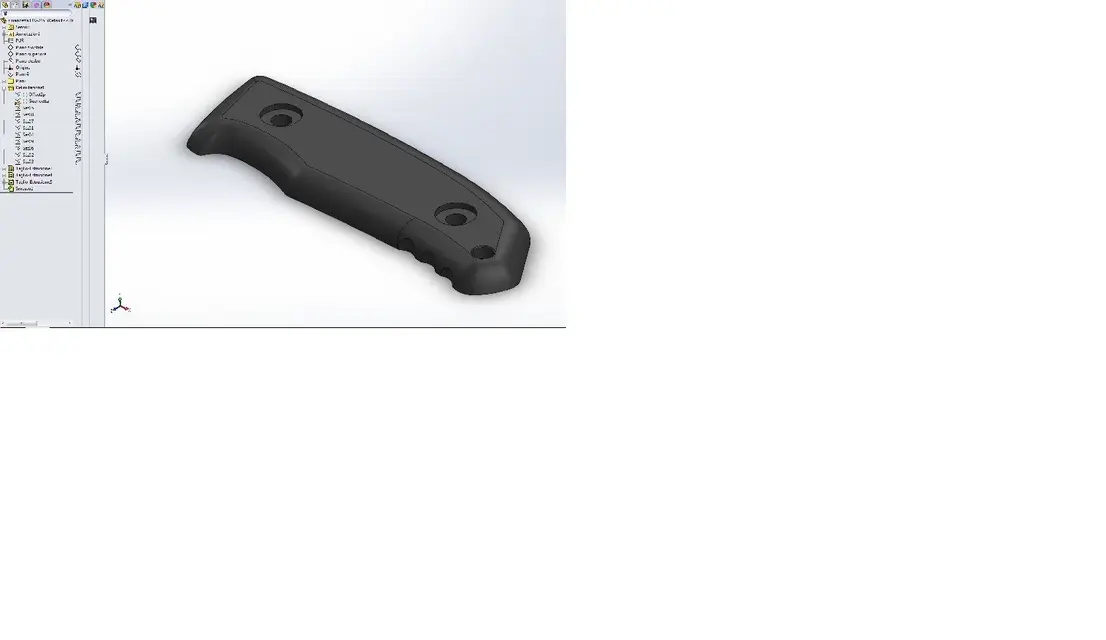
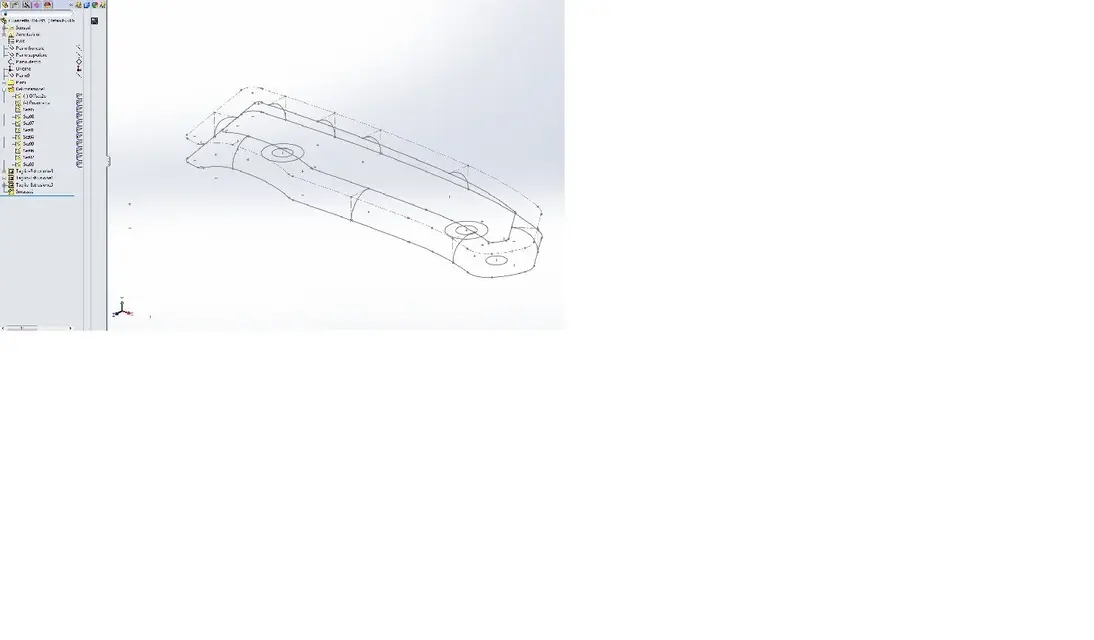
the perimeter of the cheek (or handle) has 1mm fittings and the final thickness (of the cheek) should be 6mm. I would like to combine everything with a radius 5 or 6mm, but for " obvious reasons" I do not come.. .
you, as you would. . .

ps: Can the title of the discussion be changed? Maybe with "how would you do? modeling sports knife..." just not to open another topic.. .
 
Maybe I found something: This is the "basic extrusion with loft" command that gives me the problem you see in the image, concavity and convexity. Don't I have to draw such sections along the perimeter?
 
...I finally managed.
I used the command "base/extrusion with delimitation", but I had to create 9 sections (!) of the connection + the lower path (the perimeter) and the upper path (offset of 2p equal to the radius of the connection). I sincerely hoped for a more direct and easy command to edit in the future.

new problem: I would like to affect on the scalpel of the blade (surface not flat but slightly concave) the logo of the customer without using texture, true modeling. I imported the sketch and projected it on the surface, but the curves that result can not use them for the extruded cut.
How can I do that?

Thank you, simone
 
This problem, too, was easier than expected:
in the command "extruded cut" it was enough to select "superior/face/plane" instead of the usual "clear plane" in the field "da" and enter the data of the depth....all here

comments?
 
You're right. . .
the problem was this: the knife that I am developing (at fixed blade) mounts 2 "guancette" one by side that in total make the handle. the perimeter of the cheek, which will have a final thickness of 6mm, has very small fittings (1mm) which creates problems with the fitting command.
I finally used the "extrusion with delimitation" function after drawing some sketches.
of this thing I have attached some pictures. . .

the other problem was the modeling of the brand in bas-relief, a simple perimeter (of which, for copyright reasons, I can not attach images) but on a surface not plan but curve: in the function "extruded cut" it was enough to select "surfaces/face/plan" instead of the usual "clear plane" in the field "to" and enter the data of the depth. . .

excuse the superficiality of my last posts, but since it is still a "non-official" project I preferred not to post too many images.

thanks for availability, simone
 

Attachments

  • perimetro.webp
    perimetro.webp
    16.2 KB · Views: 26
  • Risultato.webp
    Risultato.webp
    22.2 KB · Views: 36
  • Schizzo.webp
    Schizzo.webp
    25.3 KB · Views: 27
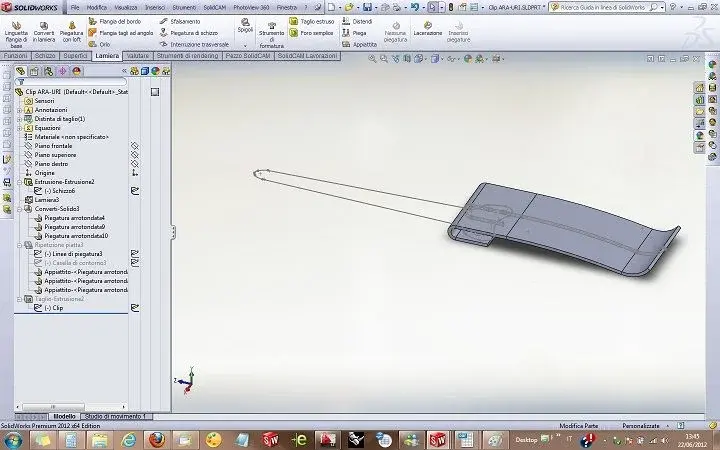
Hi, I have a new question:
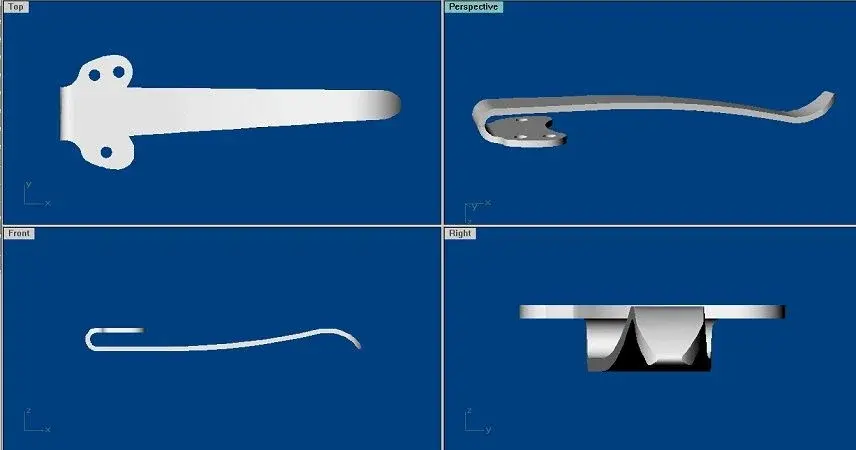
Now I have to create the clip that serves to hook the knife to the pocket or belt. having already the sheet metal cutting file (so flat) and the wound file, how can I create my object using the sheet metal functions?
Thank you, simone
 

Attachments

  • Clip.webp
    Clip.webp
    11.9 KB · Views: 18
Hi, I have a new question:
Now I have to create the clip that serves to hook the knife to the pocket or belt. having already the sheet metal cutting file (so flat) and the wound file, how can I create my object using the sheet metal functions?
Thank you, simone
I would extrude the profile and use the development that you already have to cut the shape once you unroll the sheet. .
another way would be to keep your development good and use the function
"Scratching" but I do not recommend it, even for problems related to the function itself (you cannot select curved faces).
 

Attachments

  • form.webp
    form.webp
    95.2 KB · Views: 10
I am following the first procedure you indicated to me: I extruded the profile of the folded clip (the side view to understand us), after which I flattened it and cut to give it the form I wanted. But when I fill it back to the shape before the cut... where am I wrong?
 

Attachments

  • Clip01.webp
    Clip01.webp
    42.9 KB · Views: 7
  • Clip02.webp
    Clip02.webp
    42.8 KB · Views: 8

Forum statistics

Threads
44,997
Messages
339,767
Members
4
Latest member
ibt

Members online

No members online now.
Back
Top