• This forum is the machine-generated translation of www.cad3d.it/forum1 - the Italian design community. Several terms are not translated correctly.

lifting machines

  • Thread starter Thread starter meccanicamg
  • Start date Start date

meccanicamg

Guest
I'm writing to you about something I can't get answers to.

who produces machinery, gearboxes or objects that must be lifted and installed needs to do anchoring points.

in modern versions, but not always functional and economic, use the male or female threaded gulls or the special bays with snout.

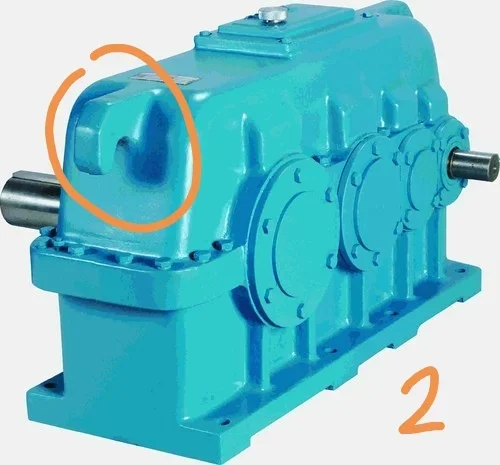
on big machinery and which are already handled in carpentry, you prefer to make open hooks, closed hooks/oven or mushrooms with belt stop gorge.

but of these things, what is normal? What can you do? Can you do everything?

I attach pictures, random but show what I'm talking about.
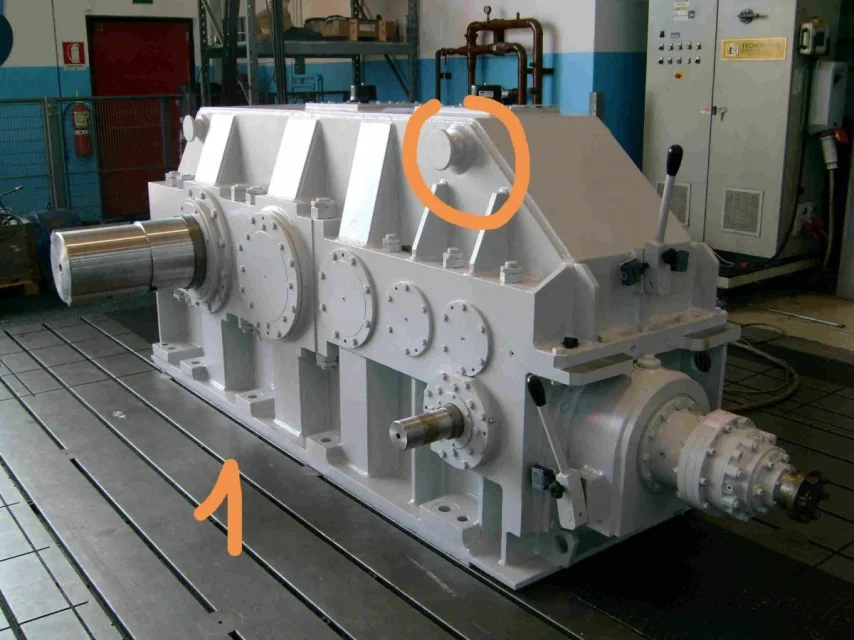
IMG_20221104_212556.jpgIMG_20221104_212621.jpgIMG_20221104_212707.jpgsomeone says that the hole must be closed to be in accordance, but what norm?
Many machines and gearboxes, especially the years behind but also now have generous open hooks made of sheet metal.
someone makes mushrooms that are welded on the machines.

do you have references or rules? tried designs of open hooks?

Thank you in advance.
 
a client of an old employer had a table with the size of the ears and mushrooms sized with security factor 8. Unfortunately no reference norm is indicated.
but there are translations in English of terms and are:
lifting ears=lifting lug
ring hook*=lifting stud (*that of the first image)
from this I did some quick research and found:calculation of a lifting lug for handling | eurocodes tools (forms for calculation)
uni en 13155:2021 (standard on removable lifting equipment)
 
din 28085 and din 28086?
and perhaps even din 28087 that should be for the threaded ones.
we hope to find the open hookers that are my favorites.
I have to go deeper into these rules.... it seems to them from what little you see in google.
 
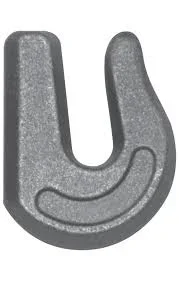
for open hooks, I found the English wording weld on grab hook.
something you can find, made in wool and in use.
download.webpnow there is to understand how they are calculated and how they can occur correctly.

for now I have not found a norm and how to use it.
 
I don't know if it can help you: the hooks open for what little I know are calculated as curved beams. on the shigley or on the mechanics manual should be reported formulas. . .
 
I don't know if it can help you: the hooks open for what little I know are calculated as curved beams. on the shigley or on the mechanics manual should be reported formulas. . .
interesting also this point of view. Thank you.
 
As for the open hook, of the type indicated in the post number 5, it cannot be calculated as a curved beam. the classic dangerous section of a crane hook (a-a), is subject to traction and bending because the hook continues with the curvature and arrives at the pin. In my case, the vertical side section is welded to the sheet and then you only cut into the hook in the section where I go to get it with a chain ring or similar (b-b).
Screenshot_20221107_000412~2.jpgWhat do you think? I believe that a b-cut test is enough, as well as traction the vertical welding cord.
Surely a fem could give the most correct idea but our avi.... how did they calculate them?
 
What do you think? I believe that a b-cut test is enough, as well as traction the vertical welding cord.
Surely a fem could give the most correct idea but our avi.... how did they calculate them?
in my industry (standard gearboxes) I never had to deal with this problem because for lifting they have always been used gulfs applied to male holes prepared for lifting or much more often, where possible, using the same fixing holes of the gearboxes. It is also true that some builders have created protrusions (melting or welded) for the coupling, but it seems to me that this solution with the morphological variations occurred over time by many has been abandoned; See you manual 1 e manual 2 present in the part relative to the lifting points.
However, I agree in the b-cut test and in the traction test of the welding cord, however, taking into account that in most cases the shot is not parallel to the welding itself unless the lifting instructions impose the use of a scale.
 

Attachments

  • Gancio aperto.webp
    Gancio aperto.webp
    22.7 KB · Views: 11
in my industry (standard gearboxes) I never had to deal with this problem because for lifting they have always been used gulfs applied to male holes prepared for lifting or much more often, where possible, using the same fixing holes of the gearboxes. It is also true that some builders have created protrusions (melting or welded) for the coupling, but it seems to me that this solution with the morphological variations occurred over time by many has been abandoned; See you manual 1 e manual 2 present in the part relative to the lifting points.
However, I agree in the b-cut test and in the traction test of the welding cord, however, taking into account that in most cases the shot is not parallel to the welding itself unless the lifting instructions impose the use of a scale.
I noticed that I had to check the cut as I said, that of bending that still affects a lot and the evaluation of the angle of inclination of the shot compared to the vertical. I had to compare the tension of von mises with the admissible one. of course the welding cord....but I still have to implement it because I didn't have time.

for now I have worked without Eurocodes....but I would like to deepen the calculation.
 
Last edited:
but the first link of the post #3 is not okay?
it is not exhaustive because the type of open hook cannot be treated like the closed one (which instead at the link is fine).
I also do not have a portion of hook that goes in traction because welded on the side and the whole "middle" is astounding.
 
Last edited:
I attach a certification document of an open hook but with sure....to see the rules followed for the ce as Annex 2a.
 

Attachments

Forum statistics

Threads
44,997
Messages
339,767
Members
4
Latest member
ibt

Members online

No members online now.
Back
Top