• This forum is the machine-generated translation of www.cad3d.it/forum1 - the Italian design community. Several terms are not translated correctly.

mesh low poly division and development plan

  • Thread starter Thread starter crimas
  • Start date Start date

crimas

Guest
hi, it is from a lot that I do not write, today I have faced a problem that goes beyond my abilities, in practice I have a 3d model made of low poles (those big triangles that form a three-dimensional model), from this model I have to succeed in selecting certain faces and create a mesh/surface apart for each triruption so that I have the entire model constituted by many sub mesh/superfici ones that compose it
the work is similar to the construction of a football in the form of icosahedra, starting from the model 3d, you decide which faces can remain united on one side and which will need a joint, develop on the plane these surfaces and eventually assemble the ball.

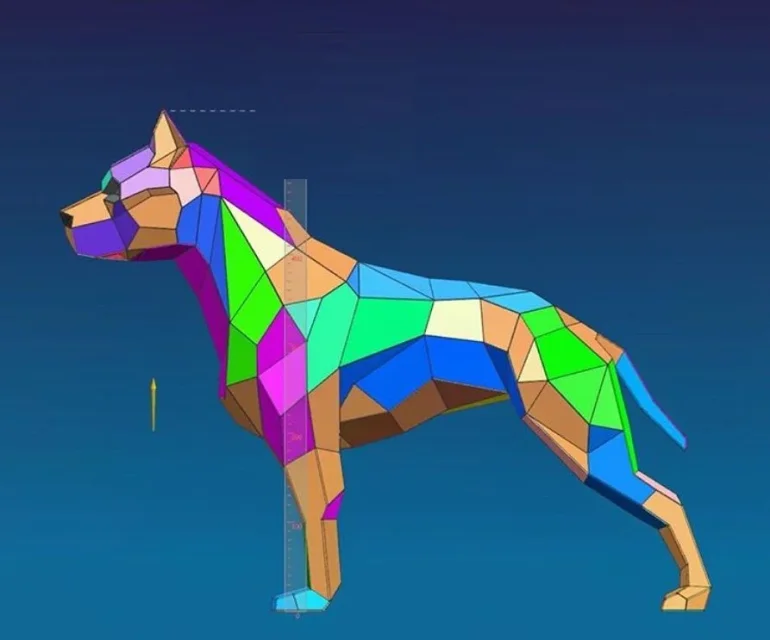
for greater clarity I leave you a photo in which there is a model 3d low poly in which each color represents a ragrupption of faces that will constitute a single piece of sheet that will have to be cut and folded.

the most immediate solution that came to mind was to go to redesign every face and then to force to export to dxf and to join the various triangles I was going out the single piece of sheet to cut, but this operation seems to me to the as laborious and little intelligent, as well as losing all the information on the fold of the sheet because in fact they join triangoli with a thickness null in a 2d design. I hope someone can suggest a smarter operation to do this job
Thank you in advance.mesh.webp
 
Have you tried to combine the surfaces and inspect them?
wanting you can do directly in sheet metal, but et certainly a long and dummy work; for a user with a similar request I had made a perfectly developing sheet icosahedron. try to search
 
thanks for reporting the discussion, I tried to put into practice immediately your advice, then the union of the faces with the uniform surface command is exactly what I was looking for, wanting to stop here I could have flattened surface and I would have finished (the thickness of the sheet is negligible at the end of the distension ) but I tried to follow the way of the functions of thickening and sheet metal but the software crashes, in the sense that it generates if I try to do the function with only two faces the game holds but it is not what I look for.. .
 
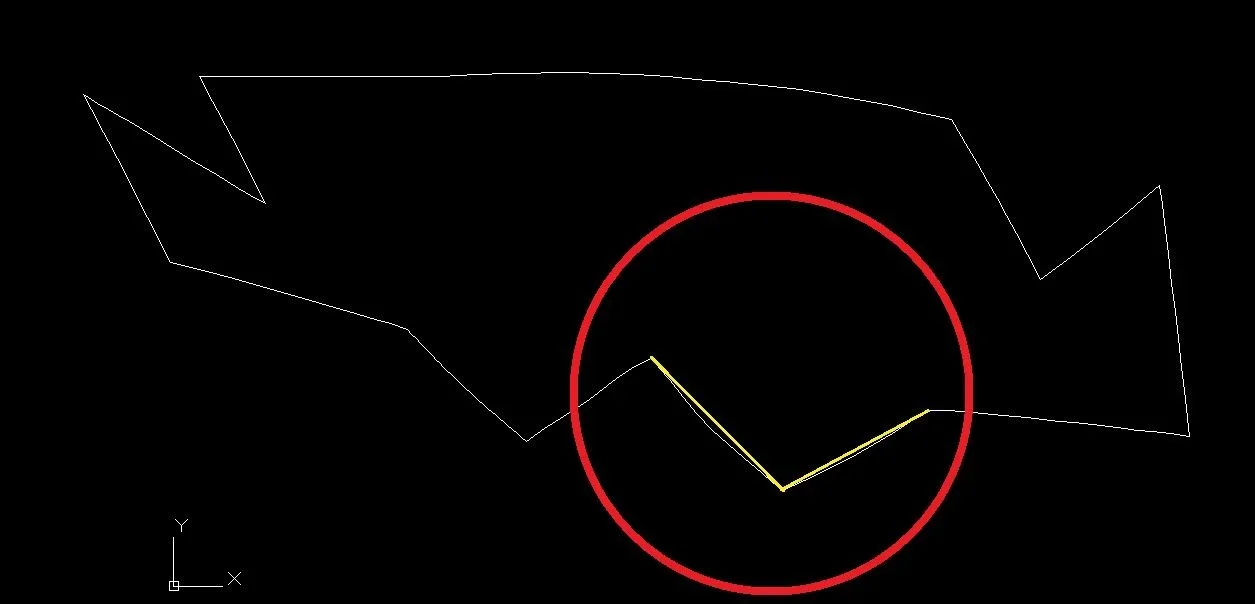
known now that only for some surfaces the flattening function generates a curved profile, not consistent with the initial geometry, which by definition should preserve all the straight sides, in the photo it is noted that a triangle of the mesh was flattened with curved sides instead of straight as highlighted in yellow; What could be due to?appiattimento.webp
 
the thickness of the sheet is negligible in order to dissolve
It is not true because according to the thickness changes the retreats (even of several tenths) and therefore the size of the development. to know the retreats you have to contact who will actually bend the sheets otherwise put an arbitrary k factor.
the software is blocked, in the sense that it thickens the supefic but they generate geometries that intersect on the union vertices of the various triangles that prevent the successive conversion in sheet metal
without files or images it is impossible to give a valid suggestion
in the photo it is noted that a triangle of mesh was flattened with curved sides instead of straight as highlighted in yellow; What could be due to?
as for the rest of your problems, without specifying:used functions, function options, attaching images and files is quite difficult to give advice on something so particular.
the version of the software used should be specified, indeed it should be inserted in the profile.
 
I try to explain myself better, as I first allego here the imported mesh in solidworks of a part of the levore I am doing, I tried to thicken, but the function only works if it thickens out, when I try inside it tells me impossible to perform. . quenching and hanging out then with the sheet function you can convert only to a certain point, certain edges selected for the fold block the function that brings error in the bending radius, probably the geometry self intersects in the edges. use sw 2016 at the moment.

ps. before when I said that the thickness of the sheet is negligible in order to distension I meant that the thickness that I use (ten tenths of mm) makes that the withdrawal is practically negligible, in fact today I made of print tests on cardboard with the simple distension of the surfaces and the result is excellent, sure the cardboard is not sheet 5/10 so if I could use the sheet function for developments would come out a more cared work
 

Attachments

what you are trying to do is possible, not using your model but it could be to be evaluated.
find an example in the annex.
not succeeding in creating them alone you have to add the areas in which to make the discharges for the fold
 

Attachments

Forum statistics

Threads
44,997
Messages
339,767
Members
4
Latest member
ibt

Members online

No members online now.
Back
Top