• This forum is the machine-generated translation of www.cad3d.it/forum1 - the Italian design community. Several terms are not translated correctly.

mini4wd

  • Thread starter Thread starter Gearscrew8
  • Start date Start date

Gearscrew8

Guest
Bye to all,
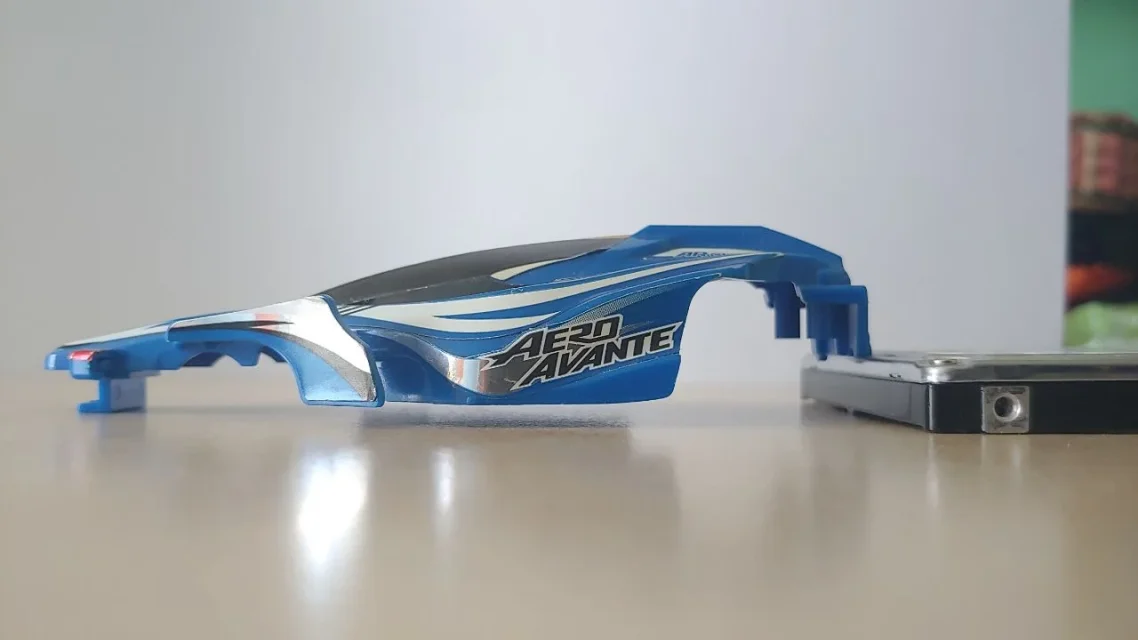
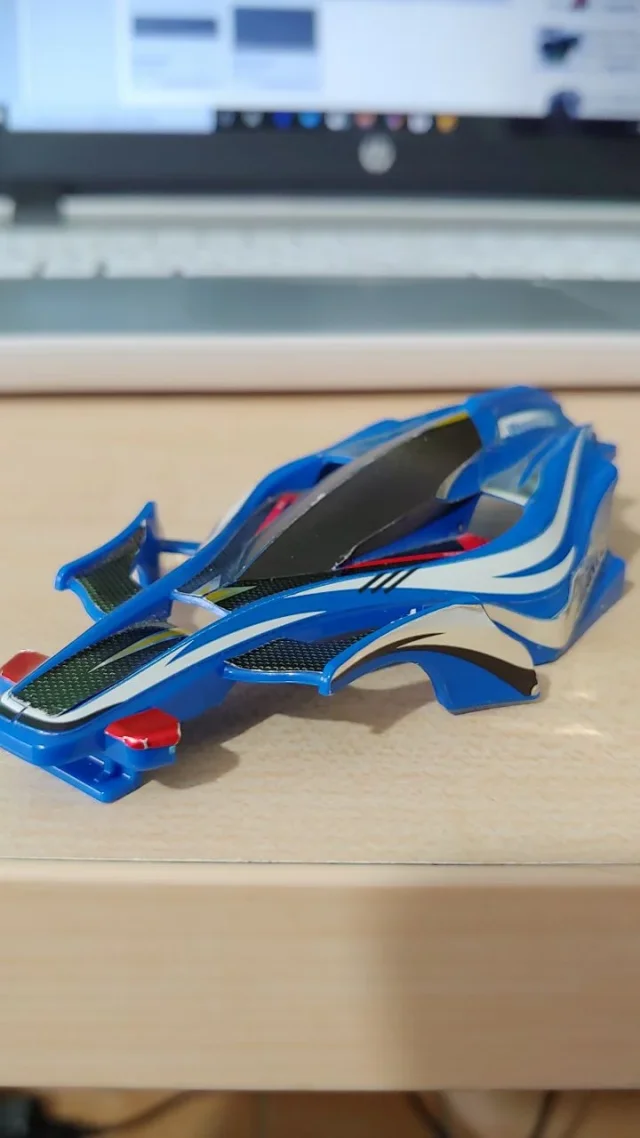
for cad examination at university I have to build an object on rhinoceros 5 and I chose the body of my mini4wd. I started modeling it through 1/2-track sweep, but I don't think I took the right path. I'm having trouble: with the front side of the muzzle (agreement 3 edges that does not close the edge) I fought us day and night but I did not find a solution; with the back, instead, I would need advice on how to shape it that I can't figure out how to do it.
Could someone give me advice?
Thank you in advance!
 

Attachments

  • Superiore.webp
    Superiore.webp
    201.6 KB · Views: 14
  • Davanti.webp
    Davanti.webp
    37.9 KB · Views: 16
  • destra 2.webp
    destra 2.webp
    37.2 KB · Views: 16
  • davanti.webp
    davanti.webp
    26 KB · Views: 19
  • destra.webp
    destra.webp
    20.7 KB · Views: 18
  • sopra 2.webp
    sopra 2.webp
    34.9 KB · Views: 18
I don't know if the exam would take you this way of modeling. But an approach to the problem could be this.
 
Bye to all,
for cad examination at university I have to build an object on rhinoceros 5 and I chose the body of my mini4wd. I started modeling it through 1/2-track sweep, but I don't think I took the right path. I'm having trouble: with the front side of the muzzle (agreement 3 edges that does not close the edge) I fought us day and night but I did not find a solution; with the back, instead, I would need advice on how to shape it that I can't figure out how to do it.
Could someone give me advice?
Thank you in advance!
What are you doing?
 
I started modeling it through 1/2-track sweep, but I don't think I took the right path.
It is not even said that it is the wrong way, but it is not the only one. a sculptor will never realize his work with only one type of chisel.
I'm having trouble: with the front side of the muzzle (agreement 3 edges that does not close the edge)
to receive help you must post the native geometries file that you cannot sew (preferably only the part with critical surfaces), otherwise any user can intervene with any answer to the fundamental question about life, the universe and everything who knows it is simply 42.
 
the only way (not to go crazy) to create the solid of that car is the modeling for polygons. is a relatively fast modeling type that serves for design prediction. i.e. when the model must be displayed and evaluated before working it with a prototyping software (i.e. those software with which to create the solid (and solids) to feed the numerical control machines). I don't think you need to do that job with prototyping software.
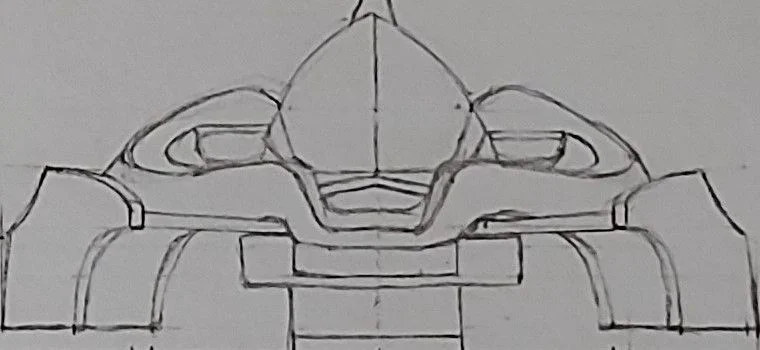
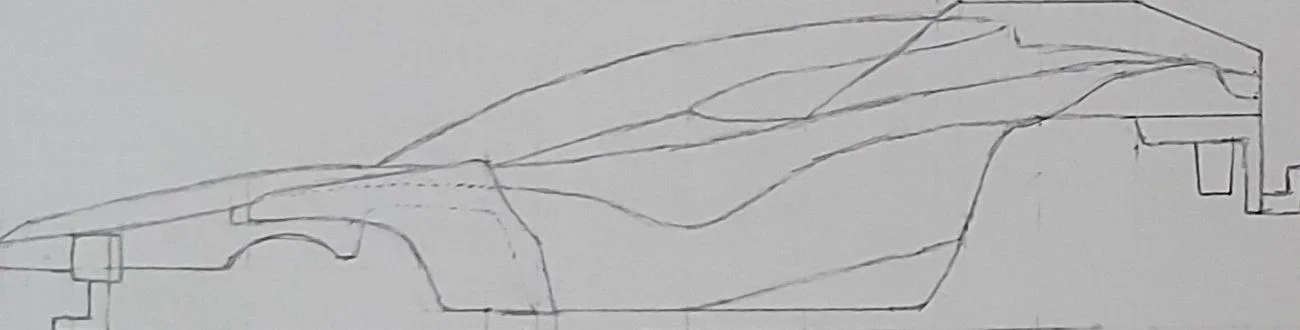
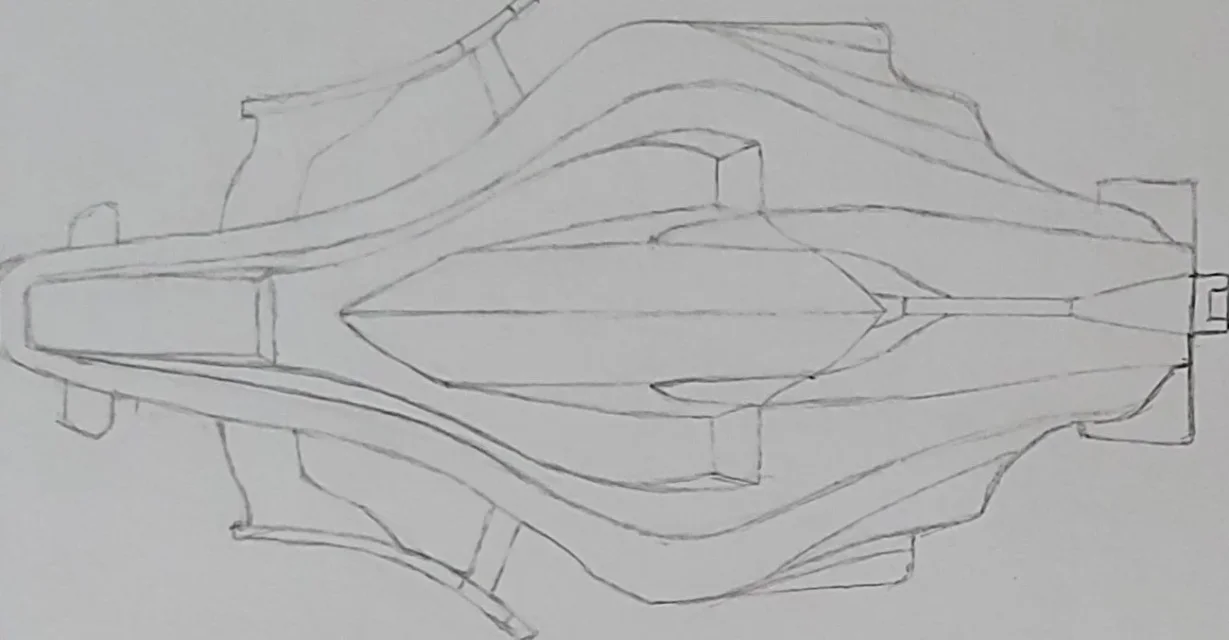
to make a polygonal modeling you need a blueprint of that car.

The blueprints are these. blueprint example and serve precisely for that purpose.

of that car you will have to prepare one yourself. Once you have created the blueprint panels and placed on rhino, you first create a flat surface with a number of subdivisions and then each vertex resting on the blueprint. on the net there are several tutorials.

to do even faster, shoot a series of photos to the car all around and with a software "3d from photo" I would regrow the solid taking the highlights without reaching to create a cloud of points. But there's no taste.
 
I don't know if the exam would take you this way of modeling. But an approach to the problem could be this.
Hi, I took a look at the series of videos connected to this and yes, it could come in handy. but I find myself with a body shop much more fluent and not created by "rectngoli". in any case I will take stock.
 
how do I attach the file in .3dm format? as soon as the load tells me that the extension is not accepted
 
There she is. I split the muzzle from the rest. I didn't finish closing the manual chord because it had problems already. Can someone give me some advice?
thanks in advance
 

Attachments

I load other photos of the model from various angles, so make you understand also details that otherwise were hidden.
 

Attachments

  • photo5924968077471100911.webp
    photo5924968077471100911.webp
    40 KB · Views: 3
  • photo5924968077471100910.webp
    photo5924968077471100910.webp
    52.3 KB · Views: 3
  • photo5924968077471100909.webp
    photo5924968077471100909.webp
    53.8 KB · Views: 3
  • photo5924968077471100912.webp
    photo5924968077471100912.webp
    47.2 KB · Views: 3
  • photo5924968077471100913.webp
    photo5924968077471100913.webp
    41.6 KB · Views: 2
  • photo5924968077471100914.webp
    photo5924968077471100914.webp
    74.1 KB · Views: 3
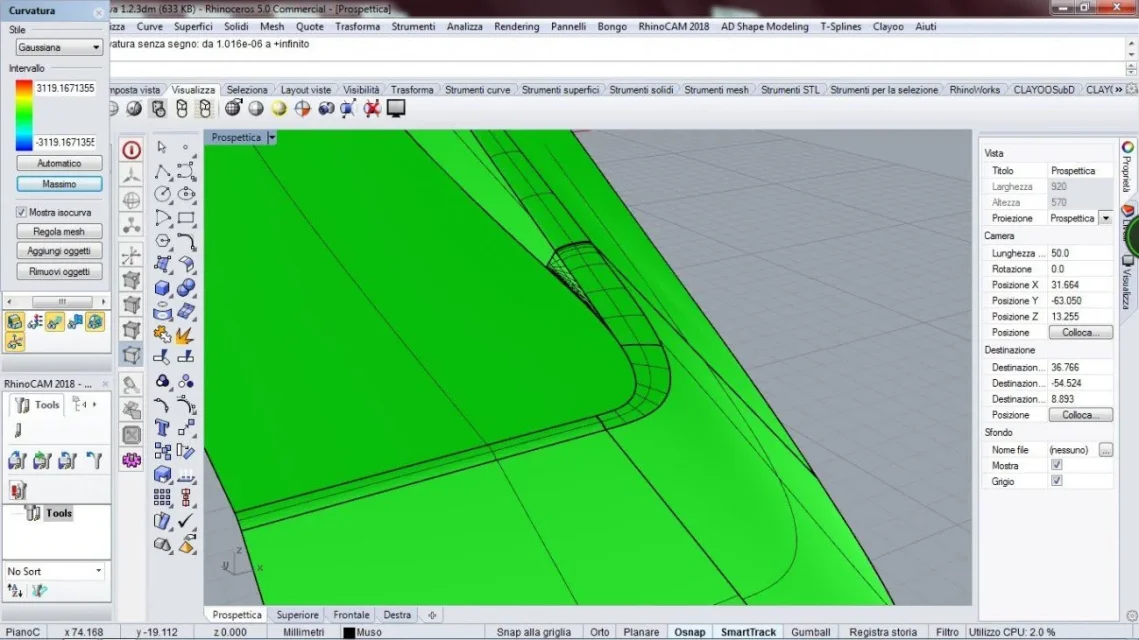
1573301712590.webpThis is what happens to me in the connection. I can't have a good bending continuity and at the same time a fitting that looks good.1573301836455.webpI inserted the photo of one of the many that I tried to do, but the result more or less is the same.
 
Mechanical engineering. I have not yet understood why cad's prof let rhinoceros use, since in companies nobody has it or uses it.
In fact they are strange, for an ing.mecc, both the cad to use and the theme chosen....
 
it goes from if it is advisable to work on a longitudinal half and then mirror it. not so' on rhino, but on 3ds max there is a modifier called "simmetry" that allows to mirror an object, hiding (wanting) the half just mirrored in which the changes in real time will be carried out in the other half original. is a useful tool when you work on objects that have a symmetry and saves a lot of time.

Probably, but it is not said, the professor has more familiarity with rhino than with other software. Even if, in my personal opinion, once impratichiti with rhino, to try with specific software for mechanics should be easier. I mean, some modeling bases.
 
it goes from if it is advisable to work on a longitudinal half and then mirror it. not so' on rhino, but on 3ds max there is a modifier called "simmetry" that allows to mirror an object, hiding (wanting) the half just mirrored in which the changes in real time will be carried out in the other half original. is a useful tool when you work on objects that have a symmetry and saves a lot of time.

Probably, but it is not said, the professor has more familiarity with rhino than with other software. Even if, in my personal opinion, once impratichiti with rhino, to try with specific software for mechanics should be easier. I mean, some modeling bases.
Yes, of course, my intent was to work on half bodywork and then mirror it.
 
I would like to take a look at the file but I can't import it on max. you should export it in 3ds or obj format.
as regards the connection, which lines to make this connection? Is it a connection between two surfaces? You should look if that command has options to vary the continuity of curvature. For example, on autocad, the widespread connection command includes options with which you can go to vary the continuity and width of the curvatures of the surfaces. autocad proposes the same thing in closing surfaces like cap and others. on rhino you should pay attention to the command to see if it has similar options. If necessary, treated with nurbs, once the surface is created, it can be easily and effectively retouched by moving the nurbs control points.
 
I saw that the surface escapes you out of the guides during the generation.
if you generate it with _networksrf you should increase the accuracy to set in the dialog box.

in any case, to get a good result it would be necessary to add at least one extra section to force the surface to assume the correct profile during development. you also have some problems with adjacent surfaces that should be prepared well for the development of your connection.

In the annex there are two new layers, the _sweep2rebuilt layer contains a surface generated with the homonymous command, which is also valid for the _networksrf layer which also contains an example of modified adjacent surface.

if you make a case the generating sections are not in continuity of curvature with the adjacent surface but are in tangency (g1). I recommend to maintain continuity g1, not g2, with the lower surface.
 

Attachments

Forum statistics

Threads
44,997
Messages
339,767
Members
4
Latest member
ibt

Members online

No members online now.
Back
Top