
• This forum is the machine-generated translation of www.cad3d.it/forum1 - the Italian design community. Several terms are not translated correctly.

pontial dimensioning

  • Thread starter Thread starter riccardot5765
  • Start date Start date

riccardot5765

Guest
Hello everyone,
I write you more about curiosity, so even if I don't have answers, it's not a problem.

So I will explain briefly to you the question.

in the port where I have the boat are willing to change all the dead bodies of a floating pier. a few days ago the commissioners of the company who will have to proceed to work on the second side of the pontile, since the first was already done. precisely for this reason I raised some concerns about the quality of the work performed. I believe that the dead bodies have been placed a short distance from the pier and in fact it happens that with the peaks of mooring almost to peak the boats however approach too. the company responds that in order to be able to moor well you have to pull the tops until the chain reaches the surface of the sea. It's practically a mule.

I have searched for something on the internet but I have found nothing and therefore my question is: is there any formula or text that relates depth, distance, size of the moored unit and things like that? not for anything else, but the work would cost 15k€ which then must be paid back by us poor shipowners. . .

grace to those who want to answer.
 
trappa on catenary: This system provides a chain placed on the bottom and parallel to the dock of mooring from which other chain breaks called traps depart.
Once the boat approaches the stern or bow, the tops are fixed on the ground on the one hand, while on the other it puts the trapper in tension so that the boat remains shaken by the dock.
for what concerns the distance of the chain from the dock, at this moment I have no info, I have to see in the office if we have something. I remember that regarding the ornament with the anchor the calumo (i.e. the total length of chain and yarn top for anchoring), must be 3/5 times the depth of the bottom. three times they give themselves with calm sea and in the absence of wind. Five are the minimum for a safe anchor. the old sailors recommend between 5 and 7.
 
I thank you for the answer, but what you wrote I knew already from experience. I'm interested in knowing exactly how much chain should be from the pier. the type that must make the installation claims that the sufficient distance is the length of the boat plus another half boat. that is, for boats of 10 m the chain is good 15 m from the pier, justifying everything claiming that at the moment of the mooring it is necessary to carry the trapper with water. all because this mooring is, sempra according to the guy, to short calumo and that if the distance was too much would be worse because with the laughter or the wind the boats would tend to swing while instead with little distance they would feel more firm. It seems to me that you want to make a good deal of a system that is not, however, I would like to have some data underhand in order to be able to deny it or to believe me.
 
I thank you for the answer, but what you wrote I knew already from experience. I'm interested in knowing exactly how much chain should be from the pier. the type that must make the installation claims that the sufficient distance is the length of the boat plus another half boat. that is for boats of 10 m the chain is good to 15 m from the pier, justifying everything by claiming that at the moment of the mooring it is necessary to carry the water-haired trapper. all because this mooring is, sempra according to the guy, to short calumo and that if the distance was too much would be worse because with the laughter or the wind the boats would tend to swing while instead with little distance they would feel more firm. It seems to me that you want to make a good deal of a system that is not, however, I would like to have some data underhand in order to be able to deny it or to believe me.
All right, I'll ask around in the morning. But if I'm lucky to have a 16 m boat like I do? or are moorings for boats up to x meters?
 
are moorings for boats of max 46 feet, and therefore reasoning could spin. the point is that in my opinion the boat distance + 1/2 boat seems to me sincerely a little bit. Even the justification of the possible movement of the boats seems to me a little weak, it is clear that, even if the chain is far away, I can shit more the mooring and in the dock I do not arrive. the fact of the movement ends to itself then I think it goes "managed" properly fixing the boats, while instead as the only parameter was chosen the length f.t.

I ask you a theoretical approach because the bottom from the two sides of the pier is different because of some excavations carried out from the yard, for this I wanted a little to know how such given influence chain distance, disposition boats and similar things.

Thank you so much for your help.
 
Thank you so much for your help.
It is a very limited aid, for I have never put the problem frankly. I have to track down a person who's the head of the office that runs our moorings. he will know more. I hope I can get you to know something as soon as possible.
Bye.
 
Okay, I'll wait.

Hi.
This morning I had a chance to talk to our ship.
Even if he's not the person I thought about (I can't see it...) he's still one who knows about mooring.
says that there is no written rule but it is good that "the entry into the water" of the mooring top, pierces a corner with the surface of the sea of 45°. therefore depends on the profndity of water and the length of the boat. now being a chain for boats up to max 46 feet, knowing the depth of the sea is simple to determine the distance.
That's how much I knew.
as soon as I have more info I let you know.
Bye.
 
Okay, thank you. This already tells me that the work they are preparing to do is not the best.

But what you say makes me wonder: 45° with boat moored in full safety and trapping on the seabed or 45° with boat well moored but trappa that does not touch the seabed?

I oppose for the first case, otherwise you are forced to pull up the trapper and it is work by hulk
 
Okay, thank you. This already tells me that the work they are preparing to do is not the best.

But what you say makes me wonder: 45° with boat moored in full safety and trapping on the seabed or 45° with boat well moored but trappa that does not touch the seabed?

I oppose for the first case, otherwise you are forced to pull up the trapper and it is work by hulk
Mah! I also think like you that the trapping (which according to definitions must be non-floating material) must remain on the bottom.
But I am not comforted by any certainty.
I will also ask for this detail.
I hope that the person I know is not already in vacation...
Bye.
 
even if at a distance of almost a year, I resume this discussion as I did not find anything, but I wanted to make available the personal (not beautiful) experience that I did and I can tell you that:

the distance between the catenary and the dock is certainly depending on the length of the boat, the greater the boat the more distance there must be between the trapper and the dock. the depth of the bottom in this case does not hit much.

What is the risk if the trapper or dead body is near the boat?

you risk that to climb over the boat you have to pull it with a mule and this I do it every time I have to board and it's not okay.

in order to avoid making monstrous efforts (initially I had thought to weather a hoist) it has led to lascare the trapper, but soon we realize that the boat can crash on the dock and if in the port a rick is formed, lookcaso due to a mal intervention of enlargement in the port, ends that the boat finds it on the dock.:finger:

the trapper must be raised shortly only if in the port there is a laugh, to soften the blow on the crows that otherwise tear (seen with my eyes).:36_1_28:

with good weather the boat should not be pulled or shit on the mooring or even pull the trapper.:eek: in case of laugh if you hold even the mooring tops on the dock, the cocks surely slit.
with little wave in the port on the boat you live badly because you are distracted from here and there and feel that the boat complains (but the carous boat place I pay only when the weather is good? )

now to overcome my problem I am building the brooklyn bridge, that is a walkway of just 3500 mm (but where you have ever seen such a long walkway) to be able to easily climb the boat and leave the stern moorings to be able to live with a minimum of comfort. in the boat you are caught unstracted.

but reflecting on us... it will not be that from the dock to the trap is missing just 3.500 mm.:mixed:

greetings
 
All right, I'll ask around in the morning. But if I'm lucky to have a 16 m boat like I do? or are moorings for boats up to x meters?
I have an idea.... a beautiful big viton that from the blanket comes to the bottom, is the safest method, you know that from there it does not move anymore.:biggrin::biggrin:
 
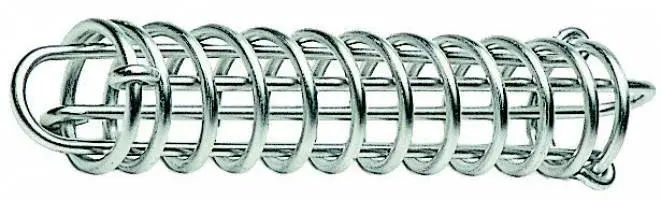
However, they also have shock absorbers to put on moorings that avoid the dry blows on bits/gallocks.
 

Attachments

  • thumb_01_189-199_xx.webp
    thumb_01_189-199_xx.webp
    28.5 KB · Views: 7
I know there's springs and I use them, but if the mooring peaks are too tight, the boat is the same, believe me.

However I also knew that the top of stretch mooring must form an angle of 45° + a tot to give extra for when there is the high tide +1 meter of lasco + 1 meter abounded for the laugh and perhaps even more, row according to the force of the wind.
 
morality is that there is no mathematical function to apply but one relies on experience, the rules handed down and not written, until the unpredictable occurs.
I have seen (I also have photos) tear a roller bypass, resulting in "discovery" of the underlying room, from the bridge of a ship of 123m from 3000 ton. for the action of the wind.
 
morality is that there is no mathematical function to apply but one relies on experience, the rules handed down and not written, until the unpredictable occurs.
I have seen (I also have photos) tear a roller bypass, resulting in "discovery" of the underlying room, from the bridge of a ship of 123m from 3000 ton. for the action of the wind.
Good morning.
Sorry I'm late but I'm a new member!

I hope you have solved your problems, however if not so I can give you the desired answer.

not all mooring systems should be considered as the usual criterion, although they are almost composed of very similar elements, you are interested in mooring on chains and piers, so let's suffer about that.

the mooring is composed of dead bodies, bottom chain (the one lying on the dead bodies and united to them by cricket), chain nipple (small chain that by cricket is arranged perpendicularly to the trend of the bottom chain and on the other side is connected to the cable that comes on the surface, messenger cable or bastard (a small cable usually diameter 8mm, is not subjected to particular mechanical efforts,

the factor that determines the distance of dead bodies from the pier is only one angle of the bow mooring cable shape with the water surface when the boat is moored in quiet state, 45°

so to be practical, to calculate the distance of the dead bodies of the pier (and for those breasts and cosines are the right and left roof of a woman and the tangent is what you pay to win the tenders) the formula is this:

boat length expressed in meters (real encumbrance, then with any beaches aft and dolphin at the bow) + 1,5mt (distance of the aft end of the boat from the pier) + the depth to which the dead bodies should be found (this because graphically we go to draw a square then with diagonal at 45° between the bow of the boat and the dead bodies.

we make an example fascile boat of 10mt, depth dead bodies 15mt

10 + 1.5 + 15 = 26,5mt

considerations

the considerations to be made are that not always the depth under the pier is the same that is where the dead bodies are, so a batimetry of the bottom is necessary quite accurate;
strong slopes of the seabed can affect stability of dead choirs for which appropriate stratagems should be implemented to improve and ensure the stability of dead bodies


other considerations regarding the size of the chain pen and the correct tensioning of the mooring

we could talk about this for hours and then spread it for days, but simplifying we can say the following

chains and cables should be sized according to these factors:

- displacement boat(I wrote displacement does not stand, look good!)
- medium annual wave motion and in the last ten years, therefore wave height, wave period or wave type (and we are not talking about motorcycles)
- wind force and dominant winds
- galvanic currents in the area

according to what we said we will know how long and heavy it will have to be the chain penzole... to understand, with the maximum wave height, thanks to the complete distension of the chain pen and to the elasticity of the cable the boat will always have to float on the wave!

from this it is evident that in a state of calm the chain penzole must be at least raised from the bottom, so always speaking earth earth we approach that 1/3 of the chain must be lifted from the bottom and the remaining 2/3 (those side chain) must be well laid on the bottom.. .
How do you get to this? if the chain is heavy and you are not a little discarded you can pull the bow cable by hand until you hear the chain rise, put the cable in bit and give a tack of reverse with the engine to relax the chain, at that point recheck the tension of the mooring and check to eye the angle of entry into the water of the cable, do it looking at the cables emersi, xché those in water present

I almost forgot, the joint crickets must be so sized, chain diameter to which they refer for a k ranging from 1.3 to 1.6.

I hope I've been able to help.

greetings

kissing
 

Forum statistics

Threads
44,997
Messages
339,767
Members
4
Latest member
ibt

Members online

No members online now.
Back
Top