• This forum is the machine-generated translation of www.cad3d.it/forum1 - the Italian design community. Several terms are not translated correctly.

question: execution injection mold abs of 2 shells

  • Thread starter Thread starter Mold
  • Start date Start date

Mold

Guest
Hi.

I have a manual 3-axis anayak fv 4 milling machine from the early 90s that works well.
this milling machine has a display that allows you to perform the tools and to measure the running of the table during the manual movement.

I would like to know if the following workflow will allow me to successfully complete my mold.

flow related to male dowel

1. the details are 2 shells in size abs 60 x 40 x 7 mm

2. I have a pedrotti stand 246 x 246 mm with tile reported - vent the old dowel

3. purchase a steel tile 1.2311 or 1.2378

3. I put the tile on the milling machine and the squadron in x, y to enter the stab

4. I put the tile on the milling machine and make the holes for thermostating

5. I put the dowel on the milling machine and make the holes for extractors and punches - lift the holes

6. I put the tile on the milling machine and work in z so as to leave to relief the protrusion of the printer part.
the protrusion will be in the form of a cap with an overmetal of 2 or 3 mm compared to the final geometry.
Of course I can't precisely check the thickness of the overmetal because the milling machine is manual.

7. I make an electrode finish in graphite and then I carry the dowel at a supplier for electroerosion.

8. I see the twelfth on the stand

9. Supposing I have ready the other dowel I try to close it and see the match with the blue of prussia.


Does this workflow make sense?

I'll do it with the manual cut?

Something missing?

How do I intervene if the closure with the blue of prussia is not zero?


I thank all those who answer me.


Hi.
 
I would also do a roughing electrode, if the overmetal is irregular the electrode begins to work only at some points and you have a different wear than in the rest of the piece.
then evaluates even if it serves to work the fingerprint with an electrode.
if you do not need a sandblasted finish you could also work the footprint directly of milling machine, of course to cnc, 3-4-5 axes depending on the geometry of the piece.
The electrode I imagine you'll build it like that if you can do that you can make the footprint.
 
Hi.

> > I would also make a degrossing electrode, if the overmetal is irregular the electrode begins
>> to work only at some points and you have a different wear than in the rest of the piece.
great suggestion, thank you.


> > then evaluates even if it serves to work the footprint with an electrode.
on this. The particular is not great and I wish not to pass through the cnc that I do not have.


> > if you do not need a sandblasted finish you may also work the footprint directly from the milling machine,
> > obviously a cnc, 3-4-5 axes depending on the geometry of the piece.
Okay, thank you. I thought of a smooth finish.

How much will the 2-print polish finish cost me?


Hi.
 
I think you've got to go through the cnc to do the electrode.
At that point, let's rub the footprint.
even more since you have to polish because you need a shiny finish.
for me it doesn't make much sense to do 2 electrodes and then have to polish, choke cnc and polish. save the cost of 2 electrodes.
for the cost of polishing depends a lot on the geometry of the piece and the degree you have to get.
the more the piece is "complicated" and the more it costs polishing, the same speech for the degree. the more you approach the "optical" degree and the more it costs.
 
Hi.

> from the cnc you know that you have to pass by force to do the electrode.
> at that point, cut the footprint
If I make the imprint in cnc I still have to make 2 or 3 electrodes to shape the edges of the openings on the side walls of the shell.

Moreover the cnc working center, which is 3 or 5 axes, may not be able to do some work.

This happens when I have to make my pockets, or when the cut is short, or when there's a potato that obstructs the access of the cutter.

This involves adding other electrodes.

The detail is small and I'm trying to figure out if I can break the dowel with my 3-axis manual cutter and then finish with 1 or 2 electrodes.


>> for polishing costs depends a lot on the geometry of the piece and the degree you have to get.
> more the piece is "complicated" and more costs polishing, same speech for the degree.
> the closer you approach the "optical" grade and the more it costs.
Okay, thank you.

Is the cost of polishing a dowel time?

Is it possible to polish in the house? I'm a peritum, and I did two years of adjustment.

Hi.
 
my suggestion was conditioned by not knowing the geometry of the piece.
from what you say now I would say that it is not the right way to work the imprint with the cnc.

As far as it's about grinding the fingerprint with the 3 axes, see if it's worth it.
If the piece is small you can start with the grinder from the full.
Since you have to do it anyway it can be a good solution.

to see geometries would help give you more targeted suggestions.

polishing is a manually done operation, so the cost is dictated by how many hours it takes.
to make it in the house you need some equipment, a place where you can work without dust, chips etc and time to do it.
as all manual work requires a certain practice, the first times the work will not be great but then in time you take your hand.
 
hi technomodel,

> > being able to see geometries would help give you more targeted suggestions.
Okay, thank you. tomorrow morning I load on the site the drawings of the particular


> From what you say now I would say that it is not the right way to work the imprint with the cnc
Okay.


> as all manual work requires a certain practice, the first time work will not be great
> > but then in time you take your hand.
great, this allows me to leave open the road of an internal polishing.


soon and thanks again
Hi.
 
Just take into account that you will need an investment for the equipment.
If you think you do polishing even in the future ok, if it is a one-time thing maybe it is better to make it to who is of the job.
 
hi technomodel,

> > if you think you do polishing even in the future ok, if it is a one-time thing maybe it is better to make it to who is of the job.
>> just take into account that you will need an investment for equipment.
I didn't know that to polish a mold's printer surface, you need equipment.

What is it?

Hi.
 
Hi.

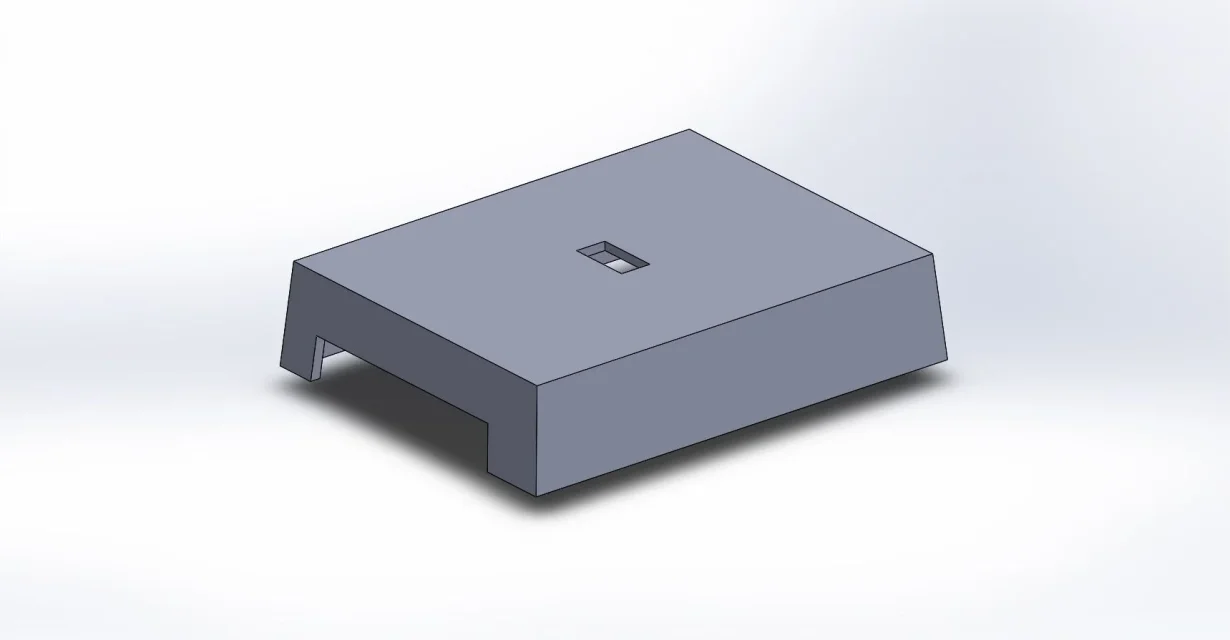
These are 3 images of the particular suitably simplified that I would like to do with electrode without passing by cnc.
PARTE CHE RICHIEDE ELETTRODO-FOTO 2.webp
PARTE CHE RICHIEDE ELETTRODO-FOTO 3.webp
PARTE CHE RICHIEDE ELETTRODO-FOTO 1.webpthe detail is about 70 x 45 x 10 mm

next week I put photos of the real detail unfortunately are out of office.

hello and thanks for the support
 
to polish you need a control unit with handles, rotations and alternatives.
on these mountains the stones, usually use those ceramics, to begin to remove the grain of electrode or cnc finishing.
arrived at a good degree of finish you pass to diamond paste using hardwood sticks or felts.
you start from the bigger grain then gradually descend to the desired polishing degree.
the biggest investment is for control unit and manipoli, the other things do not cost much.
or do all the process by hand, but you put ten times a lot.
 
Hi.

These are 3 images of the particular suitably simplified that I would like to do with electrode without passing by cnc.
View attachment 45172
View attachment 45173
View attachment 45171the detail is about 70 x 45 x 10 mm

next week I put photos of the real detail unfortunately are out of office.

hello and thanks for the support
For a piece like that, I wouldn't be fresing, two buggers and a finisher, and you're fine.
or a single grinder if you have the orbit in the erosion, then put it back a little after the first roughed to remove the consumption, lean back a little more fine and finish with the finisher.
 
Hi.

> > for a piece like that I wouldn't be fresing, two grinders and a finisher and you're good.
> > or a single rougher if you have the orbit in erosion,
> then fill it up a bit after the first riot to remove consumption, rinse a little more fine and finish with the finisher.

great thanks for the answer.


> > or only one grinder if you have the orbit in erosion
Why do you say that? What adds more the orbit of the head of erosion?

hello and thanks again
 
above all greater precision, gradually increasing the orbit is reached the desired measure with centesimal tolerances.
better surface quality, orbiting the washing is better and avoid carbonizations.
reduction of time, you can start with a higher scale and lower it as it approaches the measurement.
fewer electrodes, in some cases you don't even need the grinder.
I would say the orbit adds a little more.
 
Hi.

> > above all greater precision, gradually increasing orbit
> the desired measure with centesimal tolerances.
Okay.

> > better surface quality, orbiting washing is better and avoiding carbonization.
Okay.

> > in some cases you don't even need the grinder.
interesting

> > I would say that orbit adds a lot more.
I agree

Thank you.
 
Hi.

I see 2 more problems before proceeding.

1. Will I be able to injection with the only erosion?
I haven't studied it yet.

2. If I work the two dowels with an electroerosion of the 90s not cnc how do I make sure that the two printer parts of matrix and punch will be aligned?


Hi.
 
I don't see any big problems with electro-erosion injection.
In fact, in some cases (capillary) you do not have any other roads.

as regards alignment, if the machine is not in bad condition, it depends all on how it fits and centers the pieces.
all repeated for various processing, dowel plating, home processing etc.
 

Forum statistics

Threads
44,997
Messages
339,767
Members
4
Latest member
ibt

Members online

No members online now.
Back
Top