• This forum is the machine-generated translation of www.cad3d.it/forum1 - the Italian design community. Several terms are not translated correctly.

square official

  • Thread starter Thread starter Exatem
  • Start date Start date
a current account number will be made available to me shortly.
causal: "for the elderly care institution aspirant commodori"
do little the smart and hunt out the iban that babbo christmas arrives in advance...!!!:biggrin:
I take advantage of today that I am at home for family reasons and I place everything "the ensemble" of official square to which, however, it seemed necessary to change the title.
you will then find the pdf attached:
the great illusionist.the text has been revisited, some notes, images taken from the internet and the reference bibliography have been added.
Sslurrpp!!!! !

I gave a very quick last. really done excellently! ! ! !
Who knows if they adopt you as an alternative contemporary history text!! if one with 25 readers with a mediocre and painstaking romantic romance has become a symbol of Italian literature, you with a astound of readers as we minimum deserve the nobel!!
 
Thank you all.
for the iban we are considering whether to open an account to cayman ...:tongue:
 
but having the iban you can only pour, or could you "reuse" also to withdraw? :biggrin:
 
I'm going to reopen this discussion for a friend of mine.
he is a scout executive and provided me with stimuli, ideas and material, to add a chapter to "the great illusionist" of which you will find the updated version at the end of this chapter.
I hope my friend has a "lieve" fault:-)

Upholsteries and children of the wombto completion of what is mentioned in the chapter dedicated to the Leteranensi pacts, it is interesting to deepen a little known aspect of the years of the twenty-year fascist ie what was the relationship between the youth organizations already present on the territory and the associations that the regime intended to impose on the new generations of Italians. at the time one of the most represented realities were those that today are known as “boys scout”.
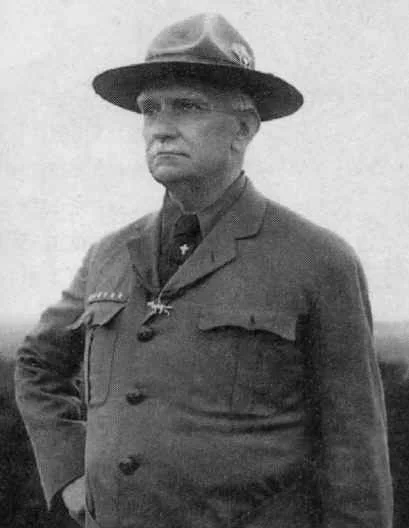
the scautism was born in guilterra at the will of the general baden-powell between 1908 and 1909 and had later spread first in the countries of commonwealth then, in European countries arriving in Italy in the spring of 1910 by Sir francis vane baronet of hutton. On July 12, 1910, with the help of a local master, the baronet founded a first scouting department in Lucca baths with the name of "boy explorers" (also known as boy knight, patriotic boys, small scouts of peace, young explorers, small knights of the world), from which the "boys Italian explorers" (rei), Italian section of the British British Boy Scout.
on 6 November 1910 the department was presented to king Emanuele ii who was on holiday in the nearby estate of San Rossore. in 1912 the national body was born young Italian explorers (cngei) at the will of prof. carlo colombo who had had had the opportunity during his travels to Europe, to get in touch with the scautism through the reading of brochures and publications in English and that later, interested in the phenomenon, he embarked on a journey in great bretagna where he collected further documentation. In this way, he created the idea of importing the scout movement into our country, whose embryo developed among a group of young people from the Lazio sports company, a city where he was a professor of physical therapy at the university. After a long and difficult start, he began to have a national diffusion in 1914 and the turning point was the outbreak of World War I, when the army realized of this youth movement whose principles were discipline, patriotism, courage and physical performance. colombo was inspired by the criterion for which the organization of the cgnei, while maintaining an original matrix inspired by the English movement, had to develop its own “Italian system” and purging those characteristics not conducive to Italian youth. and if adaptations due to local needs and needs are inevitable, other things were deviations from the original concepts that inspired baden powell. when colombo officially presented his organization, he publicly declared that his boys would be useful in war but never and never would be soldiers. but military were terminology, uniforms, degrees. military were many of his leaders, discipline, oath and, from the outbreak of war, training (with sticks instead of rifles). the basic element of scautism, i.e. the “pattuglia”, was abandoned in favor of “section” mainly aiming at a mass “arruolament” rather than an individual education. the very structure of the organization differed from the concepts of baden powell (according to which one had to aim to decentralize by giving ample autonomy to the local organs), aiming to a centralized and strongly hierarchical model.
Finally, the original principle that intended to open the scautism to all young people without religious distinction, widened so much to touch the extreme opposite for which the cgnei had to remain “areligious” excluding religion from any Scouting activity. This attitude could not be ignored by the church which, despite having passed 40 years from the taking of roma by the Italian troops (20 September 1870) had assumed an intransigent position towards the nascent Italian nation. the popes had always refused to recognize the Piedmontese usurper by voluntarily locking himself inside the Vatican. Catholics felt encircled and victims of continuing attacks on their unity and doctrine. in a historical context of ideological turmoils such as that on horseback in two centuries, he enlivened the conception of the church of the “piter ship” threatened by a hostile sea that aimed to destroy it. from here the intransigent action of pio x that intended to maintain the structure based on a centralized and authoritarian church that clearly divided what was Catholic from what was not. In particular, the youth was treated by subtracting her from the perverse and irreligious temptations. the educational problem assumed vital importance, in particular the extracurricular, the “free time”, of which the state was disinterested, could and should be used to reach the personality of the young person. assuming a polemical stance against the state, accused of secularizing the school, the church became interested in the educational problem outside the school institution. in these years a flourish of youth associations and circles including the "juventus juvat", the fuci (Italian Catholic university federation) and, the fasci (federation Italian Catholic sports associations). in early 1915 Catholics were perched on three positions: the opponents to obscurity of scautism, those who require an autonomous organization and finally those who felt desirable a negotiation with the cgnei. A special commission was set up, whose task was to attempt an agreement or, secondly, to establish a separate and autonomous organization. this conduct had full approval of the holy seat.
While the first contacts were established between commission and cgnei, requests for opening of new sections were already received. a maximum agreement was concluded in early April; the Catholic organizations would have formed groupings according to the norms of the cgnei accepting its statute and regulation. remained to solve important problems such as the management of the press, the formation of leaders, the role of chaplains and ecclesiastical collaborators. despite authoritative criticism, the agreement came into operation with the opening of some subsections but after a few weeks, the first cracks appeared and the Catholic junta arrived to send a sort of ultimatum to the cgnei accused of not complying with the agreements, but the presidency of these left him expire. Catholics, who had predicted how it would end, were faced with an alternative: create a new autonomous organization or, open scout sections within existing Catholic associations.
mario di carpegna, a former noble guard of the pope, former president of the fasci, a peer of baden powell, therefore no longer very young, was sent to London to investigate the native home of the movement. he met baden powell, visited scout groups, collected documents and returned home with considerable knowledge and experience. at the beginning of January 1916 he presented to the central council of the Catholic youth society his report at the end of which the birth of the Italian Catholic chauvinist association (asci) was deliberated, the same carpentry was placed. juventus juvat merged into the new association that began its history. relations with the cgnei remained thesis and anything but cordial at least in the early years, the associations officially pretended to be ignored, although they were in fact constantly in contrast with each other. the following years were the years of the First World War then, between 22 and 25, after the period of post-war reassessment, the so-called “gold years” in which the three major associations, the harps, the cgnees and the ascis reorganized and expanded establishing relationships of peaceful coexistence and based on mutual acceptance. then there was fascism which had its consequences on these associations. the scautism maintained its distrust of political things (although not to make politics in the presence of strong and decisive regimes has the same meaning of renouncing opposition) while the march on roma and the taking of power by mussolini. In practice, the government’s policy was accepted and this was quite logical for the cngei, given the pro-government attitude and membership of the association of representatives of ministries.
 
Last edited:
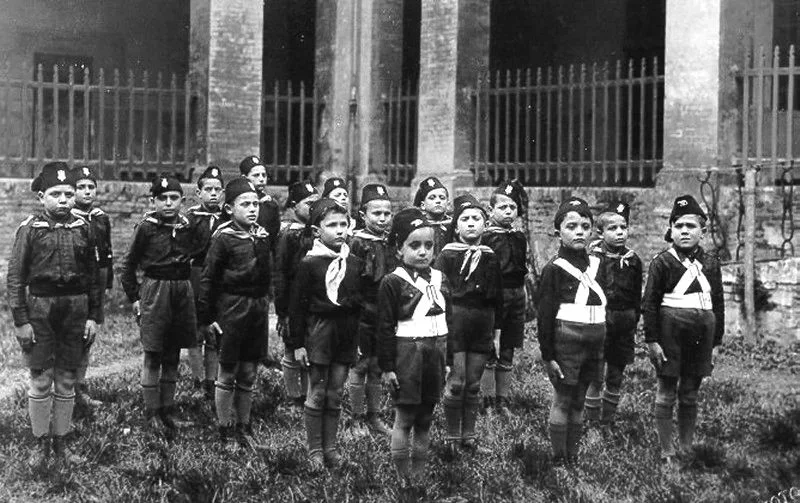
to a regime that declared itself national and whose intent was the restoration of national values, corresponded the convictions of much of the governing body council that did not fail to please it. a little more complex was instead the position of Catholic associations considering the presence of the popular party in the first Mussolini government. In essence when fascist totalitarianism turned its attention to youth associations, he found in this latter a benevolent and favorable attitude. and if in the early years the fascists had no interest in youth associations, suddenly in 1926 the government presented the law establishing the national opera balilla. the new organization would have had to be interested of children from 8 to 14 years (the balilla) and those from 14 to 18 (avant-garde) with the task of educating them to the military life taking care of their training. the bill was not very clear about the relations with the existing associations including the Scouts, but Article 8 caused some fears as it seemed to attribute to the onb the faculty to establish which associations were in contrast with it requiring dissolution. probably the same fascist leaders had not quite clear whether the ob should have had the monopoly of youth education or if rather its would have to be a leading role of other associations, even because if the first solution would open a strong contrast with the church, the second would have opened the door to “competition”. this central indecision contrasted peripheral interpretation, well decided to suppress all associations leaving the place to the balillas and the avant-garde. those who made the most of the expenses were those who aspired to “survive” and who were in greater numbers than the vanguards (despite this latter they enjoyed the support of the fascists). They envied the discipline, the spirit of body, the spontaneous enthusiasm, all that fascism intended to achieve by imposition, by force. between February and April 1926 accidents occurred a little in Italy, in square amerina, genova, sassari. in August and September more serious accidents burst into mantova where the avant-gardes devastated the local headquarters of the scouts while the latter responded with an attack on the avant-garde headquarters. was the pretext for mussolini to order the dissolution of the sections of the asci and in short other sections shared the fate of that mantovana. the asci was accused of being anti-national, linked to the popular party, Masonic.
the law of 3 April 1926, although it was one of the laws “fascistous” and contrary to the fascist practice of legislating as quickly as possible, accumulated a delay of more than nine months, perhaps also for the uncertainty of the government but, more likely because since August of the same year contacts had begun that will lead to the lateran pacts. the holy seat was not very interested in paramilitary associations and mussolini did not mean, at least for the moment, to suppress those with a spiritual character. with regard to the asci, the regime decided to “soften the pill” to the church at least until the conclusion of the negotiations on the agreed. two new decrees introduced the ban on creating new youth associations and imposed the dissolution of each association in the municipalities with less than 20,000 inhabitants. Moreover, the creation of each new asci department had to be authorized by the onb in advance while flags and gagards had to carry a littoral beam. Thus the ascis entered the orbit of the ob while at the same time leaving that of the Catholic action, the flags appeared the bundles desired by the government, but no real connection was made between the organizations.
the cngei instead was less able to defend itself because its structure was tied to the government or even belonged to it as its president, a former liberal-nationalist now passed to fascism, certainly not the figure from which to expect a convinced opposition. Thus the presidency disbanded all the sections which they answered and obeyed quietly. flags were delivered to the city museums, divided among the scouts, burned. the bundles also bowed to the will of the government and the sections were dissolved.
After a year the situation seemed to have been calmed down, the press no longer attacked the scouts and the relationships with the beam were kept correct, almost friendly and despite the onb, the organization remained alive and active. for this reason the government decided for the definitive suppression that was decreed on 30 March 1928 while the dissolution of the association took place on 6 May.
for fascism the suppression of scautism represented a total success. everything happened without opposition, without any international reactions, without consequences on the negotiations for the agreed. the last competitor in the youth field had been eliminated without great clamors.
from here onwards, scautism entered into clandestineness while the national work began to function actively, the instructors, of clear fascist faith, were chosen among the elementary masters and the officers of the militia. the boys were divided by age and sex. the girls were “small Italians” and “young Italians”. the males, to which the greatest intentions of the regime went, were divided into “balilla” (8-12 years), “balilla musketeers” (12-14), “avanguardists” (14-16), “avanguardists musketeers” (16-18) and the passages of category took place on 21 April, feast of the “natal of roma” after which it was passed to become part of the “fascism youth” (li 18-21), then in the mitia and then in the party. membership of the onb was voluntary compulsory in the sense that “recruitment” took place in schools not without pressure on parents.
However, the onb was not only bad, children were given a spiritual-cultural education (as part of it) but could count on a continuous religious assistance, benefiting from recreational activities, could go to “colonies” or in care stays, had preventive medical assistance and anti-nfortune, professional courses both day and evening, courses against illiteracy. In short, the cases where the work of the onb was useful and avant-garde. but there was also those who took advantage of it by sinking their greedy hands into the huge funds made available.
in 1937, in order to put an end to contrasts between educators and parties, the ob was replaced by the Italian youth of the littorium (gil). the novelties were the introduction of the “ fascist youth” (18-21) and the lowering of the entrance age that was brought to 6 years. in this way the gil took the boys to the families just in school age and returned them to the party at 21 years so that the cycle of "fascism education" was complete.
the years passed and came to 25 July 1943, when the end of the dictatorship decreed. Scout leaders, who for twenty years had to repress their intentions, suddenly found themselves “registered in service”, ready to resurrection of the movement despite the deep state of prostration in which the country was poured. After twenty years of dictatorship, Italy needed to be re-educated to democracy and one of the educational tools could be the creation of a political youth movement (at least this is what the allies thought after liberation). a napoli was established a committee for youth and intentions the American Boys Scouts would have to adopt the various groups helping them in rebirth.
the difficulties did not fail but the Italian scautism managed to rise again and after 103 years from the first Italian experience, the flag of unselfish volunteering that distinguishes the groups Scouts, today high and fair.
Baden-Powell.webpcarpegna.webp263.webp
 

Forum statistics

Threads
44,997
Messages
339,767
Members
4
Latest member
ibt

Members online

No members online now.
Back
Top