meccanicamg
Guest
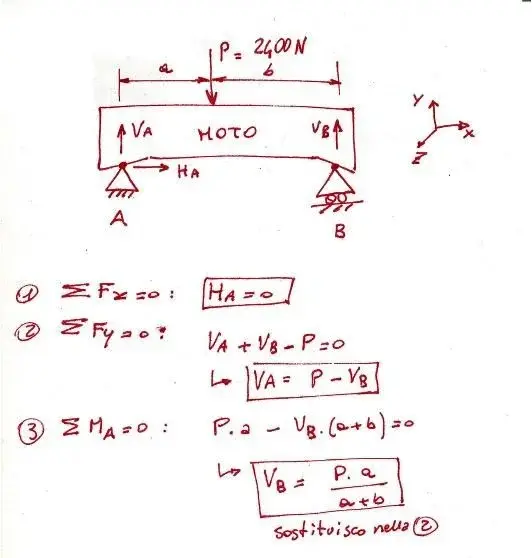
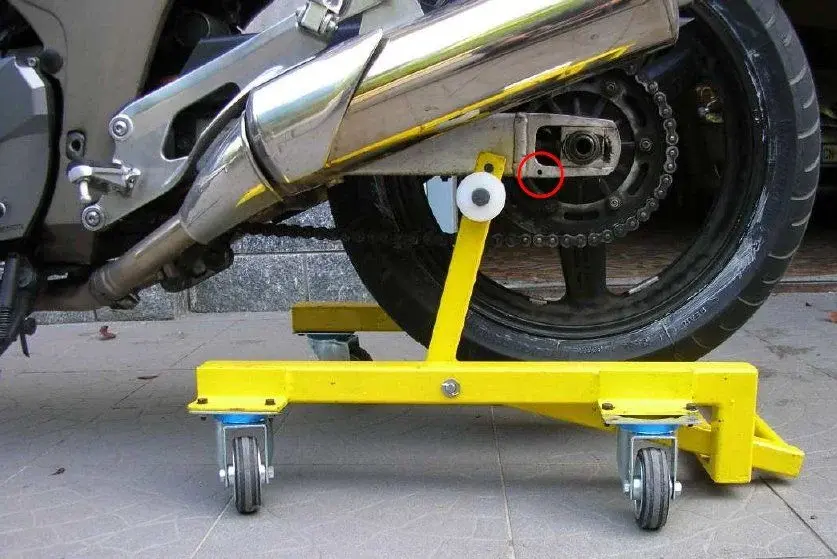
In my opinion it is completely wrong your way of force that changes angle. is a weight force, and the team is mobile (not rigid). if for that it is not even 60% of the entire weight that you download behind, but it is a plausible estimate. a cube leaning on a tilted plane having mass m will give a parallel reaction and a perpendicular to the plane. but if this plan is bound to one point it has that the result is only one downward and is m*g. the parallel and perpendicular forces are internal forces, like those of friction between piece and team...so they do not look because they are not part of the external system.Forgive my ignorance in motion: eek: the photo has cleared me ideas!!!
Therefore if the fork is not horizontal you must try to estimate a maximum inclination and verify that the direction of force does not exceed the fulcrum.
the only way to know how much vertical force there is on the pin is to put a balance. the rest is all estimated not real theory.
1) you have to break down your strength and see the fy how much it is worth compared to the fx if you want but are not talking about strength given by a mechanical component but weight force (see point 3)
2) if the inclination is on the other side what happens? is it more advantageous?
3) the transmission of weight strength is towards the always vertical floor, so you can put the plate to the turn as much as you want but the force is transmitted to a pin. the team at l could have any form and angle. the weight force follows the direction of the gravitational acceleration vector