
• This forum is the machine-generated translation of www.cad3d.it/forum1 - the Italian design community. Several terms are not translated correctly.

surface treatment

  • Thread starter Thread starter Jari
  • Start date Start date

Jari

Guest
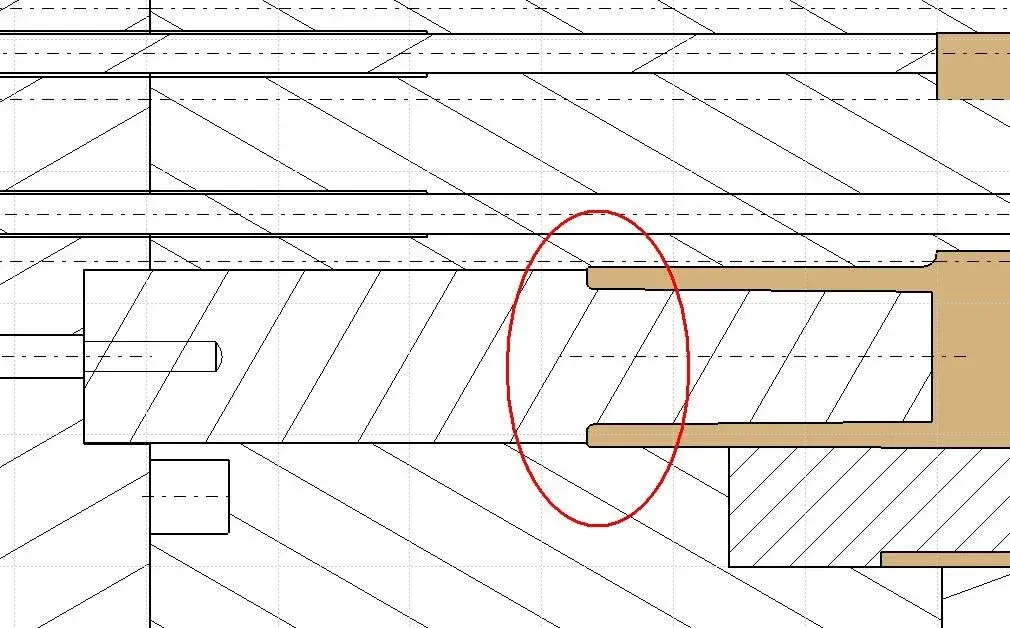
having too small dimensions (it has to enter another dowel but it enters too freely) I need to increase its size by about 2 cents.
I knew about "enrichment" treatments that could make "growth" that much that takes me to avoid a bava picket (between the joint of the dowels).
I'd like to know more if someone can help me.
Say hi.
 

Attachments

  • Immagine.webp
    Immagine.webp
    75.1 KB · Views: 29
Hello, but what material is the dowel made?

in what conditions does it work? What kind of function should it perform?
 
you could make a chrome (which you can usually perform on materials of different type) since you make a layer of material but I don't know how much you would increase (I still think of a few cents) or you can perform a enjoyment. .
But don't you do it first? ?
 
The dowel is a bronze-aluminum alloy, recessed into a tempered stax matrix.
It's a fixed, not mobile. precisely reported for processing needs and good heat transmission.
in the image of before I looked for the area in which it makes a little bit of bava (the plastic is colored in brown).

the dowel is quite complex and there are 6, so you should do first with treatment.
the enjoyment... ...my problem is the stagnation between the dowel and the matrix. I also have a prototypal mold where the dowel goes almost ink and the bava is completely absent.
(Unfortunately the material to print is really a boredom: pps).

thanks for the answers, greetings.
 
you can try with laser hello
What do you mean by laser, do you mean welding?
I do not intend to weld and then to fresare, I would like to know more about any treatments that can increase by a few cents the area of the dowel that is collected in the matrix.
I'm interested in that.
 
with the laser you can enrich the material.
It is not exactly a welding but a laser carry on plastic molds. I think whoever makes plastic molds knows about it.

there is also the treatment impreglon trezzano on the ship
 
that the laser serves to make the material "growth" I did not know. how does it work specific?

The only thing that comes to mind is that you could paint the pin, or spray it with that material that is used to isolate the electrical circuits (leave a generally black film). obviously do not solve the problem of heat transmission, indeed you have the opposite effect.
 
Hi.
if they attack
chrome or nickel
hoping they don't bother in the mold production
otherwise I think of a contribution of material
via a ring see the sketch placed with forced coupling
heats up and sticks it on the turned diameter
to rectify it to measure +0.02
cats thousand
 

Attachments

thanks for all suggestions.
interesting the speech "impreglon"... and thanks also for sketching as an alternative solution.

Honestly, I don't understand the question of laser (although taking care of molds).
Perhaps because I have always associated it with the carryover of material as welding, can you have more detailed information about it?
(since I would like to apply the treatment, without fresare. 2 cents on the radius and I can have a perfect joint without defects).

thanks in advance.
 
thanks for all suggestions.
interesting the speech "impreglon"... and thanks also for sketching as an alternative solution.

Honestly, I don't understand the question of laser (although taking care of molds).
Perhaps because I have always associated it with the carryover of material as welding, can you have more detailed information about it?
(since I would like to apply the treatment, without fresare. 2 cents on the radius and I can have a perfect joint without defects).

thanks in advance.
I believe it refers to the welding technique you see in the attached image
 

Attachments

  • saldatura_laser.webp
    saldatura_laser.webp
    59.2 KB · Views: 24
Hello, everyone.
I think first of all that those who design moulds must be aware of all the mold processing mechanisms themselves.
who builds them and who makes use of them then must be able to perform various maintenance.
co0munque is now rigor use laser carry in delicate molds. both to avoid errors and to restore wear areas.

see websites sitec or rtmspa:finger:
 
Honestly, I don't understand the question of laser (although taking care of molds).
Perhaps because I have always associated it with the carryover of material as welding, can you have more detailed information about it?
(since I would like to apply the treatment, without fresare. 2 cents on the radius and I can have a perfect joint without defects).
Hi.
I know that the laser is used to make fused material intake; advantages of laser: you can report very small amounts of material, moreover the area of dowel that is heated is very limited and the thermal effects are very limited. However, it is a material supply, the area is then reworked to obtain the desired shape and size.

use of lasers for "growth" techniques of other kind I do not know... I apologize if I am not aware of all processing mechanisms etc.;)
 
I came across the discussion, interesting, but in 0.02mm plastic passes???? ? mold for many years and I never happened a case of bave in interference between so small dowels.
greetings from
 
I came across the discussion, interesting, but in 0.02mm plastic passes???? ? mold for many years and I never happened a case of bave in interference between so small dowels.
greetings from
we need to print at very high temperature (110° and beyond), and the material becomes almost water.
However the total game is not 2 cents. the fact is that another dowel (of a prototypal mold) has 2 cents more than the latter. the prototypal did not make defects.
(among other things there is a very demanding customer).
the total game was and must be around 4 cents.

Anyway, I solved it with a chemical enrichment. Thank you all.
 
Hello, everyone.
I think first of all that those who design moulds must be aware of all the mold processing mechanisms themselves.
who builds them and who makes use of them then must be able to perform various maintenance.
co0munque is now rigor use laser carry in delicate molds. both to avoid errors and to restore wear areas.

see websites sitec or rtmspa:finger:
I imagine that for "working mechanisms" means "working processes".
laser, used as a surface heat treatment, I have known it since the late 80s, and I have used it and worshipped it as a carry of material for about 15 years.
My problem (now solved) was not related to the material supply.
was the exact contribution of 2 cents around a dowel to avoid an aesthetic defect (and avoid further cnc processing).
so if you were referring to laser as material intake (saving) this is not my case. if instead it refers to some type of surface heat treatment (which causes a slight enrichment of material) then I ask you to be clearer.
because I saw the sites he indicated but I didn't find much.
useful maybe for other situations but not what I had exposed.
 
Anyway, I solved it with a chemical enrichment. Thank you all.
I never had experience on interventions of this type, would you post some extra info (or even just some reference links?

Thank you very much
 
I never had experience on interventions of this type, would you post some extra info (or even just some reference links?

Thank you very much
I didn't have time to get into it either, it's 'chemical activation'. I sent you a message with a company link.
Say hi.
 
the chrome is absolutely not good unless you want to add a few tenths of material (under 0.05 is peeled) and then it must be rectified with a diamond grinding wheel (can not be milled)
to add a few cents you can use a pvd wear coating
 

Forum statistics

Threads
44,997
Messages
339,767
Members
4
Latest member
ibt

Members online

No members online now.
Back
Top