• This forum is the machine-generated translation of www.cad3d.it/forum1 - the Italian design community. Several terms are not translated correctly.

the technique and history

  • Thread starter Thread starter Exatem
  • Start date Start date
more than ice ships are "frozen" ships, but the topic is pertinent.
Why do you say it's not a caxxo?
Hi.
 
more than ice ships are "frozen" ships, but the topic is pertinent.
Why do you say it's not a caxxo?
Hi.
because first I was talking about ships built with ice while these are ships covered with ice... was just a joke:-)
 
Do you know that if they kept accumulating ice, some of them would be clogged... how can you do to remove the excess ice on a ship?
 
Right athlon, good question, had come to mind to me too, but you preceded me.
What does the guru say?
 
Do you know that if they kept accumulating ice, some of them would be clogged... how can you do to remove the excess ice on a ship?
Right athlon, good question, had come to mind to me too, but you preceded me.
What does the guru say?
you navigate on hottest routes... :-)

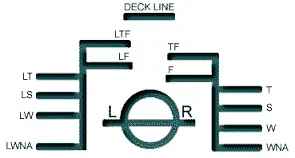
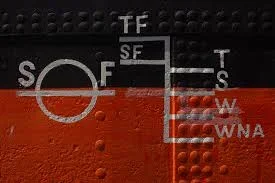
that of the formation of ice is a known problem. the increase of weight in high causes problems related to the decrease of the free edge.for navigation in areas considered at risk, you must load up to the brand of free edge ina (north Atlantic winter) or wna (winter north Altantic).
to not know what it is about I attach two images:images.webp images.webp in correspondence of the plimsoll ring there is the brand of e or s (summer/summer).
going down (so increasing the free edge for security reasons) we have:

i o w (winter or winter)
ina or wna (North Atlantic winter or winter north atlantic)
for some ships, used for the transport of the timber, the classified entities mark the ship with inal (North Atlantic lumber winter) to consider the increase of the displacement to pc due to the absorption of the water of the timber on deck in occasion of waves in blanket.

going up we have:

t ( tropical waters)
fw or ad (fresh water or fresh water)
tfw or adt (tropical fresh water or tropical fresh water)
 
when it is said that survival in war is a combination of factors among which has a decisive role luck. on 16 March 1944 a U-boot type vii - the U-1206 - was delivered to his new crew and their commander, the schlitt, who immediately began to take “confidence” with the boat with exits at sea of testing and training.
on 6 April 1945 the U-1206 became operational and left the port of kristiansand in Norway, for its first mission, to search and destroy the British and American ships in the waters of the North Atlantic.
for a crew of fifty men, in a small boat, life was not only extremely dangerous, but also anything but pleasant. the premises were small and the toilets were no exception.
there were two services on board but as one stood next to the kitchen, it was almost always used as a warehouse of the food so the only service left had to be shared by the whole crew.
In addition, unlike allied submarines, German toilets did not discharge into a black water collection box but directly at sea. this choice had been dictated not to occupy valuable space but had a price. services could only be used in emergence. In fact, if immersed, the external pressure prevented the unloading off board. so if when you were in dive, you had the need to use the latrine, the crew members were forced to use buckets, jars or any other container of luck that were then kept until the subsequent emergence when finally, you could get rid of the content.
to this little edifying situation it was added that the ventilation systems were at least inadequate, which means that in addition to the diesel fumes, to the smell of the naphtha, to the sweat, the exhalations of all those buckets and cans scattered within the narrow hull were added.
but the new “1206” introduced an important novelty.
a complicated system of high pressure valves in fact allowed the use of the toilets even in depth. only problem was that the system was so complex that it required specific training for its proper use so, as well as complicated instructions indicated on the manuals, it was used to some specially trained crew members called jokingly “specialists shaquone”.
after a week of patrol, while it was 200 feet deep about 8 miles from the Scottish coast, the c.te karl adolf schlitt had the impeccable need to resort to the new hygienic service. but instead of resorting to a “specialist shaquone”, he tried to follow the instructions on the manual. Obviously something did not go for the right direction so schlitt was forced to call a specialist who, however, committed a second mistake opening the external valve at sea while the internal one was in “open” position.
a stream of water thus began to flow from the “fuggita” of the wc flooding in a few moments the boat.

Thus a second serious design error emerged, the toilet had been obtained in a room that overstated the batteries so the sea water poured out and coming into contact with the acid the lethal production of chlorine began to spread throughout the boat. with the gas that flooded all the premises, the commander had no choice but to emerge to area the hull.
but just emerged the German submarine was identified by allied aircraft and immediately attacked. a German sailor died in the confusion that was created while three others fell into the sea where they drowned. the u-1206 was severely damaged and, unable to dive, the captain ordered to leave the ship while the same sank. in his eight days of patrol, the U-1206 failed to attack any allied ship even if this would not have changed the fate of the war. On April 30, hitler killed himself in the Berlin bunker and seven days later Germania surrendered by ending the war in Europe.
maybe the u-1206 was the only ship condemned by a toilet but thanks to the malfunction of this, 46 crew survived the war.
in 1970 during the works of laying a submarine pipeline was identified the wreck on the seabed of 230 meters.
 
and I thought some boats today are baskets......... .
:
Well, curiosity will never end up astonishing me, thank you, exa.
 
really in this case I think it would be + just write:
"when the toilet doesn't save your life, it's bad for you."
Hi.
 
really in this case I think it would be + just write:
"when the toilet doesn't save your life, it's bad for you."
Hi.
depends on the points of view.
considering the mortality rate of u-boot crews (which was more than 75%, higher value than all the "specialities" of the armed forces of the world) perhaps that "cess" saved 48 of them.. .
 
Well, if I read well 2 are dead, now since 30 April 1945 everything is over, and since the submarine had become "operative" only on 6 April............
Well, according to all this I'm inclined to say that, if there was no incident at the toilet, even those 2 people would be alive, because very difficult the submarine would have been identified by someone.
and, conversely, I think he wouldn't have the chance to throw a single torpedo.
But we can't be sure...... .
Hi.
 
Well, if I read well 2 are dead, now since 30 April 1945 everything is over, and since the submarine had become "operative" only on 6 April............
Well, according to all this I'm inclined to say that, if there was no incident at the toilet, even those 2 people would be alive, because very difficult the submarine would have been identified by someone.
and, conversely, I think he wouldn't have the chance to throw a single torpedo.
But we can't be sure...... .
Hi.
Sorry, I was wrong. the dead were 4 then the survivors 46.
considering the mortality rate of submarine crews. . .
But there are two aspects of the same story.
Bye.
 

Forum statistics

Threads
44,997
Messages
339,767
Members
4
Latest member
ibt

Members online

No members online now.
Back
Top
