tecnico_plast
Guest
beautiful story, as always:finger:
it would be interesting to see some image of the vulcan joint.
it would be interesting to see some image of the vulcan joint.

I should scan it.beautiful story, as always:finger:
it would be interesting to see some image of the vulcan joint.
not worth stealing in the house of thieves...:tongue:Mine?
Of course!
Chi io?not worth stealing in the house of thieves...:tongue:

 a tanker 177m long and 26.3 from 25000 tons, built in the yards of shanghai edwards in 2007 but recently subjected to refitting works that resulted in the replacement of the two engines wartsila 46, powered by heavy fuel, with two warstila 50df dual fuel connected to the axles by reducer, which draw from two tanks of 500 m33/ installed on the deck to simplify the operations of refuel the capacity of the tanks allows an autonomy of 12 days but it is always possible to switch to diesel for naval use if necessary. the conversion performed by wartsila included gas supply systems, pipes, engines, control systems and all adjustments for the ship's systems and also resulted in the upgrade of the ship's classification certificate. the subsequent tests at sea were successfully carried out under the supervision of the German lloyd confirming the validity of the use for the future of the gas as fuel for naval use.
 a former ferry built in 1974 in loand verft in Norway, 49,65 meters long and 11,25 from 626 tons wide, rebuilt for this purpose at the Norwegian yards of fiskerstrand blrt in 2013.
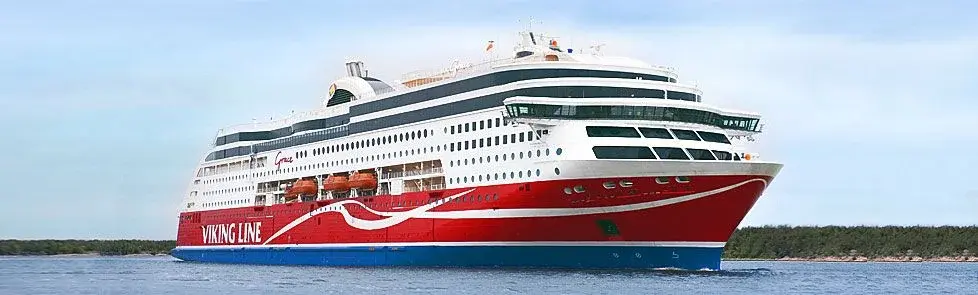 a ferry/passenger ship built in the yards stx europa of turku in Finland. launched on 10 August 2012 and completed on 10 January 2013 it cost approximately 240 million euros. driven by gas engines, 218 meters long, 31.8 wide with a gross tonnage of 57.000 tons can transport 2800 passengers to 22 knots and has 12 bridges of which 3, 4 and 5 for the transport of vehicles. the engines are 4 wartsila 8l50df of 7600 kw each and the propulsion is diesel/electric type with 2 propellers. gnl tanks are located outdoors on the stern bridge (in enclosed photo)
 the operation of bunkeraggio took place in the port of stoccolma. the seagas has a single large cryogenic tank of 170 cubic meters that maintains the temperature of -162 °c to ensure to the gnl to occupy only 1/600 of its gaseous volume, placed at the ship center, which guarantees the transfer of gas in only 60 minutes. after some initial difficulties now many ships are adopting the formula of use of dual-fuel engines. using gas-powered engines means reducing intakes in the atmosphere practically zero. the nox is reduced by 90% therefore below the current requirements of imo, while greenhouse gases are completely cut, and in particular, with a reduction of 25% of carbon dioxide, absent sulphur and reduced particulate by 99%. in fact, today, in many ports there are under construction many terminals for service stations bunker for ships; in particular along the coasts of the Baltic Sea and the sea of the north that are added to those already in service in north America and in Norwegian.
It's not about warships. .Honestly, they seem to me two concepts in antithesis, warships and environmental respect
Of course it's my own opinion.
 this time with magnetic steel hull, longer, with a more powerful propulsion apparatus and, with more modern sensors. measured 43.9 meters in length and 4.6 meters in diameter, the displacement climbed to 500 tons and the propulsion was entrusted to two mercedes-benz v12 diesel 600hp, a bbc generator and an electric motor siemens from 1300hp connected to a 5 blade propeller. the maximum speed was reached in immersion and was equal to 17 knots while on the surface barely 10.
 They formed a new subclass family with variable dimensions between 650 and 1500 tons. were realized in 50 units sold to Greek, Turkish, Argentine, Chile, brazil, Peru, Colombia, ecuador, Venezuela, India, Indonesia, South Korean and South Africa, and to demonstrate the goodness of the project of this submarine we remember that san louis, the Argentine submarine that during the war of the falkland attack did not even attack two British enemy units.
 (follow...)
 (follow...)
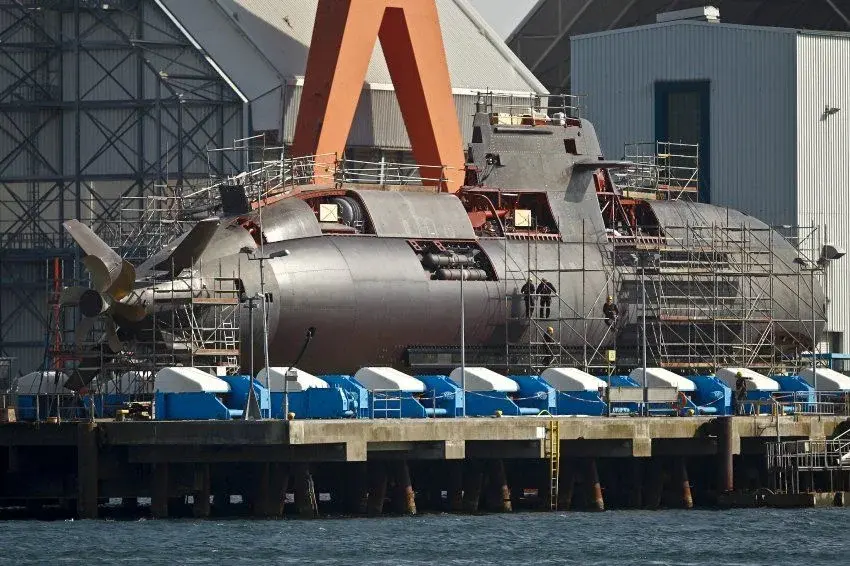
 the s85, then became s90 and that now you could call “s2000”, was a project born when there was still no propulsion ip and therefore “old born”. it was therefore essential to choose a foreign product that filled the technological gap accumulated.


 (follow...)
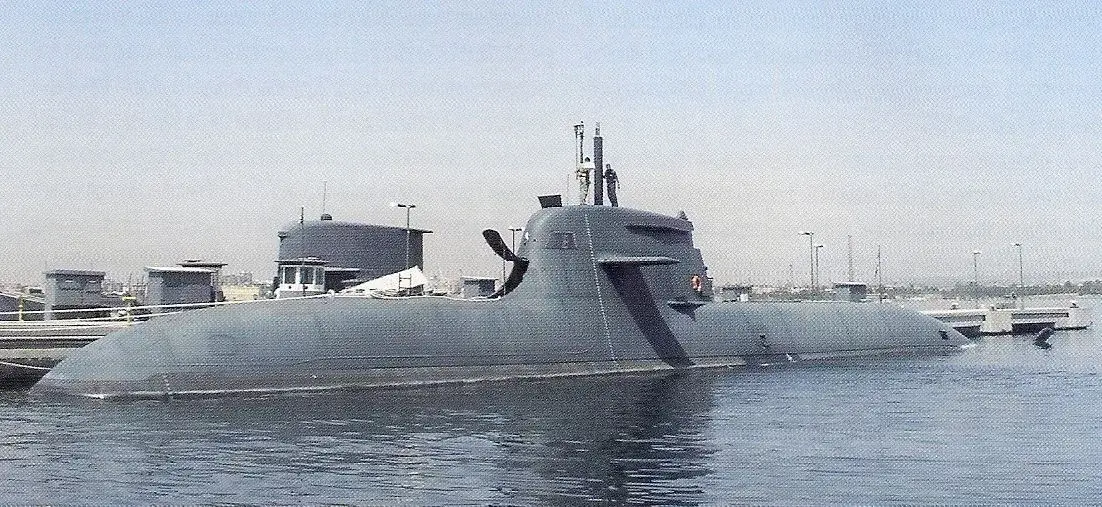
 212 are no exception although as we will see from previous achievements considerable progress has been made.
 the initial project took advantage of the cold war period in which the born submarines had to compare with the means of the varsavia pact for which they denounce a low global score. the boats are designed to reduce the noise produced by the propeller and the auxiliary devices on board as well as for a low thermal and magnetic marking. the amagnetic hull guarantees similar magnetic marking values, if not even lower, to those of wooden ships or fiberglass. is made of stainless steel type 1.3964 amox, very expensive and mechanical characteristics lower than conventional quality steels but which has the great advantage of being amagnetic. this natural dowry was then increased with the adoption of an apparatus of “degaussing”. the Italian navy also wanted to have increased the operational depths and this has resulted in an increase of the thicknesses (and therefore of the costs) and although the maximum quota reached is a confidential data, it is assumed that it is "notable".
 (follow...)
 This is the heart and brain of the submarine. is spacious and welcoming. there are the consoles of the terminals of the sensors built “following” the internal forms of the hull, the systems of communication and navigation, the radar, the tactical table/navigation. three consoles are reserved to sleep operators. then the blocking of the two control stations of the platform and the electronic war station, which avails of the esm system able to provide a complete picture of the situation, to follow the integrated console of maneuver of the timones. at the center the two periscopes, one of attack and one of discovery; are of the zeiss optronik type sero 14 and 15, equipped with high resolution thermal chamber and optical telemeter. the attack periscope also has a laser telemeter and images taken from the cameras can be recorded or photographed. Just touch a button and the image can be transformed into a track to be entrusted to the integrated control and control weapons control system, the bcwsc msi90u (basic fight & weapons control system) realized by the Norwegian kongsberg defence as that proposes the automatic classification of the target, the evaluation of the threat and the data necessary to the launch center. the submarine has a dbqs-40 sound apparatus of the stn atlas elektronik, flank-array, towed-array, asm interceptor, own noise detection system.
 when all posts are occupied in the cyc are fourteen people more the commander but for normal operations of conduct eight operators are sufficient. from here you control all hydraulic, electrical and propulsion systems as well as the management of zavorra and trim cases. the 212 have 5 ballasts: 2 aft (n° 1 and 2), and 3 aft (n° 3, 4 and 5). there are then 4 cashiers and two crates thirsty. the push reserve is about 200 tons.
 (follow...)