Scipione205
Guest
Hello.
I'm helping kids to build an economic and open source work center. we have aluminum components to be realized (square plates, holes and grooves for references).
I have been no longer working in the workshop, cam etc. for more than 5 years, so I ask for advice and help.
one of the fundamental objectives is the total cost, so the machine is made for most of the ready components, and in little part components made specifically (realized however with the machine itself).
I designed the plates so that they were simple to make, and I should have done it on a vf2. But then that workshop had problems and I had to look for solutions from third parties.
the estimates had so far go too far out of budget (it was actually initially expected zero cost for these components and I would have made them aggratis), but more than anything else I am sure that many workshops have bounced us because looking at the tables will have slipped.
Actually the holes should be lamature for cylindrical screws, or threaded blind holes. However to make the processing simpler, I made all normal holes passing, so that the holes can be realized all on the same side with drilling tips and drilling operations. then in the lab I will make tears and threads.
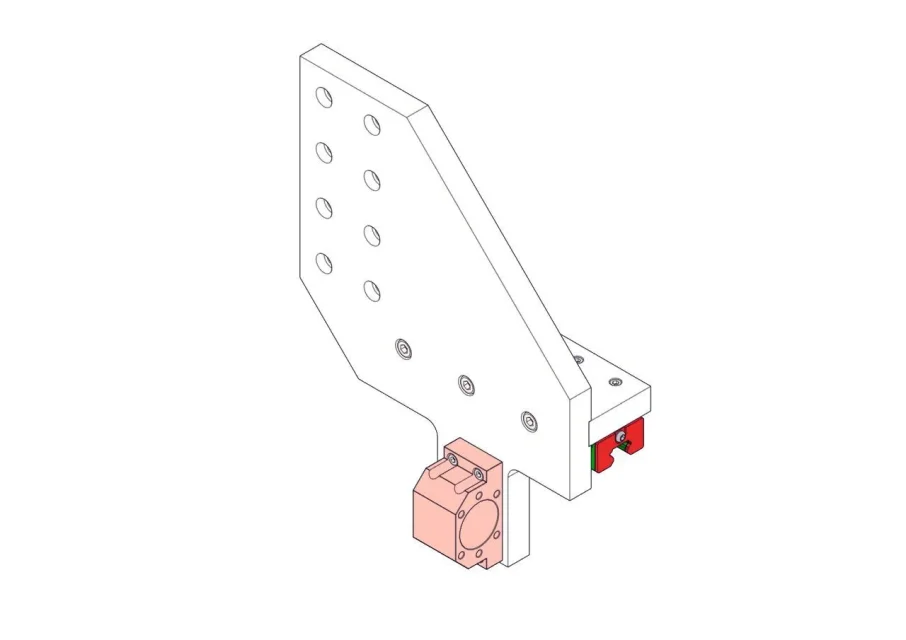
for the pieces "shoulder" I have designed alternatives that are plates, without the "strange" form, since for those pieces I need only parallelism between the main planes, the groove seat for ink that is in the picture, and then a border only in squadron with the planes and the groove (which then I use to control the alignments); that "strange" profile only serves to free space of space, and we can go with the tape saw in the lab.
about tolerances.
I need the planes to be parallel, and the edges to be squared between them and the planes, so that the assembly can be easily put into geometry. instead the holes are deliberately wide enough, so that there is room to adjust in assembly. there are grooves for reference pins of skates and guides, and the pieces "shoulder" and "often skates y" are framed in the seat, with a very light game so that the thickness can flow in during the assembly.
In fact I did not calculate the really necessary tolerances, it would suffice me the tolerance obtained from the machine (if it is in geometry, in good state, all executed correctly). in the past the same pieces I made them with a Chinese vertical cutter with swallow tail guides made cnc and I was more than satisfied.
Here I inserted geometric tolerances of 0.02 everywhere on a friend's advice. 5 cents would definitely be fine.
if you have advice on how to improve the table, change tolerances, to whom to address us, etc., I would be grateful.
when everything is final we will publish all the documentation so that anyone can make the machine. projects will never be on sale.

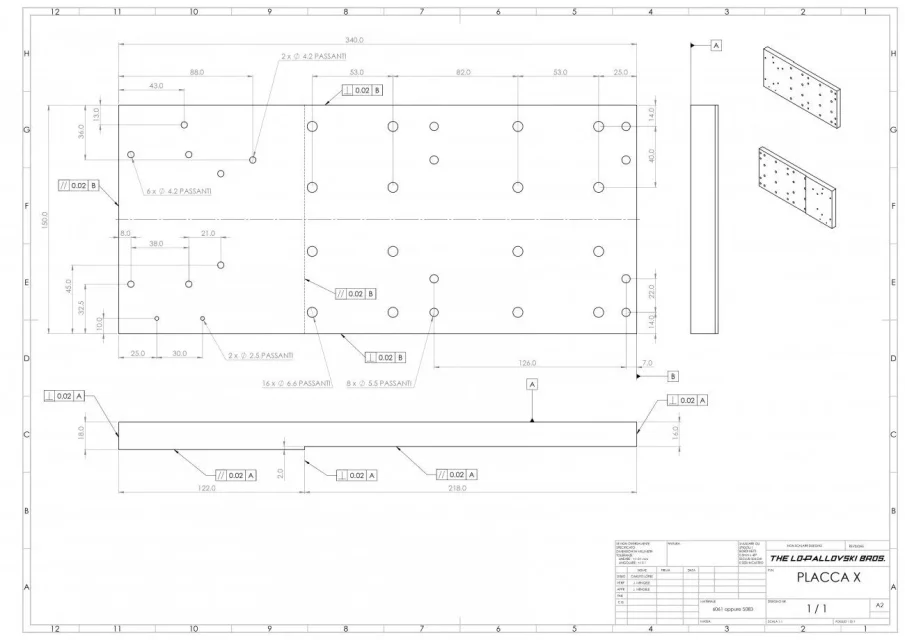
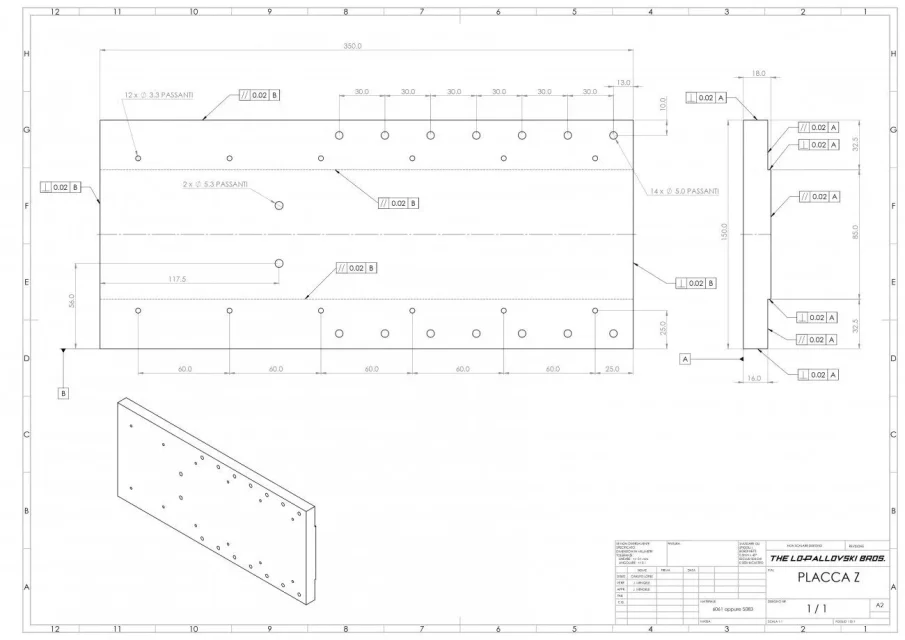



I'm helping kids to build an economic and open source work center. we have aluminum components to be realized (square plates, holes and grooves for references).
I have been no longer working in the workshop, cam etc. for more than 5 years, so I ask for advice and help.
one of the fundamental objectives is the total cost, so the machine is made for most of the ready components, and in little part components made specifically (realized however with the machine itself).
I designed the plates so that they were simple to make, and I should have done it on a vf2. But then that workshop had problems and I had to look for solutions from third parties.
the estimates had so far go too far out of budget (it was actually initially expected zero cost for these components and I would have made them aggratis), but more than anything else I am sure that many workshops have bounced us because looking at the tables will have slipped.
Actually the holes should be lamature for cylindrical screws, or threaded blind holes. However to make the processing simpler, I made all normal holes passing, so that the holes can be realized all on the same side with drilling tips and drilling operations. then in the lab I will make tears and threads.
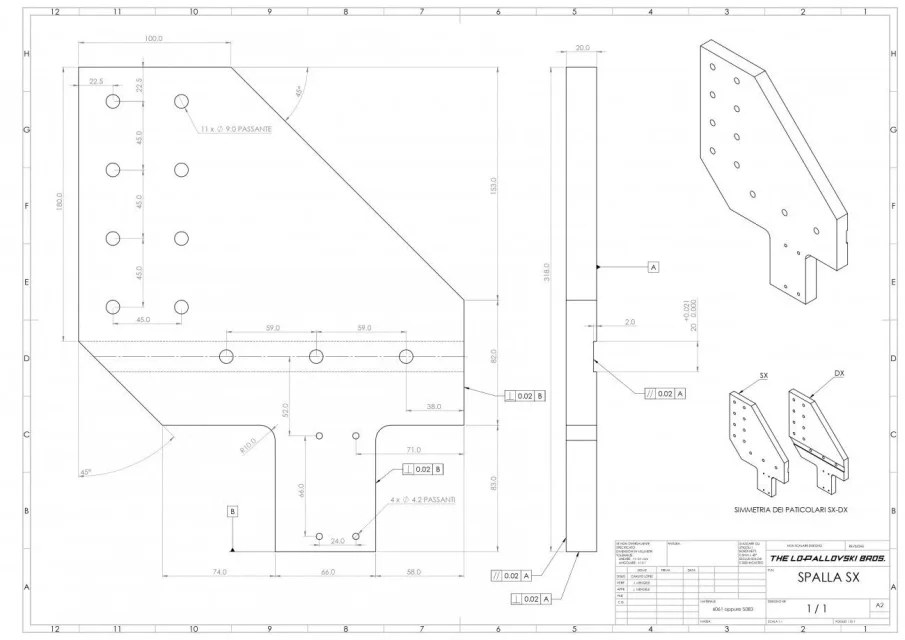
for the pieces "shoulder" I have designed alternatives that are plates, without the "strange" form, since for those pieces I need only parallelism between the main planes, the groove seat for ink that is in the picture, and then a border only in squadron with the planes and the groove (which then I use to control the alignments); that "strange" profile only serves to free space of space, and we can go with the tape saw in the lab.
about tolerances.
I need the planes to be parallel, and the edges to be squared between them and the planes, so that the assembly can be easily put into geometry. instead the holes are deliberately wide enough, so that there is room to adjust in assembly. there are grooves for reference pins of skates and guides, and the pieces "shoulder" and "often skates y" are framed in the seat, with a very light game so that the thickness can flow in during the assembly.
In fact I did not calculate the really necessary tolerances, it would suffice me the tolerance obtained from the machine (if it is in geometry, in good state, all executed correctly). in the past the same pieces I made them with a Chinese vertical cutter with swallow tail guides made cnc and I was more than satisfied.
Here I inserted geometric tolerances of 0.02 everywhere on a friend's advice. 5 cents would definitely be fine.
if you have advice on how to improve the table, change tolerances, to whom to address us, etc., I would be grateful.
when everything is final we will publish all the documentation so that anyone can make the machine. projects will never be on sale.