tailele
Guest
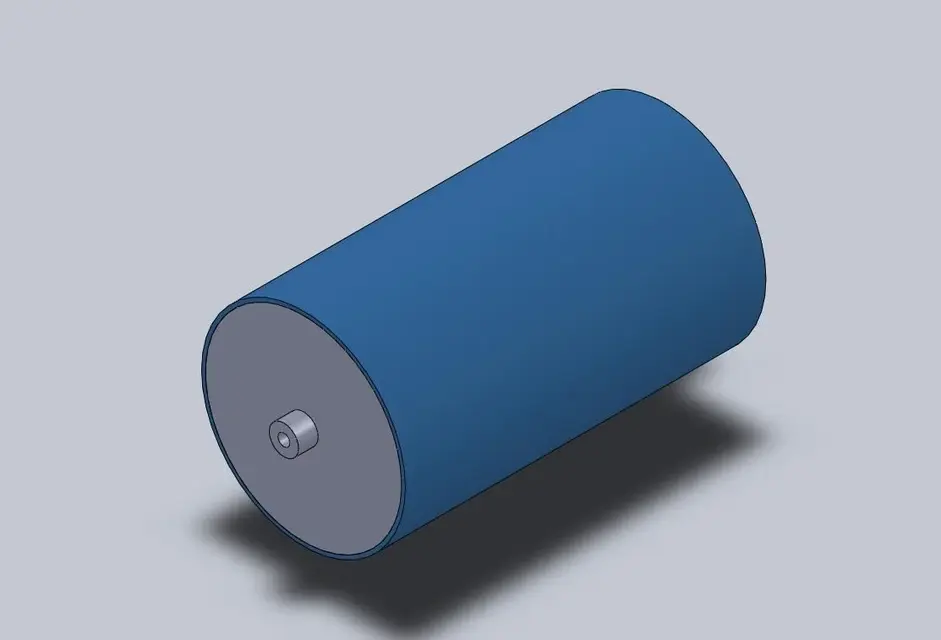
hello to everyone, I'll give you my problem.. .then I have difficulty simulating the traction behaviour of a standard rubber already preinstalled in the ansys library (explicit materials). In theory rubber should have linear traction behavior if you do not exceed the yield limit, and a behavior however not linear in compression given the non crystalline structure. Now my problem is the following, I have a very simple structure. .two cylindrical steel wheels of diameter 100 and height 10mm connected along the vertical axis from a 100mm long square bar (always of steel). on the side surfaces of the wheels is a cylindrical rubber standar so that the 2 wheels are put in contact with each other. to make you understand better place 2 scrrens:
- in image 1 you see the two wheels connected by the bar
- in image 2, the 2 wheels with cylindrical rubber covering them
I hope I've been clear. . attached hang 2 forces visible in image 3 in correspondence of the rims on the rubber. constraint the side supports and launch the solutor. from here it gives me unknown error and does not give me the deformed rubber. The strange thing is that if instead of putting rubber as material, I put structural steel, it solves it quietly. What's the problem?
- in image 1 you see the two wheels connected by the bar
- in image 2, the 2 wheels with cylindrical rubber covering them
I hope I've been clear. . attached hang 2 forces visible in image 3 in correspondence of the rims on the rubber. constraint the side supports and launch the solutor. from here it gives me unknown error and does not give me the deformed rubber. The strange thing is that if instead of putting rubber as material, I put structural steel, it solves it quietly. What's the problem?